16th century
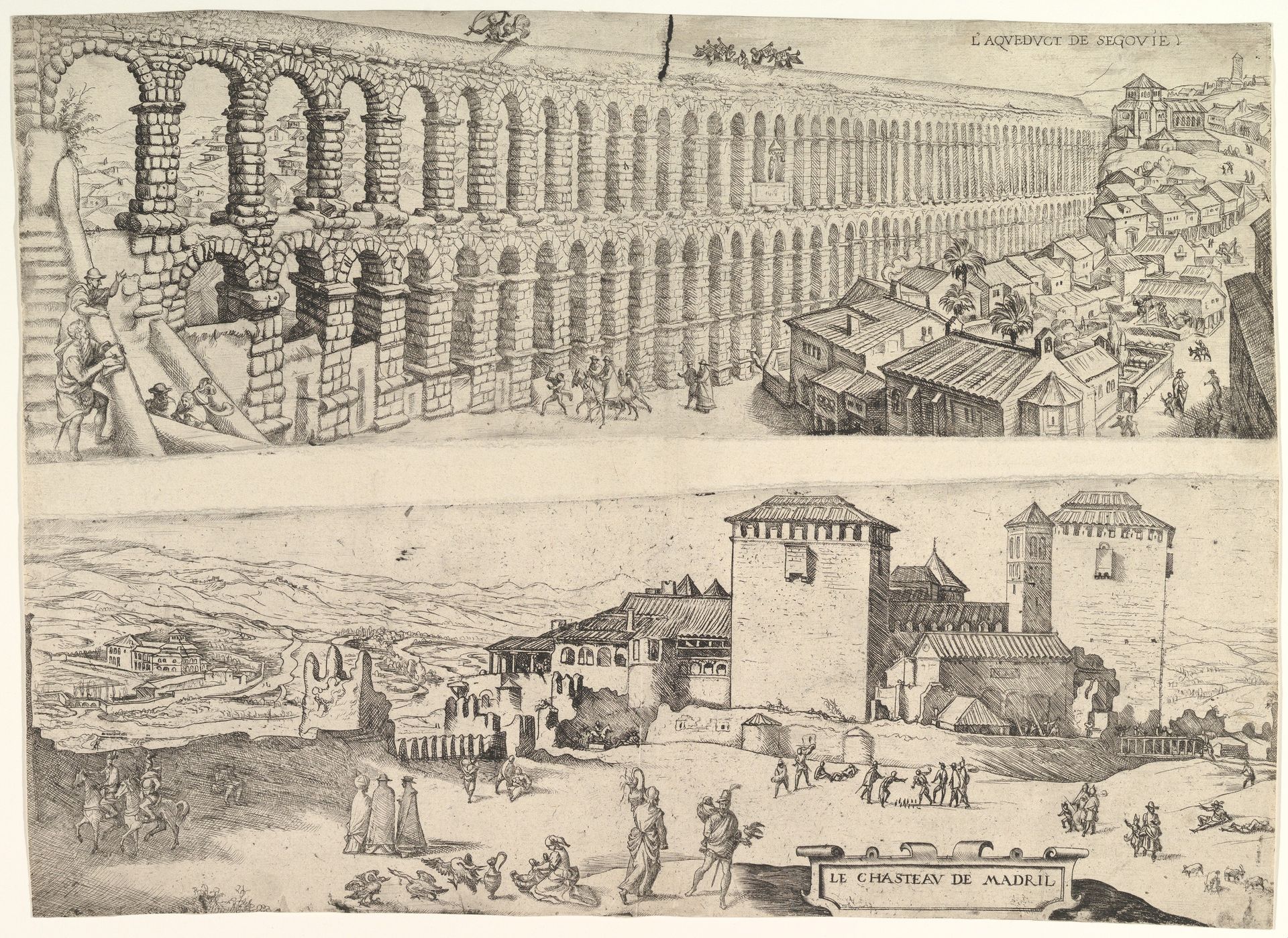
The Aqueduct at Segovia and The Castle of Madrid

Jan Cornelisz Vermeyen
1504 - 1559
The Metropolitan Museum of Art
Metropolitan Museum of Art, New York, NYListen to curator's interpretation
Curatorial notes
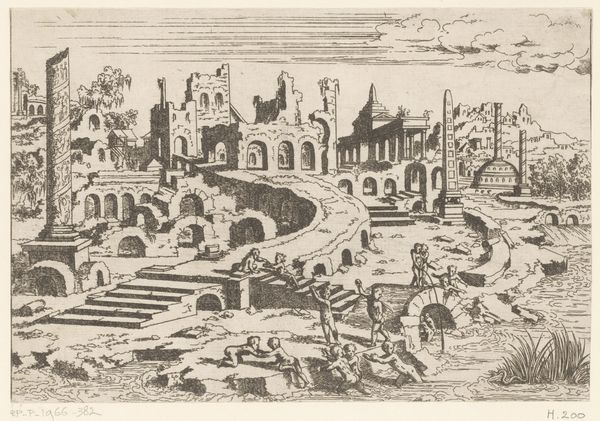
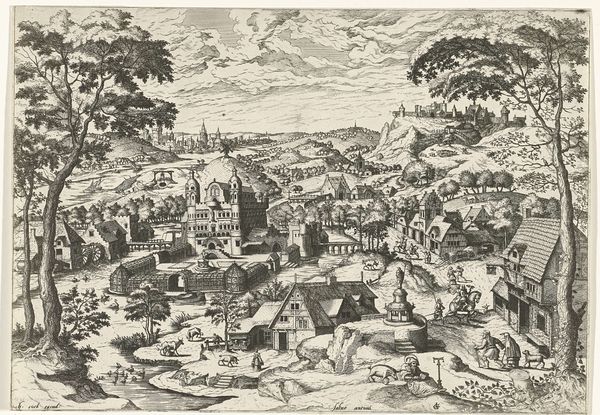
This print, "The Aqueduct at Segovia and The Castle of Madrid," was created by Jan Cornelisz Vermeyen sometime in the mid-16th century, using the intaglio process. The technique involves cutting lines into a metal plate, inking the surface, and then wiping it clean so that ink remains only in the incised lines. When paper is pressed against the plate, the image is transferred. Look closely, and you can see the crisp precision that this process affords, allowing for immense detail despite the small scale. Prints like this one played a crucial role in circulating images and information across Europe. The intaglio method, requiring specialized tools and skills, was itself part of a complex economy, linking artists, printers, and distributors. So, while the print depicts feats of engineering and architecture, it is also an artifact of production. It serves as a reminder that images themselves are made. They are the product of labor and technical know-how, just as surely as the aqueduct and castle it portrays.