1872
Langland Bay


Listen to curator's interpretation
Curatorial notes
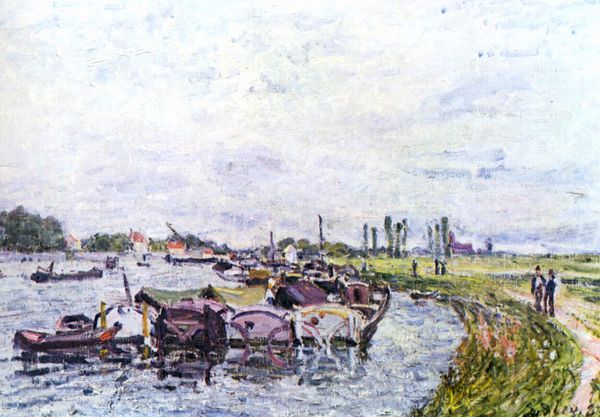
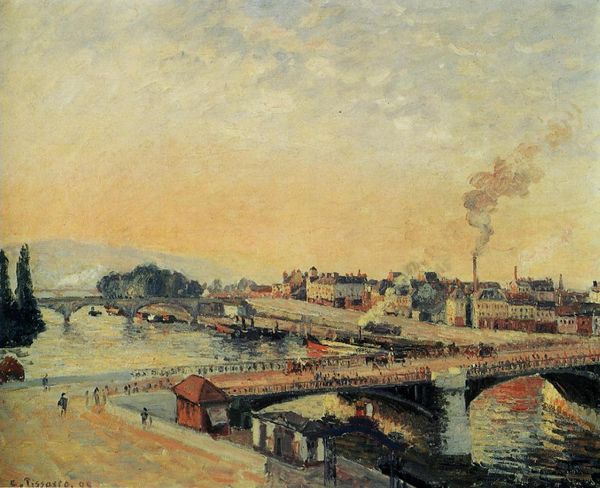
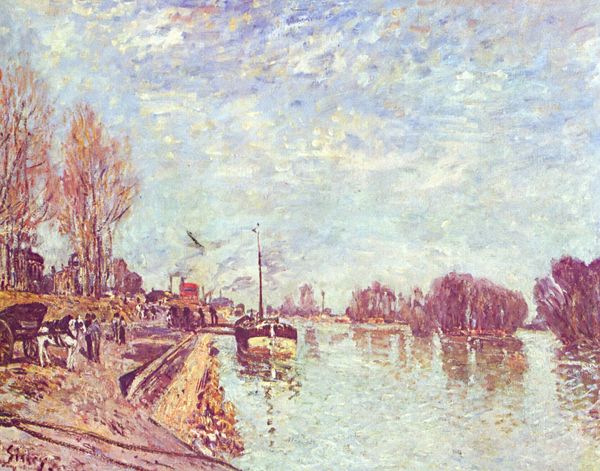
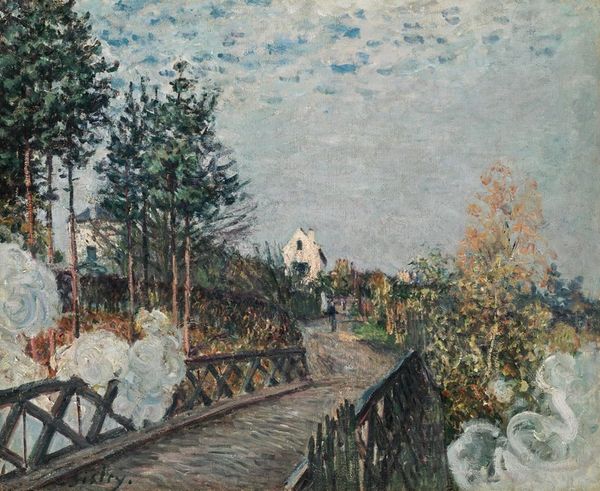
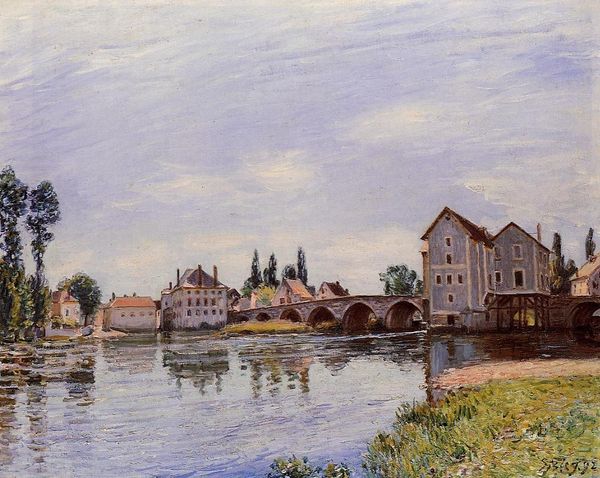
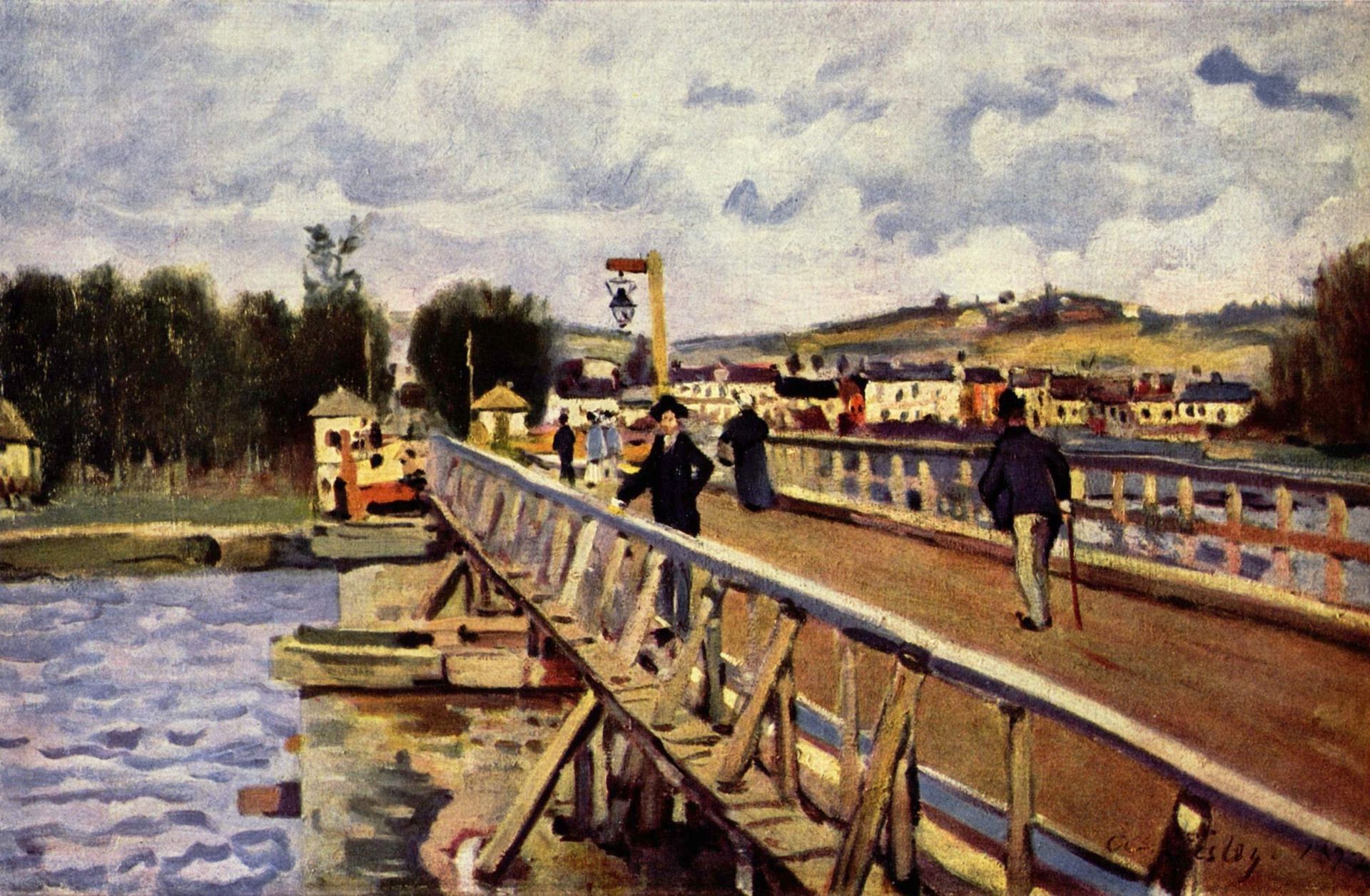
Curator: Alfred Sisley painted "Langland Bay" in 1872. You can find this piece now at the Musée d'Orsay in Paris. What are your first impressions? Editor: Gloomy, yet somehow optimistic. It's interesting how the wooden bridge seems to cut right through the canvas like a knife. And what about the muted palette and visible brushstrokes—did he use oils? Curator: Most likely. Sisley was all about capturing light and atmosphere in his landscapes, and oil paint was perfect for that. I'd guess that he mixed a lot of his pigments on the canvas itself. Editor: You can certainly tell! The layering of colours feels almost textural. And those brushstrokes suggest such a rapid application, as if to convey a sense of spontaneity... how would the canvas itself influence his material process? Did he opt for premade canvases of a certain thread count, or did he have these prepared himself? I am also curious to learn about the origin and cost of pigments available to him. Curator: He may have stretched his canvases, since that allowed for more control over the surface and sizing, although archival evidence about suppliers will probably elude us. It’s funny, because when I look at the people on the bridge, they're just these little blurs of color, rendered anonymous by modernity, as if laboring. Editor: Precisely! Their facelessness amplifies my reading: The impression isn't of a bustling crowd so much as a conveyor of labor across that central band, as if this bridge served not just as transit across the river, but towards specific tasks, too. Curator: What a curious bridge of industry... For me, though, I think of these liminal, intermediate spaces as inherently suggestive of passage. The scene’s so full of mist and motion. I guess Sisley captured something ephemeral in that little moment by the water. Editor: Ephemeral, indeed, while all the various laborers had material needs and were deeply situated in time and place! Food had to be secured; bills, paid. I guess both our ways of seeing are correct... Curator: As is true of most subjects if examined at length, my friend! Now, what do you say we make our way over to the café?