About this artwork
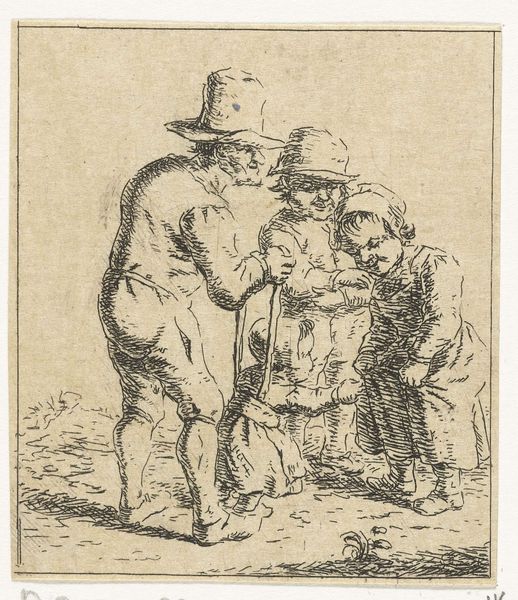
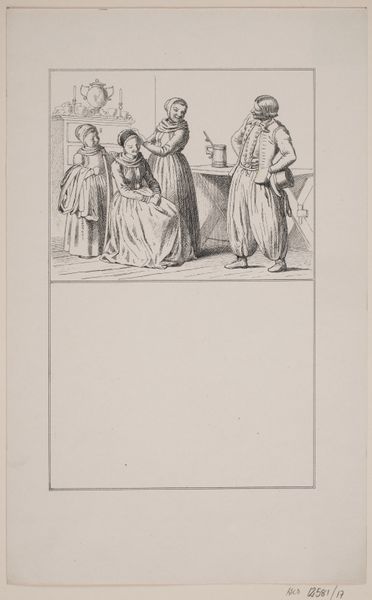
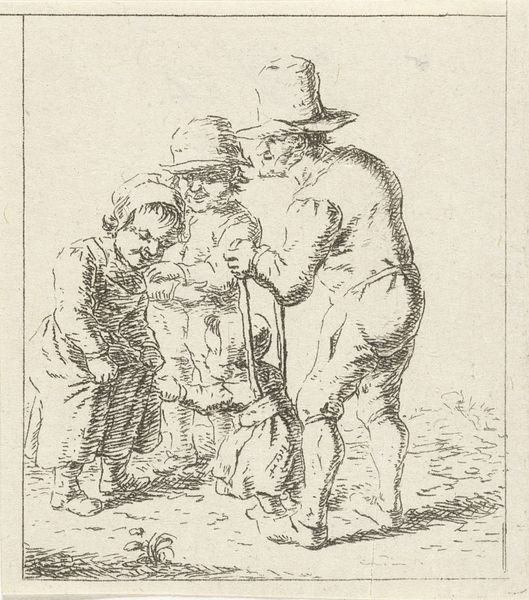
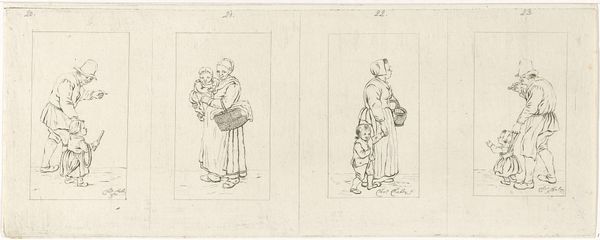
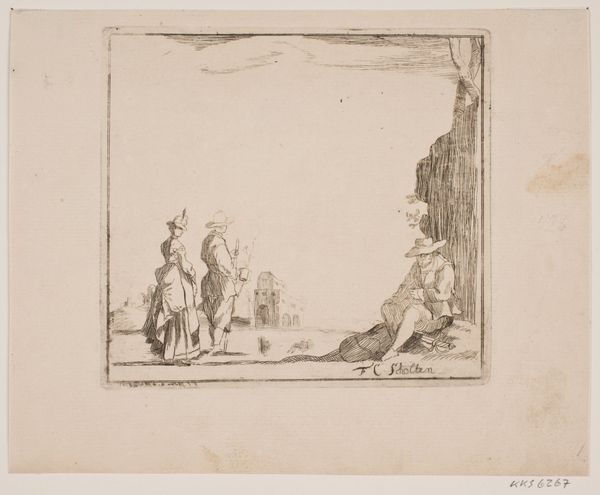
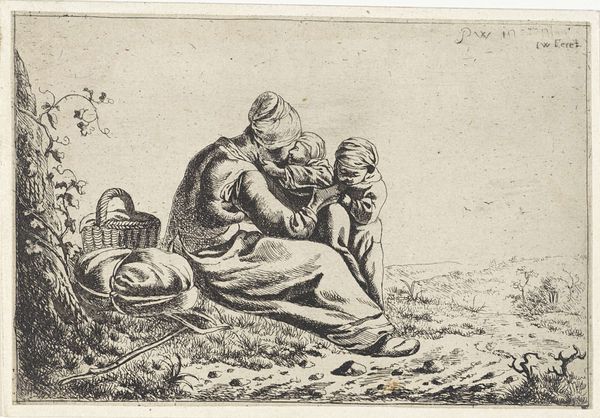
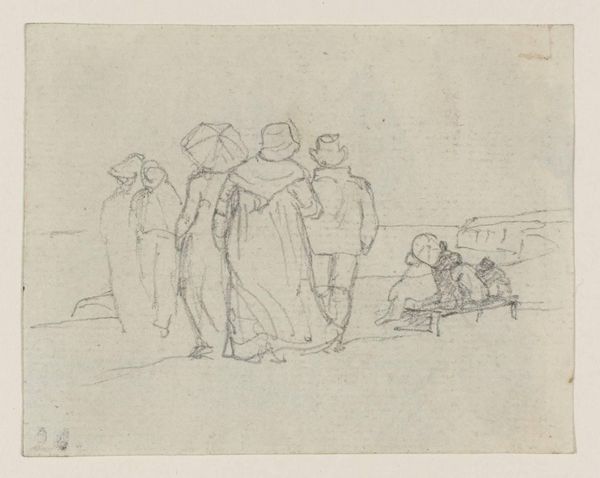
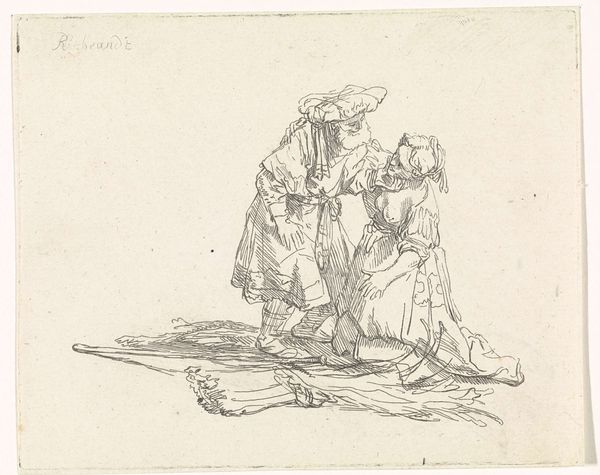
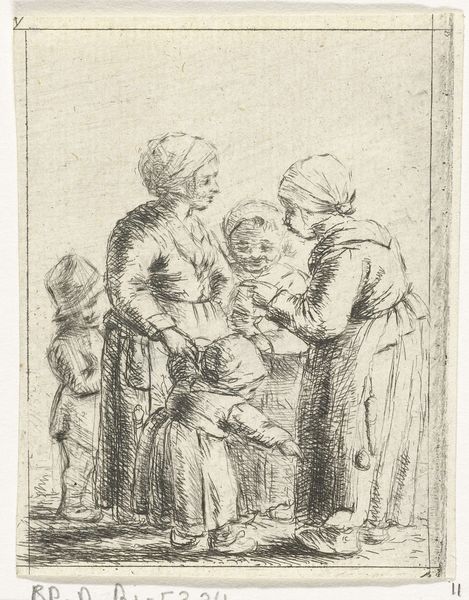
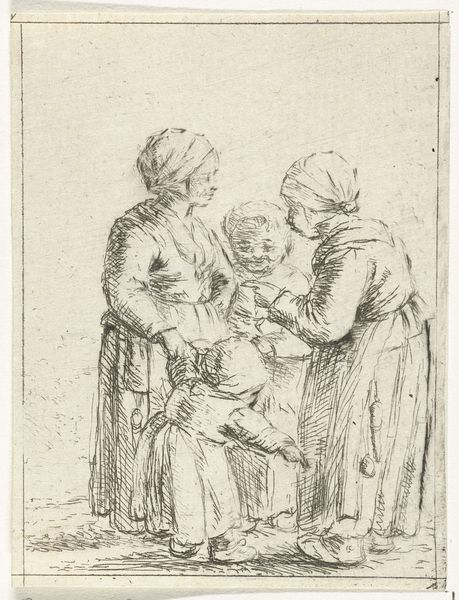
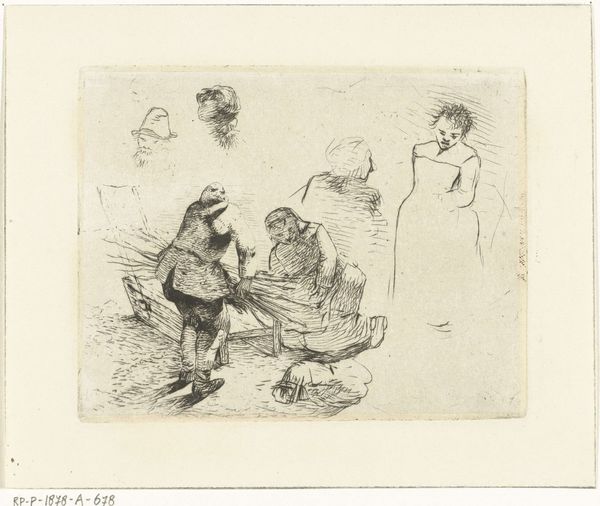
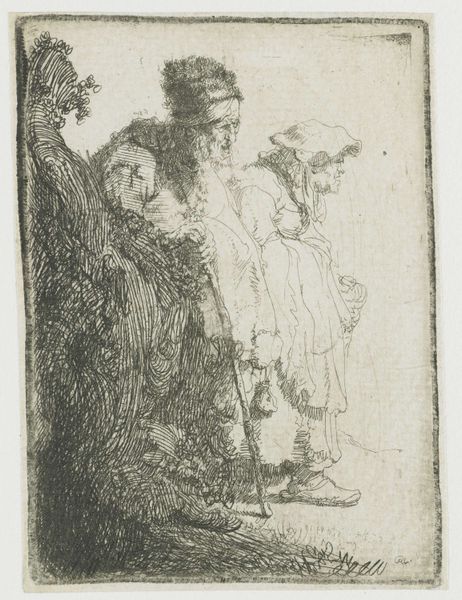
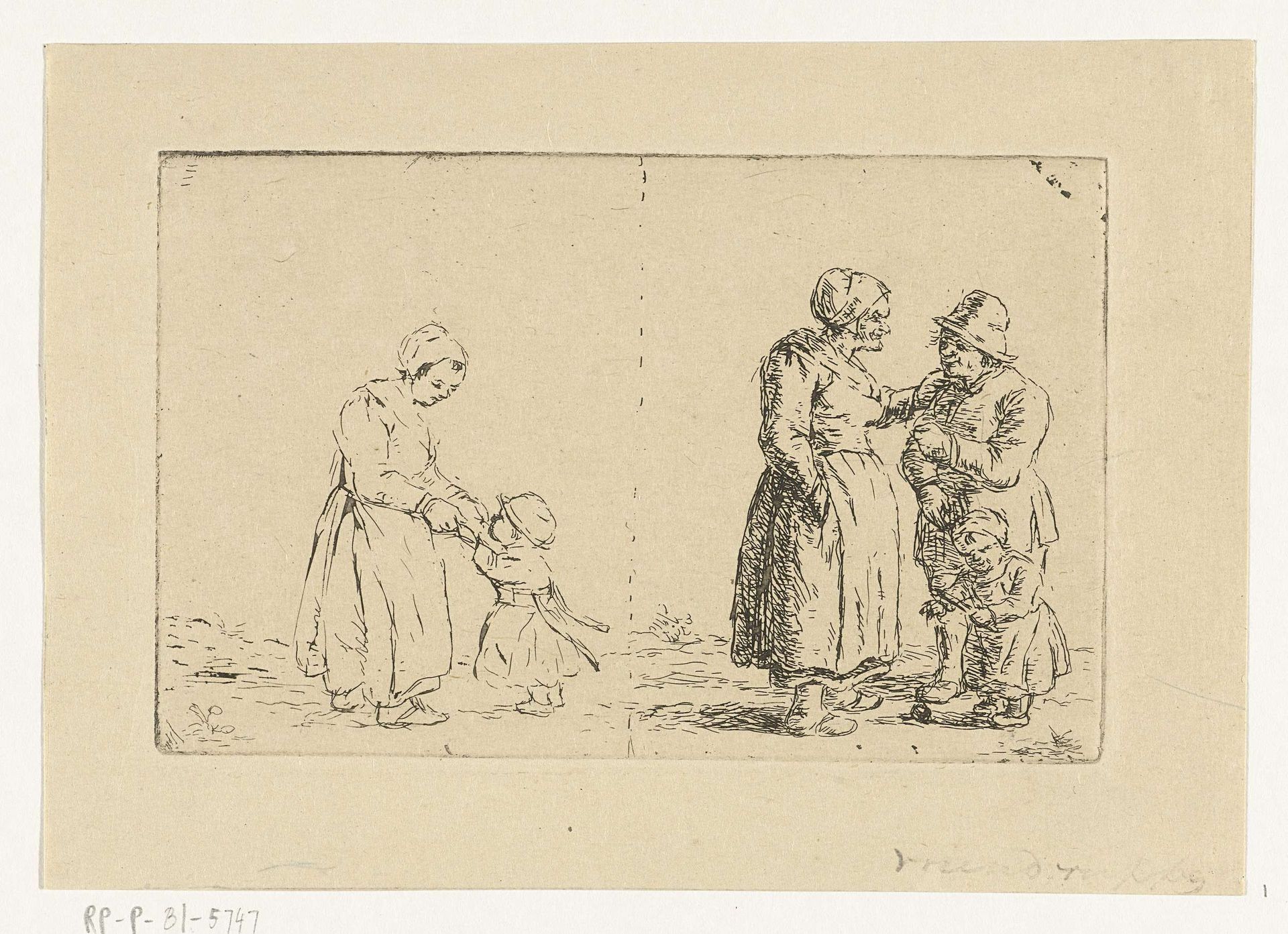
Christina Chalon created this artwork, ‘Two Depictions of Family Life,’ using etching techniques. The composition, divided into two distinct scenes, invites us to compare different facets of domesticity. On the left, a mother gently guides her child, their interaction framed by soft, curving lines that suggest tenderness and support. The right side presents a contrasting scene of a family cluster, where the figures are rendered with more angular, almost caricatured lines. This contrast isn't just stylistic; it subtly challenges idealized notions of family life. Chalon's etching technique, with its stark blacks and whites, emphasizes the structural aspects of each scene. The semiotic play here is fascinating—how do these visual choices reflect broader cultural values and perhaps critique societal expectations of women and family during the 18th century? Consider how the division of the print itself functions as a commentary, prompting us to question fixed meanings and appreciate the complexity of representation.
Twee voorstellingen van het gezinsleven
1758 - 1808

Christina Chalon
1748 - 1808Location
RijksmuseumArtwork details
- Dimensions
- height 92 mm, width 145 mm
- Location
- Rijksmuseum
- Copyright
- Rijks Museum: Open Domain
Comments
Share your thoughts
About this artwork
Christina Chalon created this artwork, ‘Two Depictions of Family Life,’ using etching techniques. The composition, divided into two distinct scenes, invites us to compare different facets of domesticity. On the left, a mother gently guides her child, their interaction framed by soft, curving lines that suggest tenderness and support. The right side presents a contrasting scene of a family cluster, where the figures are rendered with more angular, almost caricatured lines. This contrast isn't just stylistic; it subtly challenges idealized notions of family life. Chalon's etching technique, with its stark blacks and whites, emphasizes the structural aspects of each scene. The semiotic play here is fascinating—how do these visual choices reflect broader cultural values and perhaps critique societal expectations of women and family during the 18th century? Consider how the division of the print itself functions as a commentary, prompting us to question fixed meanings and appreciate the complexity of representation.
Comments
Share your thoughts