print, paper, typography, engraving
#
neoclacissism
# print
#
old engraving style
#
paper
#
text
#
typography
#
history-painting
#
engraving
Dimensions: height 317 mm, width 425 mm
Copyright: Rijks Museum: Open Domain
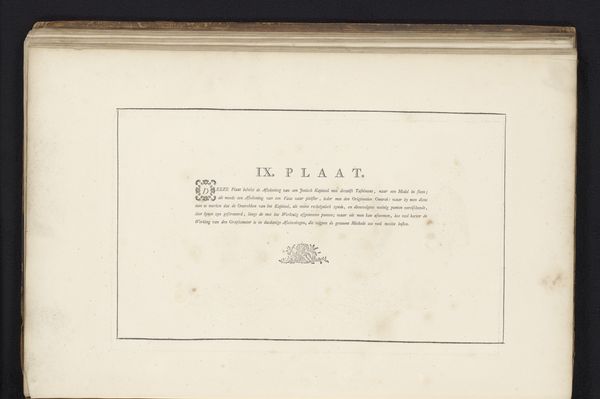
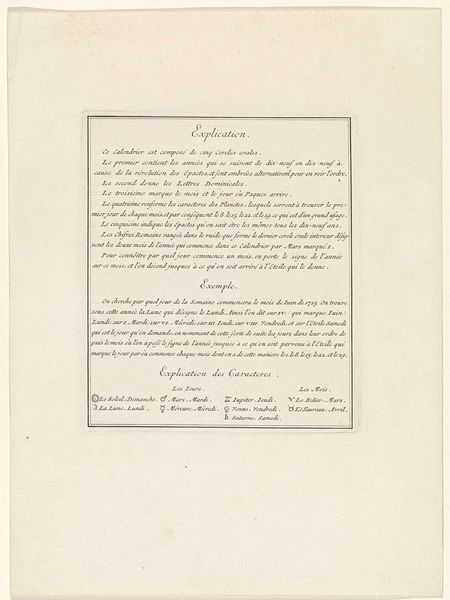
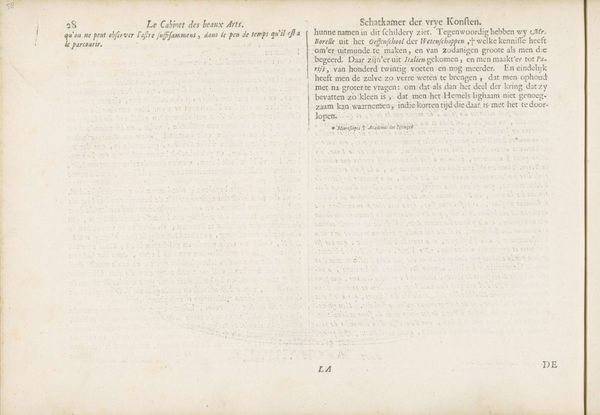
Antoine George Eckhardt made this print, ‘Toelichting bij een achtkantige doos,’ which translates to ‘Explanation of an octagonal box,’ probably sometime in the late 18th century. The image presents a set of instructions, likely for constructing a particular type of box. It's worth considering the social context in which such a print would have been produced and consumed. Manuals and instructional guides became increasingly common during this time, reflecting a growing interest in practical knowledge and self-improvement among certain segments of society. This was the era of the Enlightenment, after all. We might also consider the role of institutions such as craft guilds or academies in shaping the production and dissemination of this type of knowledge. Was Eckhardt affiliated with any such organization, and how might that have influenced his work? To fully understand the meaning and significance of this print, one could delve into archival sources such as trade directories, guild records, or publications related to artisanal crafts. By examining the social and institutional context, we can gain a deeper appreciation for the historical significance of seemingly mundane objects like this instructional print.
Comments
No comments
Be the first to comment and join the conversation on the ultimate creative platform.
 Collect
 React
React Comment
More like this