#
aged paper
#
muted colour palette
#
photo restoration
#
light coloured
#
white palette
#
retro 'vintage design
#
archive photography
#
personal sketchbook
#
old-timey
#
soft colour palette
Dimensions: height 238 mm, width 159 mm
Copyright: Rijks Museum: Open Domain
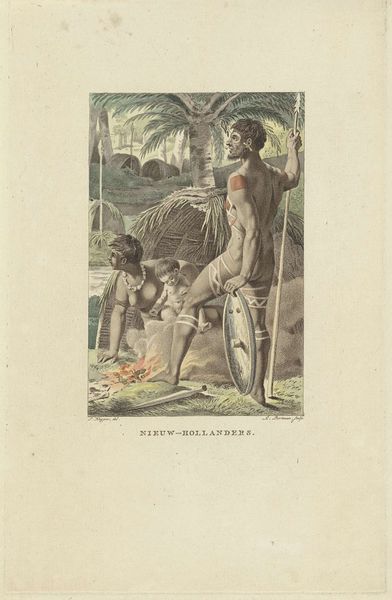
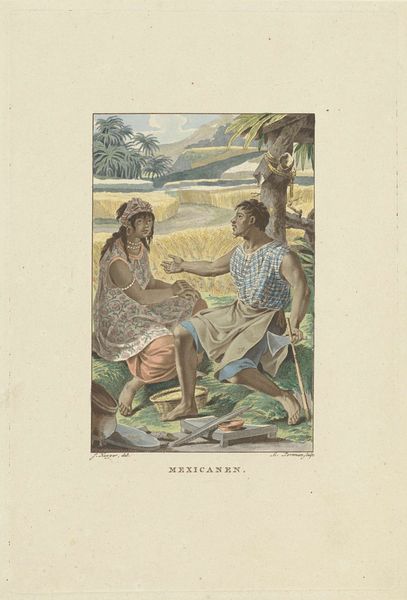
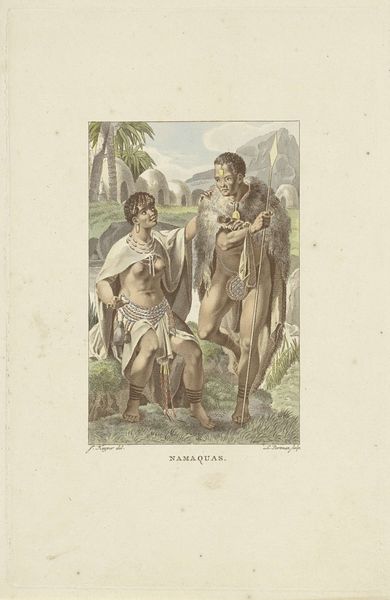
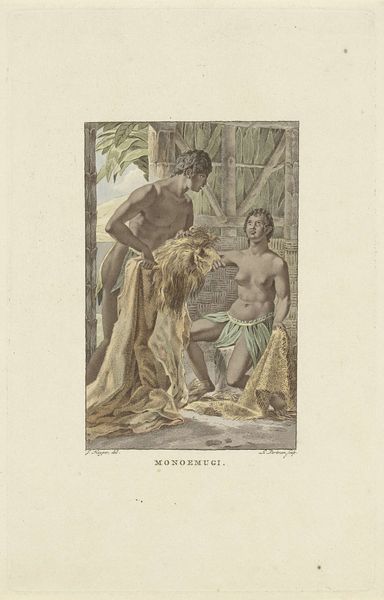
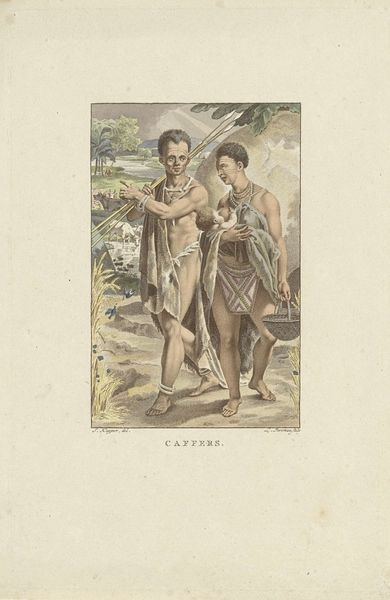
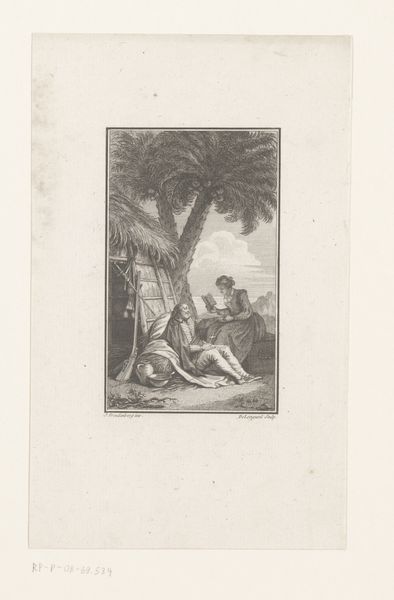
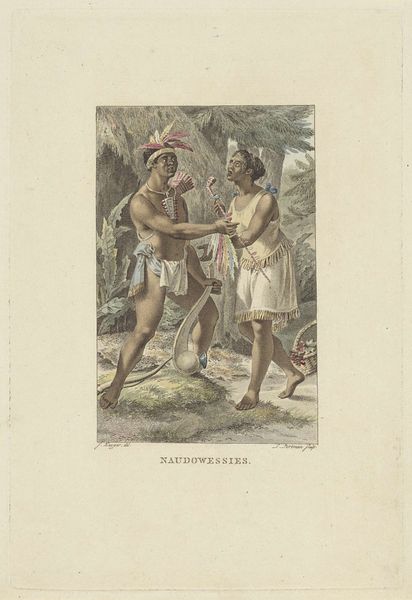
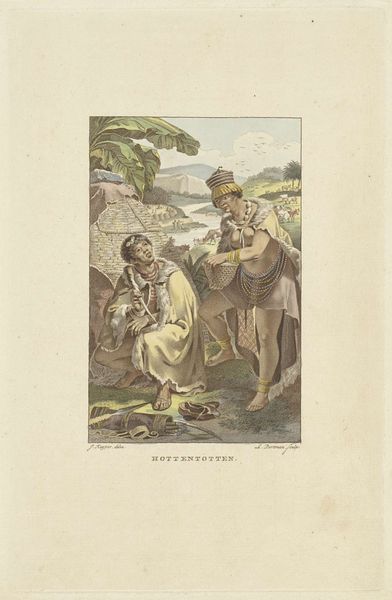
Editor: This is "Echtpaar bij hun hut in het veld," made in 1805 by Ludwig Gottlieb Portman, currently held at the Rijksmuseum. There's a palpable tension; the man is on alert, rifle raised, while the woman calmly weaves. How does this image speak to the societal context of the time? Curator: This image is more than just a domestic scene; it's a carefully constructed representation intended for a European audience. The 'noble savage' trope is strongly at play here. Note the man’s posture – vigilant, armed – versus the woman engaged in domestic craft. Consider who commissioned this image and what narrative they were trying to promote about indigenous populations and their relationship to colonial power. Editor: So it’s less a depiction of reality and more of a…performance? Curator: Precisely. Think about the artist's choices: the exoticized clothing, the juxtaposition of labor and protection. How might the placement of this image in a museum setting contribute to its meaning today? How might a contemporary indigenous artist respond to this depiction of their ancestors? Editor: It’s unsettling to think of this image being used to justify colonial narratives, yet it lives on in the museum, perpetuating those views. Curator: Indeed. Museums play a vital role in critically examining their collections. How can we recontextualize this work to acknowledge its historical baggage and empower a more accurate, respectful dialogue about the depicted cultures? Editor: I never would have considered this beyond just an historical scene. The museum’s responsibility to the communities depicted really shifts my perspective. Curator: That critical lens, recognizing the power dynamics embedded within artistic representations, is key to understanding art history.
Comments
No comments
Be the first to comment and join the conversation on the ultimate creative platform.
 Collect
 React
React Comment
More like this