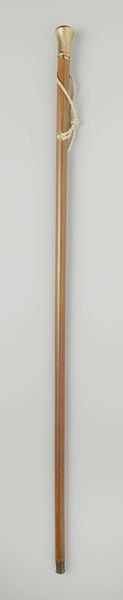
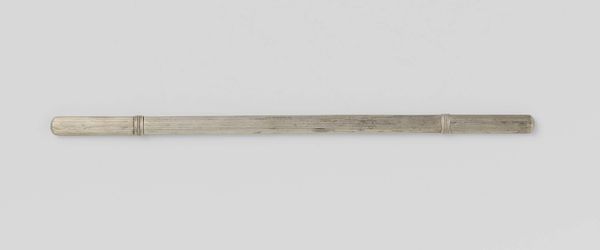
Zweep waarvan rieten geraamte omwonden met groenzijden lint, telkens onderbroken door een zilveren nodus en onderaan een ring, bovenop een konische knop met gegraveerde kroonrand 1779
0:00
0:00

metal, textile, sculpture, wood
#
metal
#
jewelry design
#
textile
#
geometric
#
sculpture
#
wood
#
decorative-art
Copyright: Rijks Museum: Open Domain
Curator: This is an intriguing piece. It's identified as a whip from 1779, made with a reed frame wrapped in green silk ribbon and punctuated with silver nodes. At the top is a conical knob decorated with an engraved crown border. Editor: A whip? It appears so refined, almost delicate. The pale green and silver give it a muted, elegant aesthetic, a far cry from the violent connotations typically associated with a whip. Curator: Exactly! Its delicacy and ornamental details blur the boundaries between a functional tool and an object of display. The materials, specifically the combination of the reed structure and the expensive silk and silver, point to the complexities of the Dutch Republic's colonial power and consumption at that time. Think of the labour required to harvest the materials and the skill of the artisans to execute. Editor: Indeed. But even the colors tell a story. Green, especially, carried strong symbolic weight during this period. What shades are there? Is this particular tone connected to notions of privilege, power, or something else entirely? The engraved crown on the silver knob also speaks to a deliberate effort to incorporate visual signs of authority. Curator: Good point. Considering the time period, one can examine its usage context in relation to trade. Was it used as a form of dominance in marketplaces, on farms, or even by a wealthy individual as a display of status? The craftsmanship clearly suggests a higher social stratum than agricultural workers. The quality of materials and expertise in textile arts indicate a culture where detailed manual work was valued, not just for functional things. Editor: And how intriguing it must have been at that time for the artisan to subtly embed symbols, perhaps understood differently by varied social ranks and positions. What hidden, or maybe less hidden, codes related to control are being coded into such objects of apparent finesse and display? What visual clues about ownership might have been designed in for anyone who used it? Curator: Examining it from a purely material standpoint shows how the very construction—the tension between the reed's structural properties and the silk's tactile luxuriousness and its social meaning when produced through craft—create these levels of interpretations of this item as something functional or art. Editor: Fascinating. This single item opens to such wide stories of power, position, craft and skill. Curator: Precisely. What started as a look at a seemingly decorative piece now opens to social structures that we must appreciate.
Comments
No comments
Be the first to comment and join the conversation on the ultimate creative platform.
 Collect
 React
React Comment
More like this