weaving, textile
#
decorative element
#
pattern
#
weaving
#
textile
#
hand-embroidered
#
geometric
#
regular pattern
#
round circular shape
#
decorative-art
Dimensions: 42 1/2 × 2 1/2 × 1 1/4 in. (107.95 × 6.35 × 3.18 cm) (without ties)
Copyright: No Known Copyright
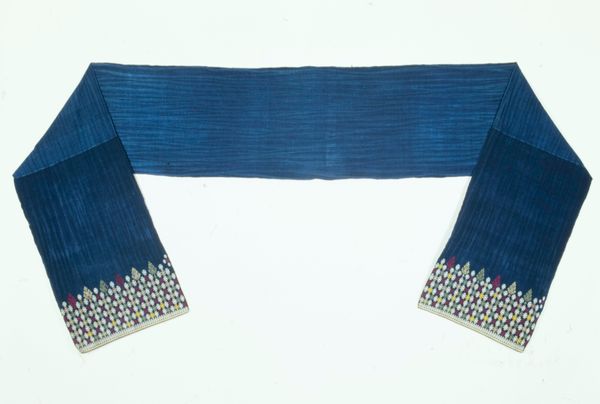
This belt was created with raffia, beads, and thread by a Kuba artist. Its function as clothing immediately situates it in a social context. In the Kuba Kingdom, dress codes indicated social status, gender, and age. The image creates meaning through its colors, materials, and patterns. The geometric patterns and knotwork are typical of Kuba design. This aesthetic was prominent in the central African region, and often appeared in textiles, sculpture, and decorative arts. We know that Kuba society was highly stratified, with a complex political system, so further research might reveal whether this belt belonged to someone of high rank. When we look at an object like this, its value is dependent on its cultural and historical context. We are responsible for researching the conditions of its production, not only to appreciate its beauty but also to understand its place in the world.
Comments

minneapolisinstituteofart over 2 years ago
⋮
Belts are critical in traditional Kuba clothing because they denote status, rank, and royal title (or lack thereof). And for that reason, Kuba people distinguish among at least a dozen different kinds of belts. This narrow belt, called nkody mu-ikup lakiing, belonged to an aristocratic woman. The name refers to the hoop that palm wine collectors use to climb trees—the shape of which can be recognized in the central knot made of blue and white beads. The use of beads and cowrie shells, which were a form of currency throughout Africa at least until around 1900, underscores the belt’s monetary value—and its owner’s prestige.


Join the conversation
Join millions of artists and users on Artera today and experience the ultimate creative platform.
 Collect
More like this