1838 - 1841
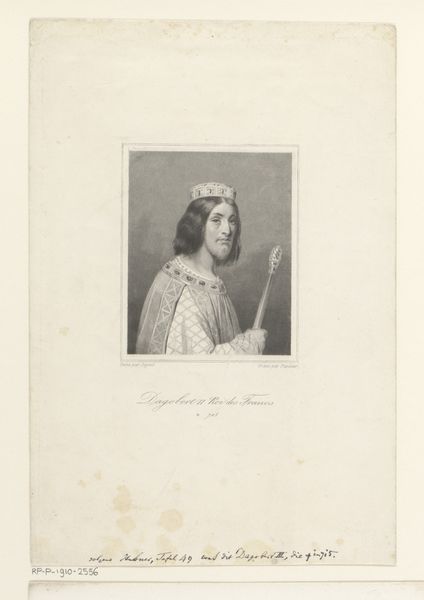
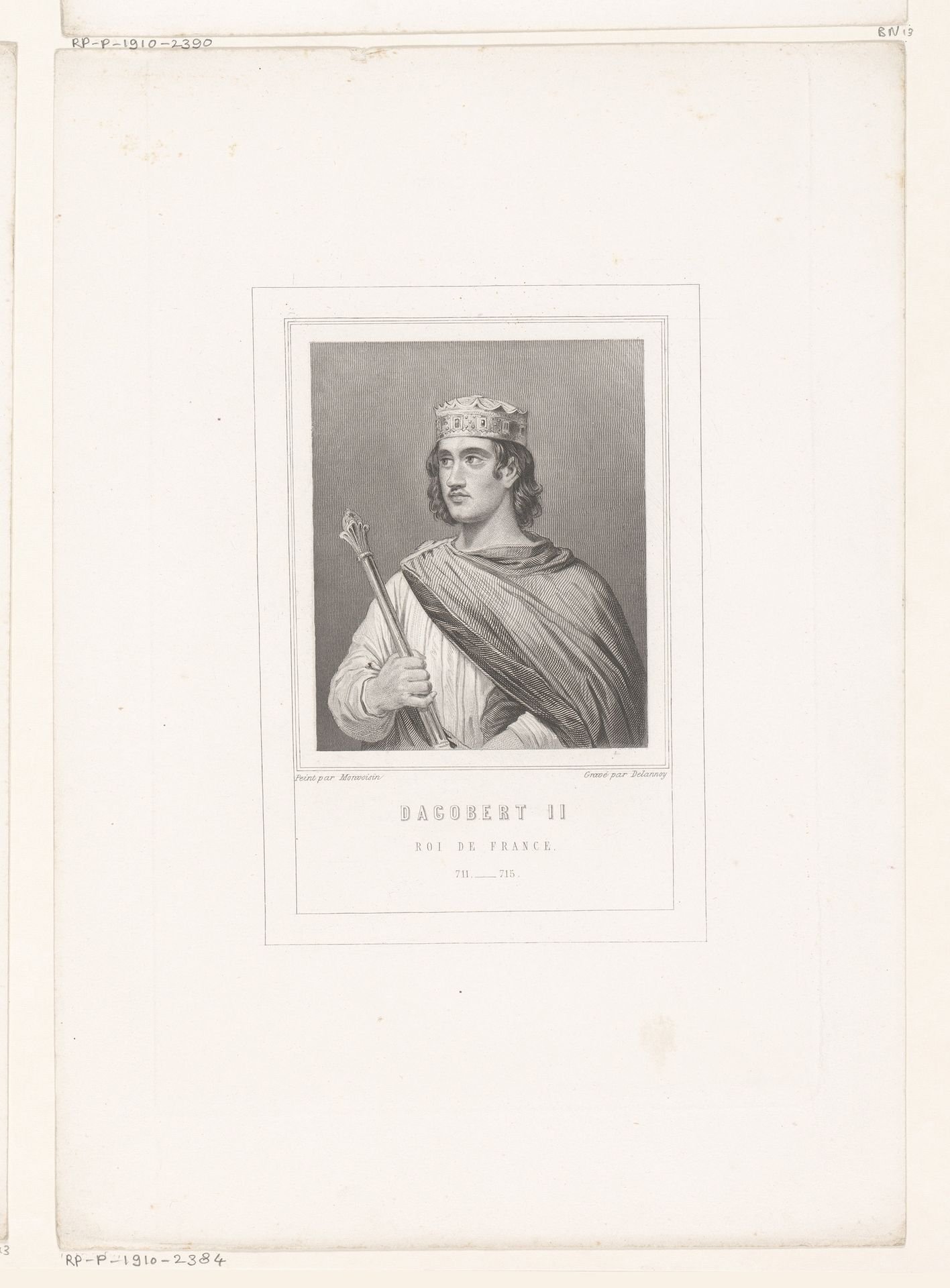
Portret van Dagobert III, koning der Franken

Listen to curator's interpretation
Curatorial notes
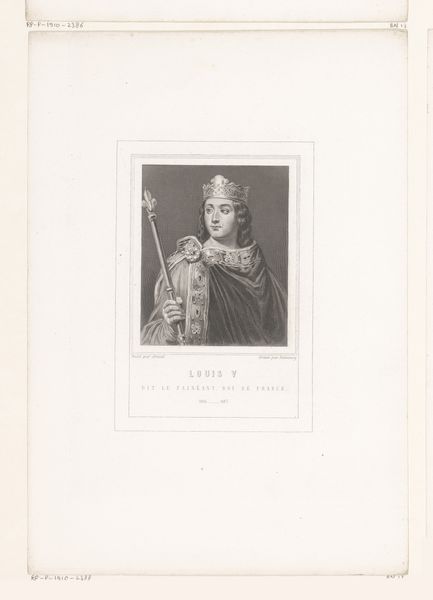
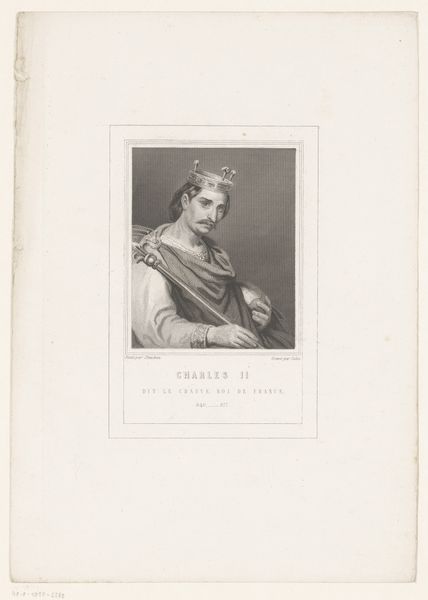
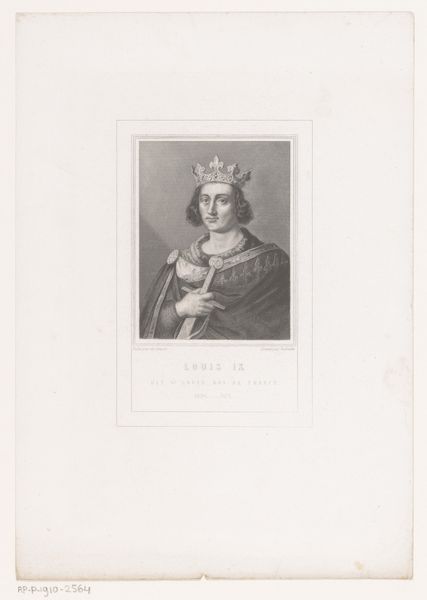
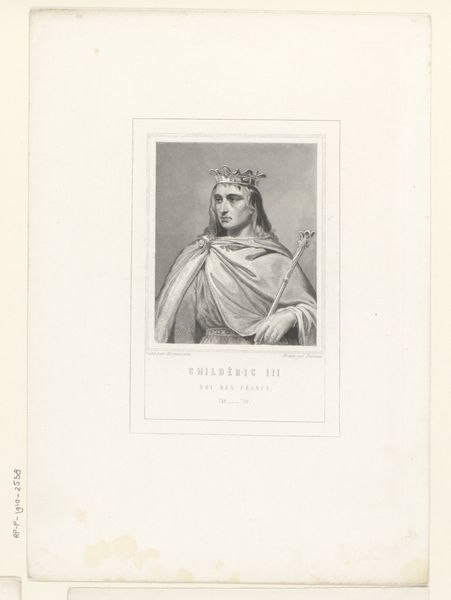
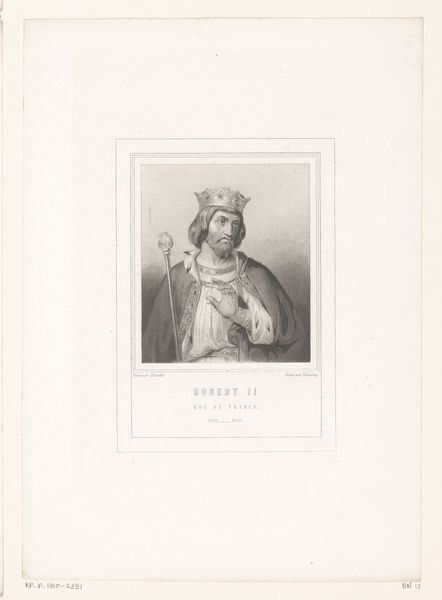
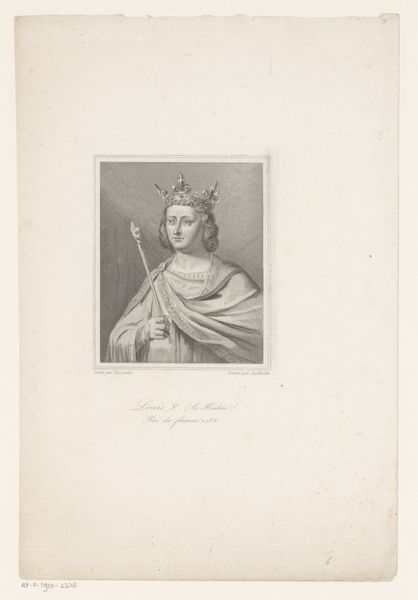
Editor: We’re looking at a portrait of Dagobert III, King of the Franks, by Ferdinand Delannoy, created sometime between 1838 and 1841. It’s interesting how the print medium gives this royal portrait a certain accessibility, almost like a widely distributed image. What kind of social impact do you think a piece like this might have had? Curator: That's a crucial observation. Consider the socio-political climate of the 19th century. The proliferation of printed portraits served a distinct purpose: constructing and disseminating specific images of power. While seemingly 'accessible,' who really had access, and what message was being sent about kingship in a post-revolutionary world? Editor: So, it’s not just about accessibility, but also about control of the narrative? Were these prints aimed at legitimizing or perhaps even modernizing the idea of monarchy? Curator: Exactly. It's less about democratizing access to art, and more about reinforcing power structures in a changing social order. Notice the details: the crown, the scepter. How do these symbols, when reproduced and circulated, impact the public's perception of royal authority? Were they effective? Editor: That’s a perspective I hadn’t considered before. I guess I saw a printed portrait and immediately thought of wider reach. I didn't really think about the specific goals behind its distribution, and what values it would reinforce, especially thinking about this portrait as propaganda of sorts! Curator: It's a subtle but important distinction. These images functioned as a form of public address, negotiating the shifting relationship between ruler and ruled in a world increasingly aware of its own agency. Think about the political messaging, especially with royalty struggling to find new meaning in the nineteenth century. What I find exciting is the realization that at the heart of an image of power, you might be seeing fragility. Editor: That adds so much complexity! Thanks, this makes me think very differently about how images of authority are presented, and consumed.