drawing, ink, pen
#
drawing
#
landscape
#
ink
#
pen
#
history-painting
Dimensions: height 241 mm, width 220 mm
Copyright: Rijks Museum: Open Domain
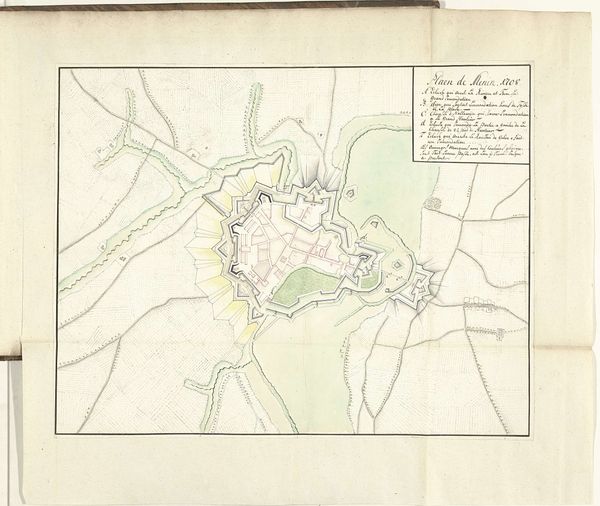
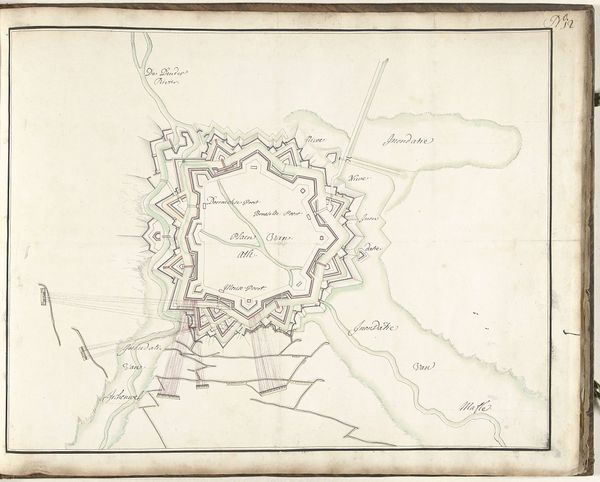
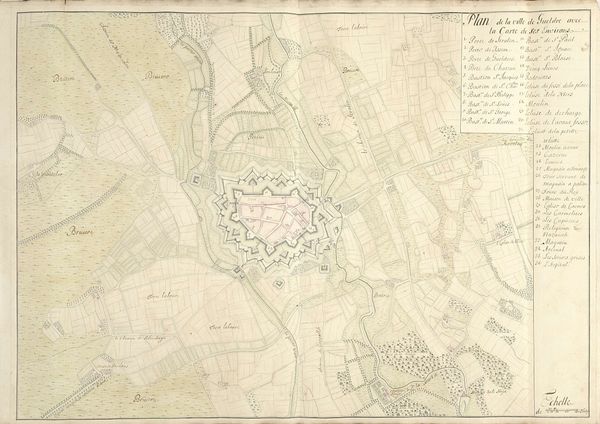
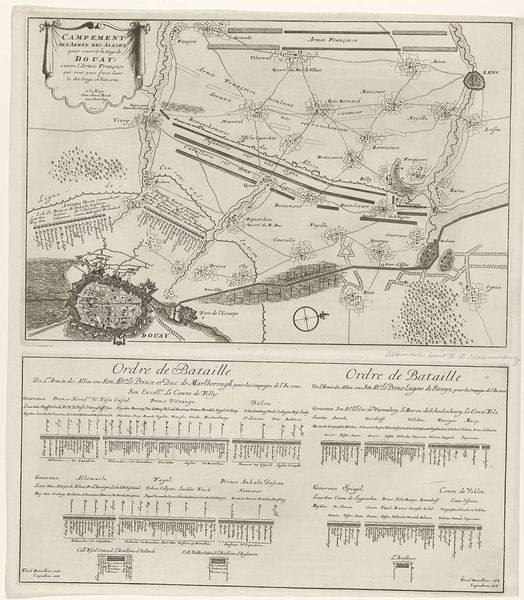
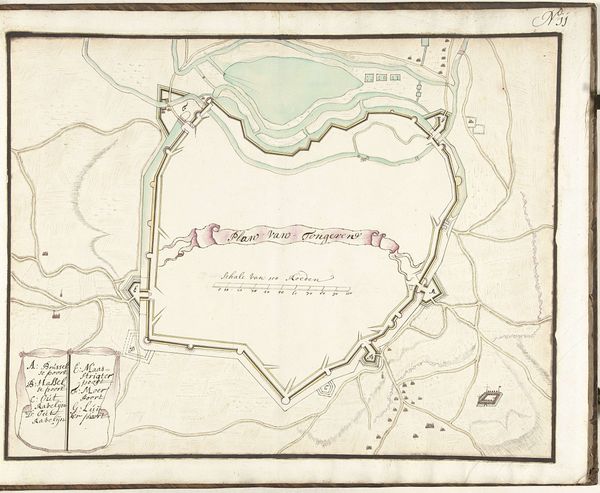
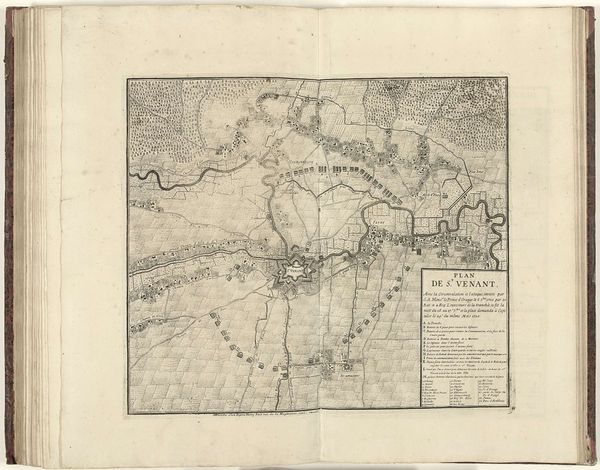
This is Samuel Du Ry de Champdoré's depiction of the Battle of Ramillies, created in 1706. The composition is dominated by geometric arrangements representing troop formations against a backdrop of delicately rendered terrain. Note the blocks of color – red, yellow, and green – symbolizing the opposing armies. This cartographic language, transforming human conflict into abstract symbols, echoes ancient traditions. Consider the 'vexillum', the Roman military standard; a flag bearing emblems of power and legionary identity. Like these ancient banners, the blocks serve not just as markers, but as embodiments of collective will and martial power. This reduction of complex human action to symbolic form offers insight into our psychological need to comprehend and control chaotic events. By rendering war as a plan, Champdoré imposes order on the unpredictable, tapping into a deep-seated human desire to master fate through symbolic representation. This symbolic battle plan, therefore, becomes a potent, if sterile, echo of the clash of wills and fates it represents.
Comments
No comments
Be the first to comment and join the conversation on the ultimate creative platform.
 Collect
 React
React Comment
More like this