About this artwork
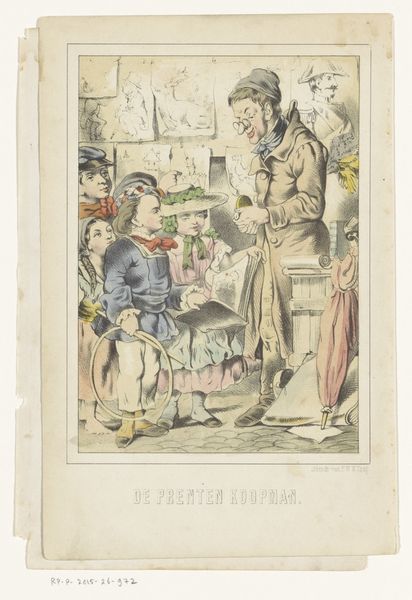
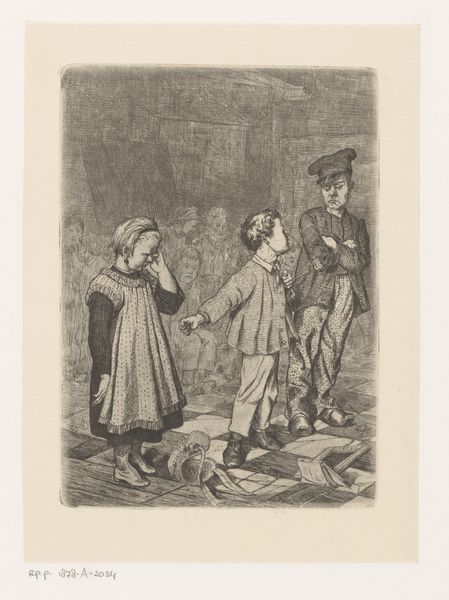
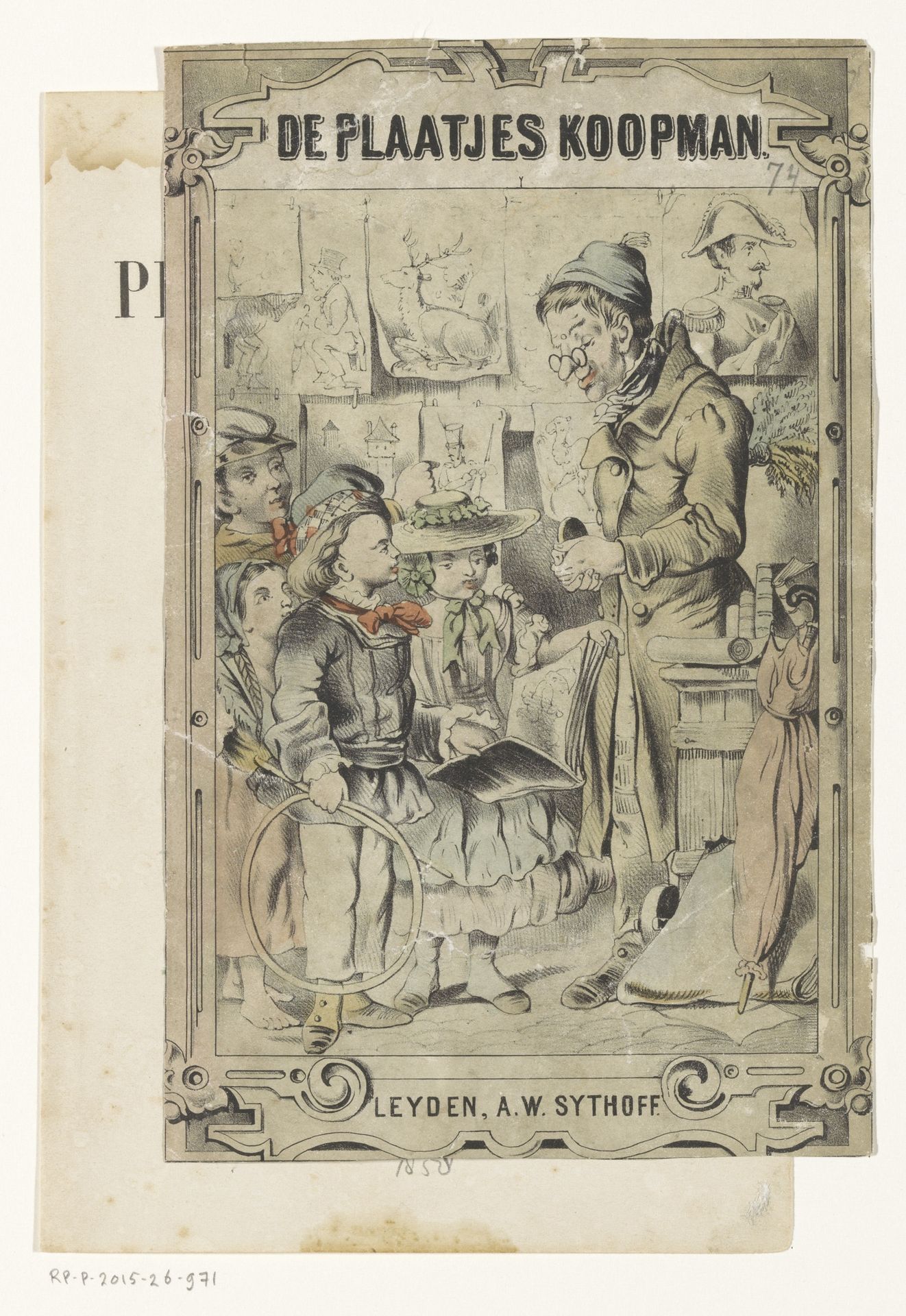
This print, titled 'Vier kinderen bij een prenthandelaar,' or 'Four children at a print dealer,' was made by an anonymous artist. The print presents a slice of everyday life, inviting us to consider the cultural values and social dynamics of its time. What strikes me is how the children are portrayed in relation to their class. Notice the clothing and demeanor; some appear more neatly dressed, possibly indicating a middle-class background, while others seem more modestly attired. This subtle distinction invites us to think about the experience of childhood, and how access to education and cultural goods would vary. The print dealer himself, peering through spectacles, represents another layer of social identity. As a purveyor of images, he occupies a space between art, commerce, and the public. In observing the children's interactions with the prints, and with the dealer, the artwork becomes a mirror reflecting our own engagement with images and narratives. It’s a reminder that what we choose to look at, and how we interpret it, is always shaped by our own unique perspectives.

Artwork details
- Medium
- drawing, lithograph, print, etching
- Dimensions
- height 213 mm, width 135 mm
- Location
- Rijksmuseum
- Copyright
- Rijks Museum: Open Domain
Tags
drawing
16_19th-century
lithograph
etching
genre-painting
academic-art
Comments
No comments
About this artwork
This print, titled 'Vier kinderen bij een prenthandelaar,' or 'Four children at a print dealer,' was made by an anonymous artist. The print presents a slice of everyday life, inviting us to consider the cultural values and social dynamics of its time. What strikes me is how the children are portrayed in relation to their class. Notice the clothing and demeanor; some appear more neatly dressed, possibly indicating a middle-class background, while others seem more modestly attired. This subtle distinction invites us to think about the experience of childhood, and how access to education and cultural goods would vary. The print dealer himself, peering through spectacles, represents another layer of social identity. As a purveyor of images, he occupies a space between art, commerce, and the public. In observing the children's interactions with the prints, and with the dealer, the artwork becomes a mirror reflecting our own engagement with images and narratives. It’s a reminder that what we choose to look at, and how we interpret it, is always shaped by our own unique perspectives.
Comments
No comments