1880s
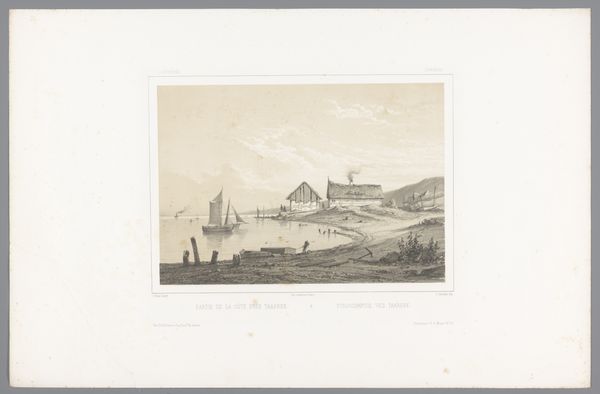
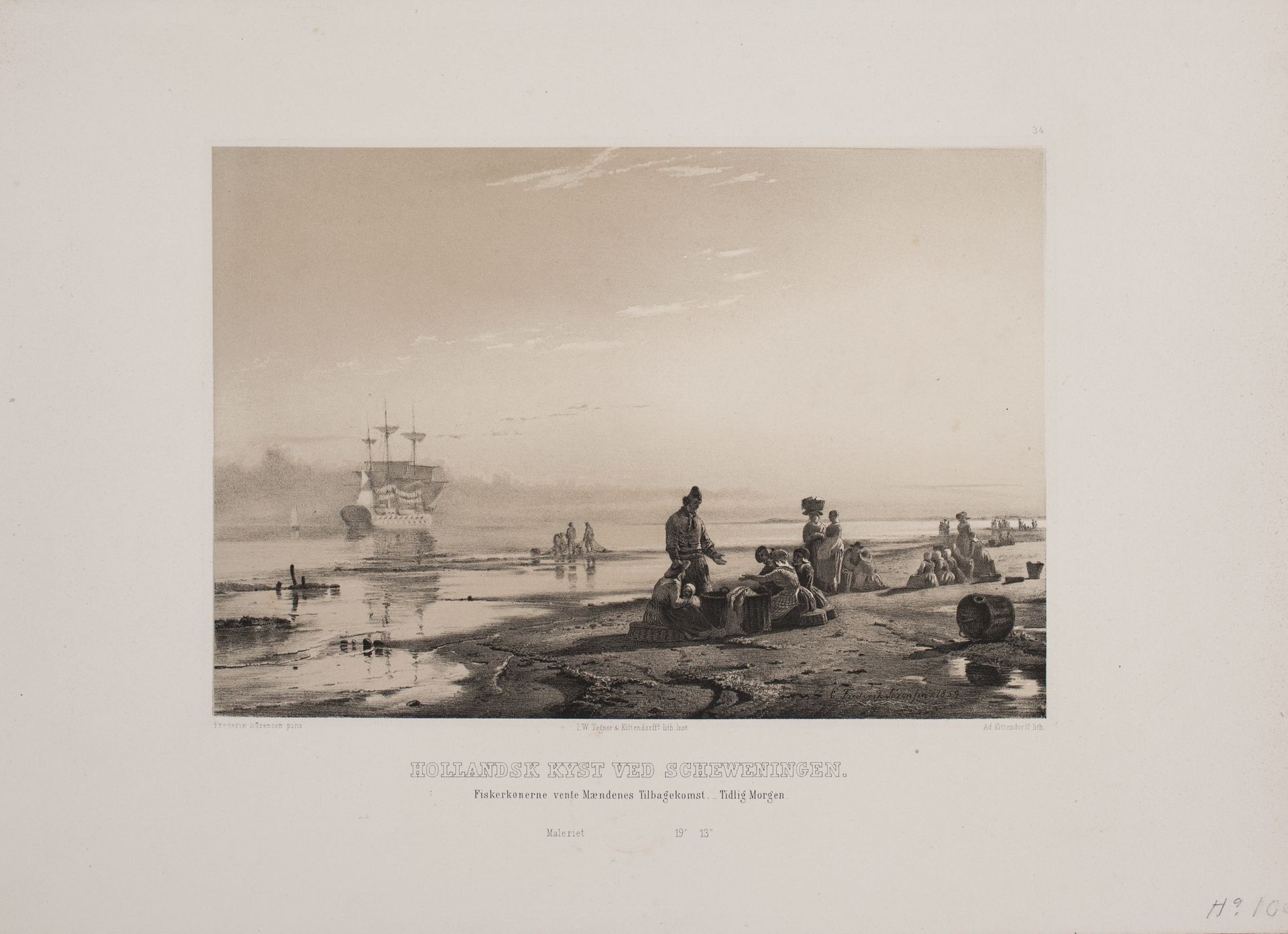
Hollandsk kyst ved Scheweningen


Listen to curator's interpretation
Curatorial notes
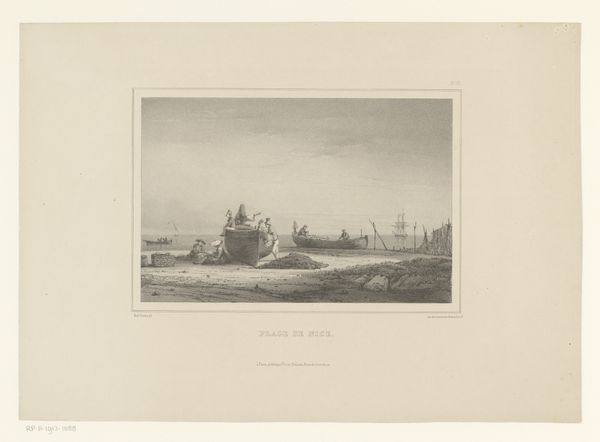
Editor: This is “Hollandsk kyst ved Scheweningen,” a lithograph from the 1880s by Adolph Kittendorff, here at the Statens Museum for Kunst. It has such a calm, quiet feel. All these figures gathered on the shore with a ship off in the distance... it makes me wonder about their lives. What do you see in this piece? Curator: I see a frozen moment ripe with implied narratives. The fishing boats aren't merely objects; they represent a culture's reliance on the sea, and perhaps, the hopes and fears tied to maritime voyages. Note how the figures on the beach, likely fisherfolk, are arranged – a study in social hierarchy and communal interdependence. How might their clothing reflect local traditions and social status? Editor: The details are amazing for a lithograph! And I see what you mean. The way they're placed seems almost symbolic, but I am not sure what that means here. Curator: Precisely. Consider, too, the almost ethereal quality of light. What emotional associations does the misty atmosphere evoke? Does it suggest a romanticized vision of coastal life, or a deeper commentary on the ephemeral nature of human existence against the backdrop of the vast ocean? It’s interesting how something real, becomes archetypal here. Editor: The light really does give it a dreamy quality, almost like a memory. Curator: Exactly. Think about how images can function like shared dreams or waking memories, preserving cultural values and historical experiences across generations. Perhaps that's why it evokes that feeling. Editor: That's a fascinating way to consider it – as a visual preservation of shared cultural experiences. Thanks! I learned a lot by considering those details. Curator: And I appreciate you seeing that. Images act as cultural touchstones, always worthy of our attentive looking and thought.