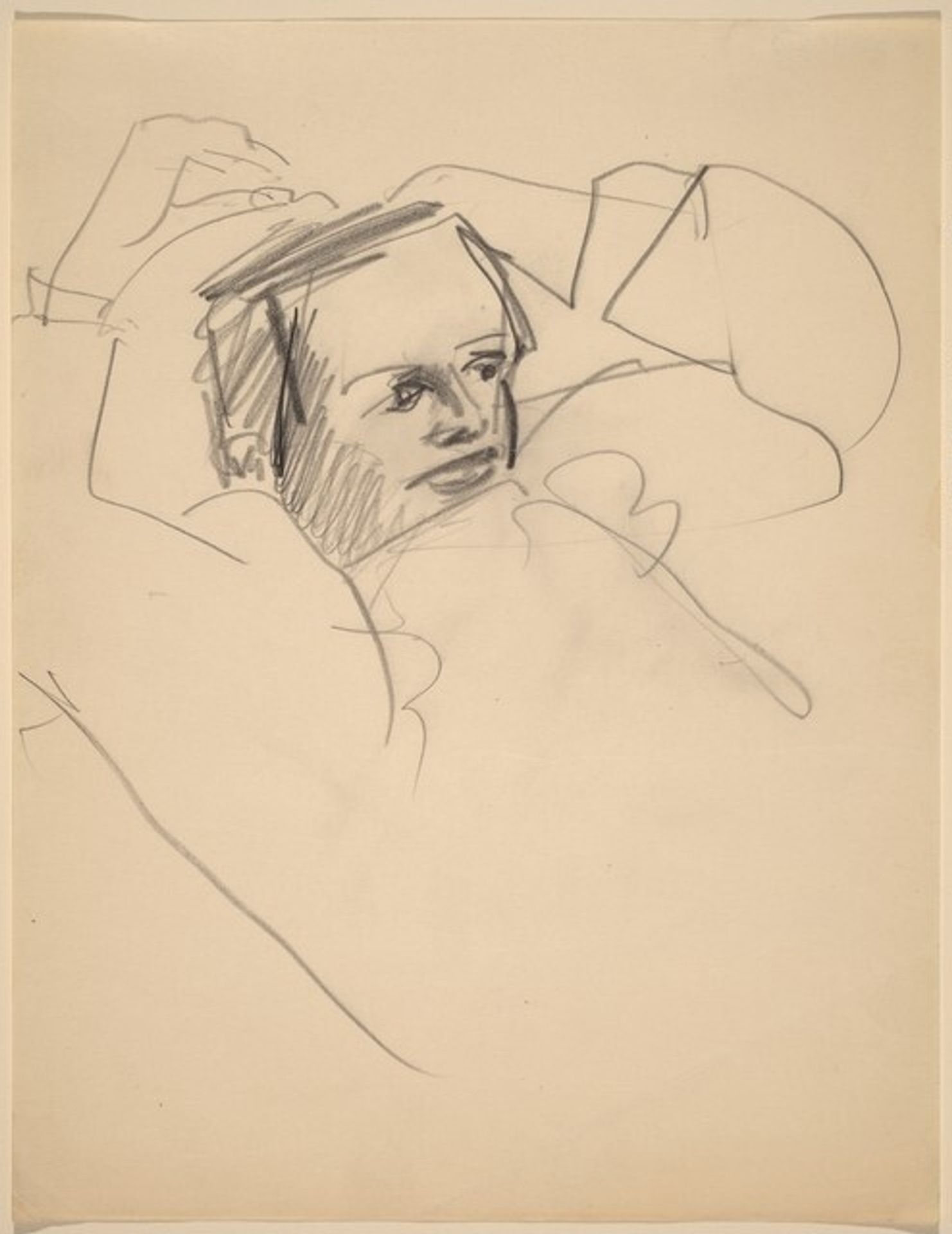
Half-Length Study of a Woman, Arms Raised to Head


Listen to curator's interpretation
Curatorial notes
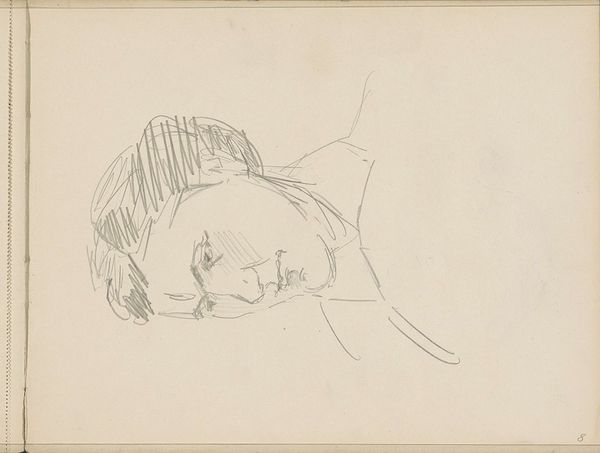
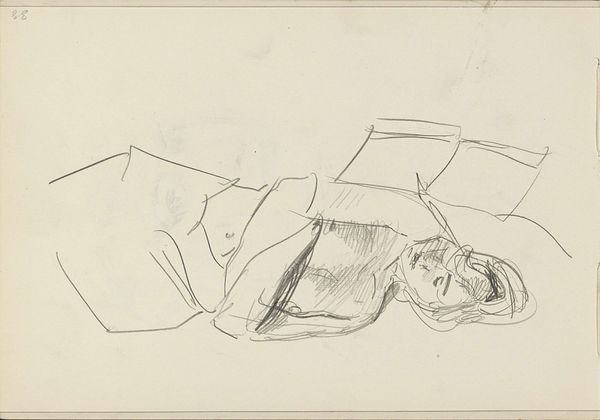
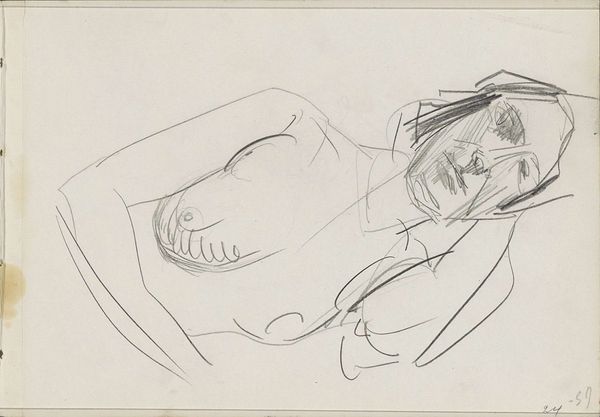
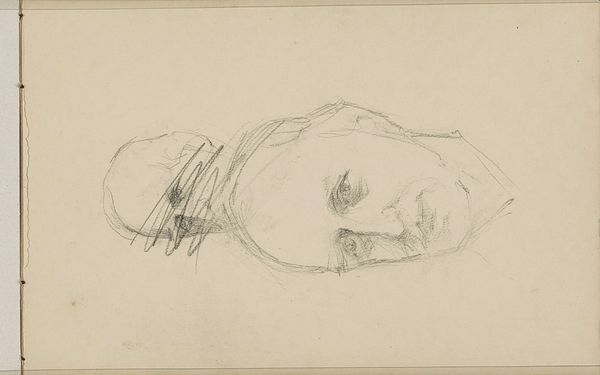
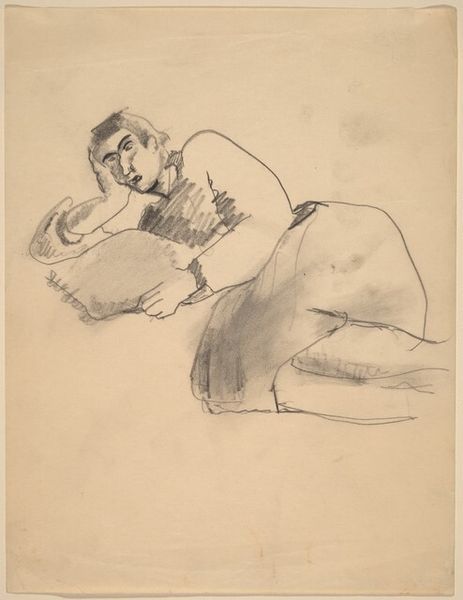
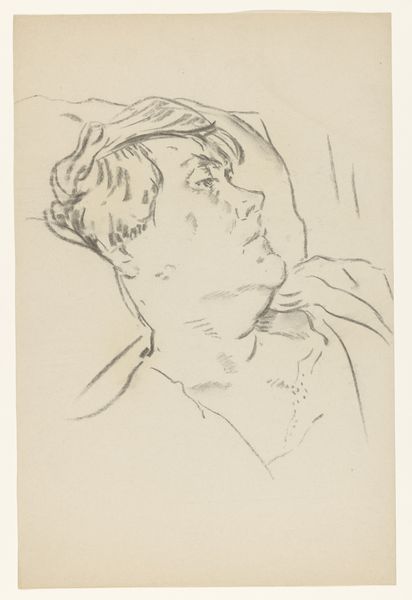
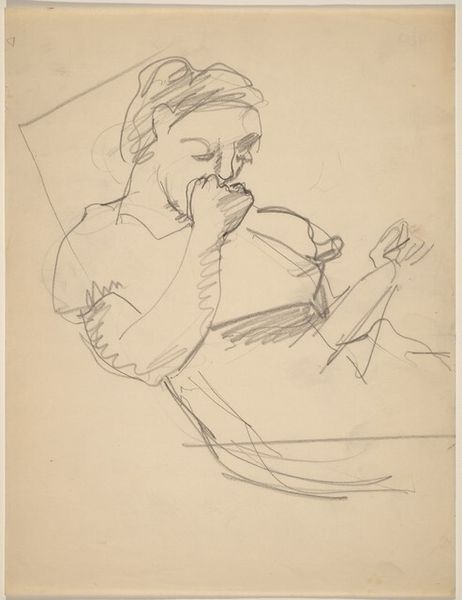
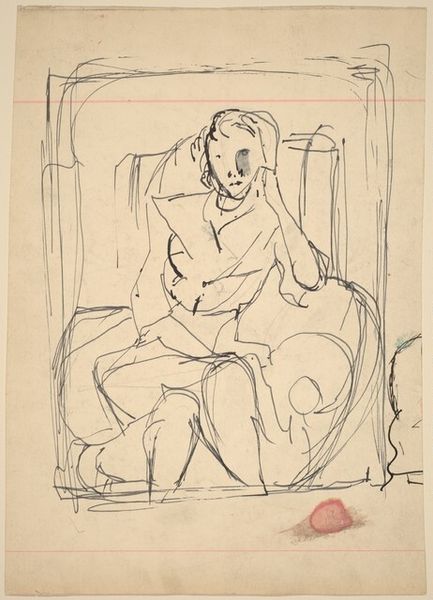
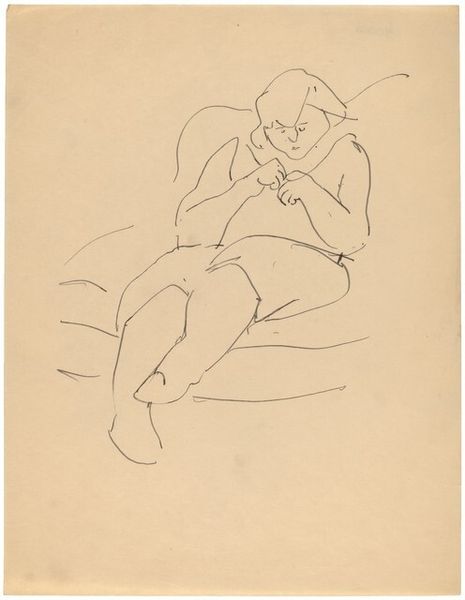
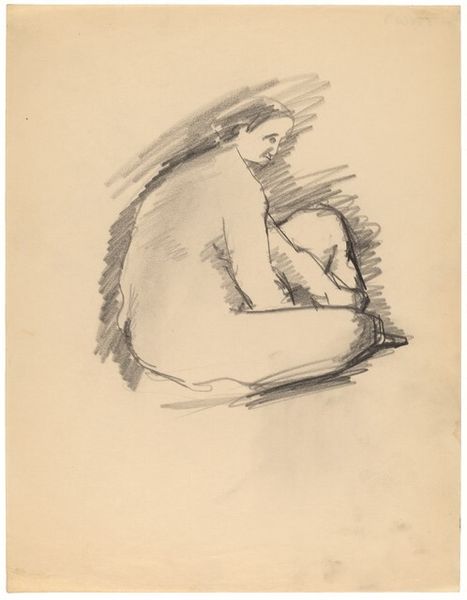
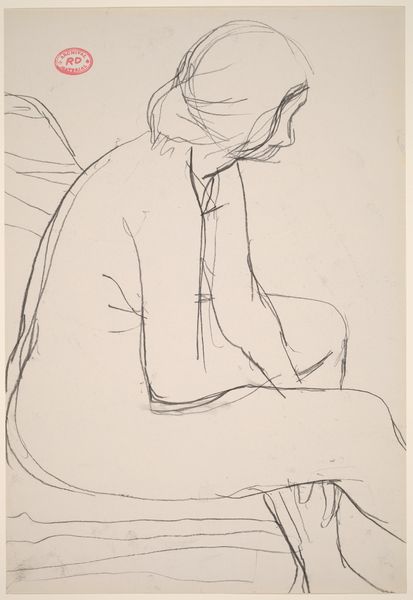
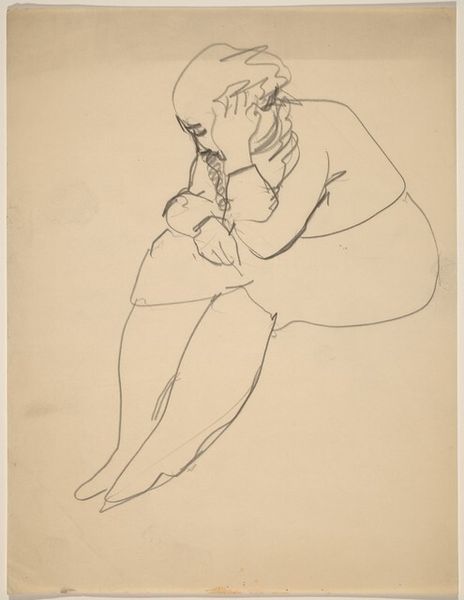
Editor: This drawing is called "Half-Length Study of a Woman, Arms Raised to Head" by Mark Rothko. It seems to be a pencil sketch, quite simple, and the figure's pose feels almost theatrical to me. What can you tell me about it? Curator: The pose is interesting, isn't it? The raised arms can be interpreted in various ways. We see it as a gesture of despair, of reaching, or even defiance in some art historical depictions. Think of classical tragedies or even religious iconography; hands raised to the heavens signify supplication, but can also represent anger. Editor: So the pose itself carries a symbolic weight? Curator: Precisely! Rothko, even in this seemingly simple sketch, taps into our cultural memory. Notice how the face, though lightly rendered, has a distinct expression. What do *you* see there? Editor: Hmm, maybe a sort of contemplative resignation? I suppose that could be either reaching *towards* or recoiling *from* something. It seems kind of ambiguous, right? Curator: The ambiguity is intentional, I believe. Rothko often used such evocative, yet open-ended imagery, drawing on archetypes to elicit deep emotional responses. It prompts a dialogue within us; a reflection of our own psychological landscape mirrored in the visual symbolism. This simple drawing then is not really so simple at all, it’s a conversation with centuries of established iconic forms. Editor: I see! So Rothko's work is often more about the universal symbols we all subconsciously recognize. Thanks, I'll look at his drawings differently now.