1736 - 1762
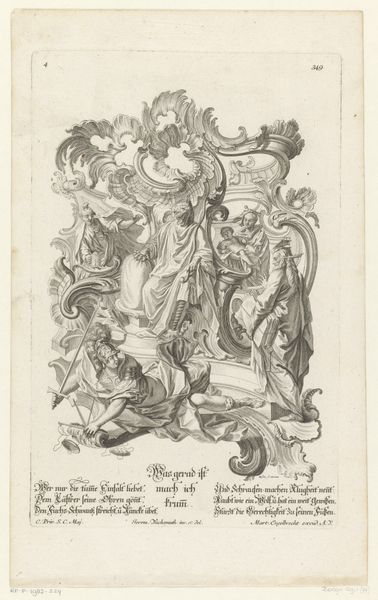
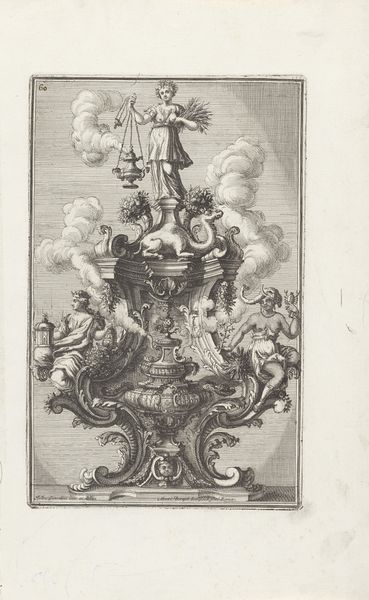
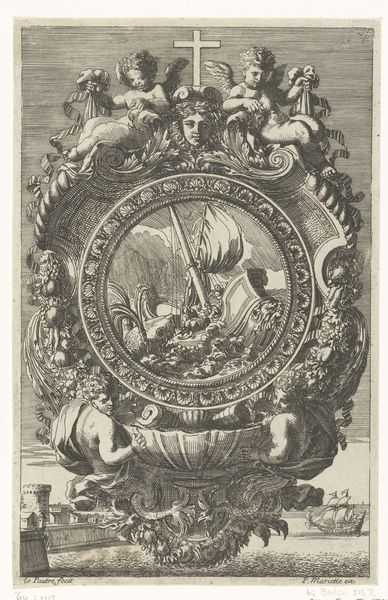
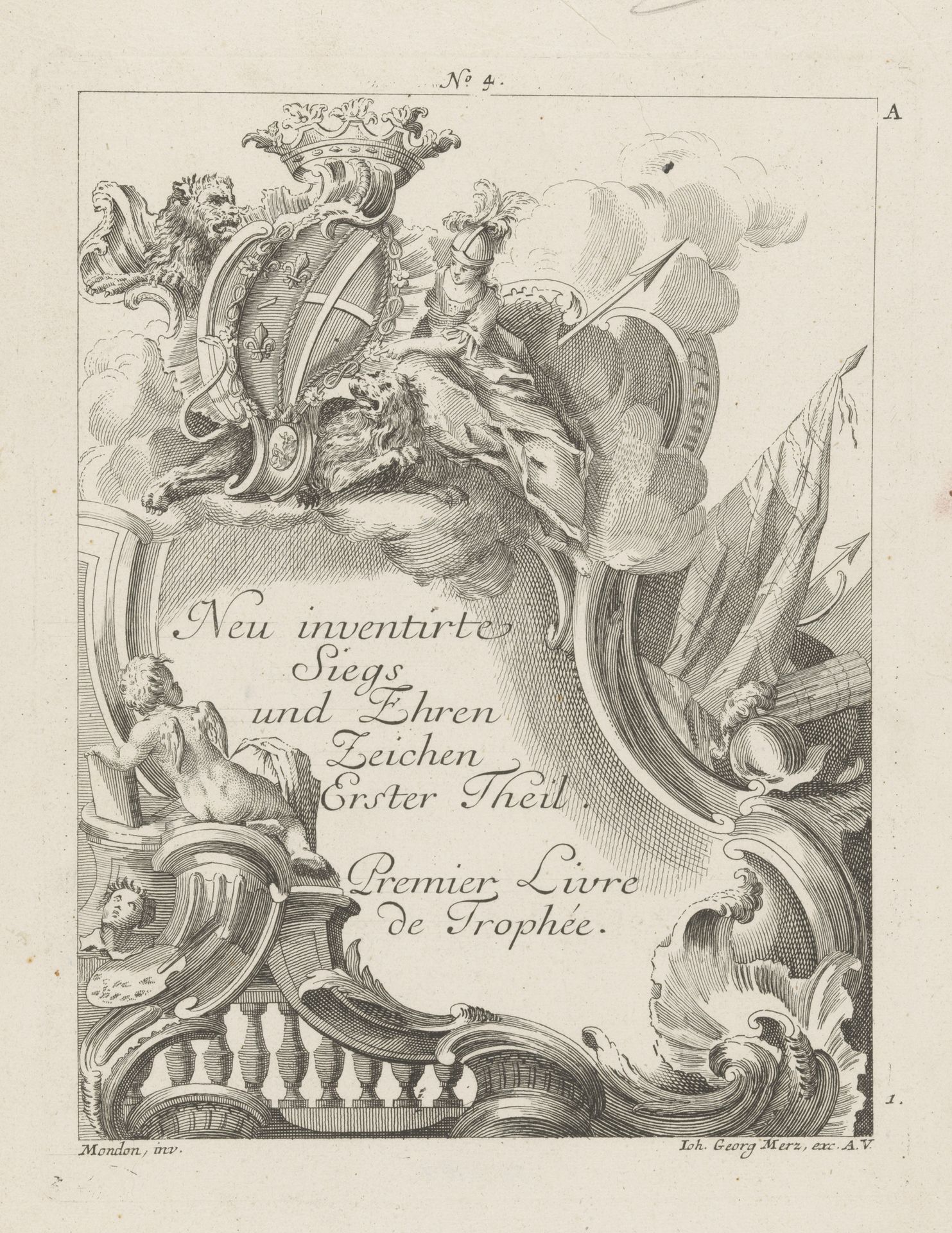
Cartouche met gekroond wapenschild

Anonymous
@anonymousLocation
RijksmuseumListen to curator's interpretation
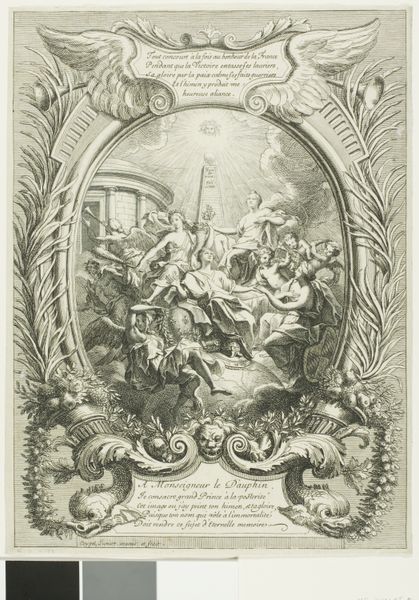
Curatorial notes
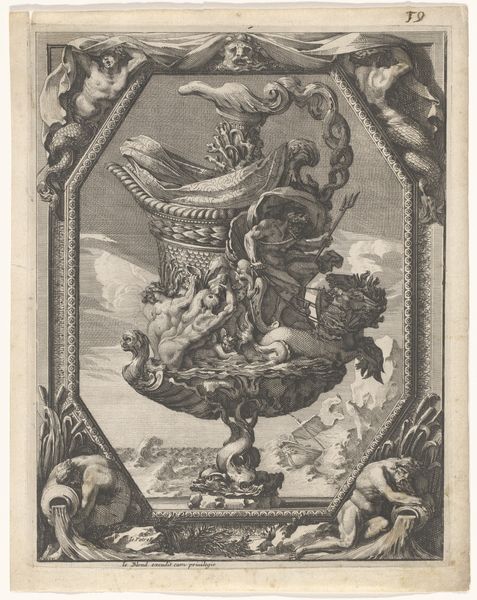
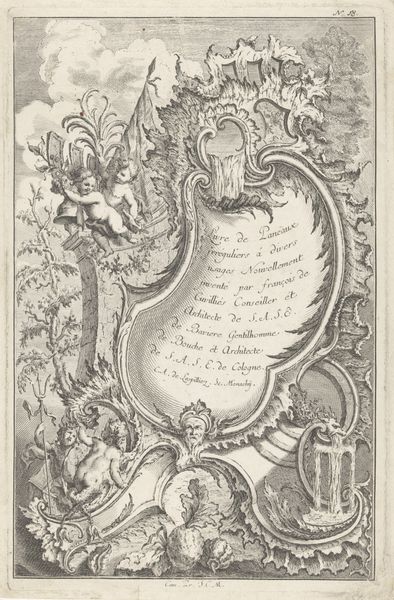
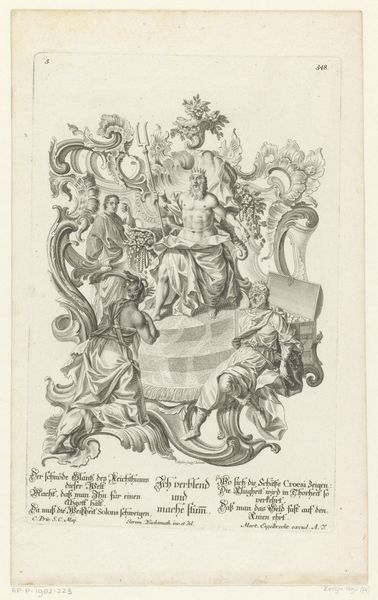
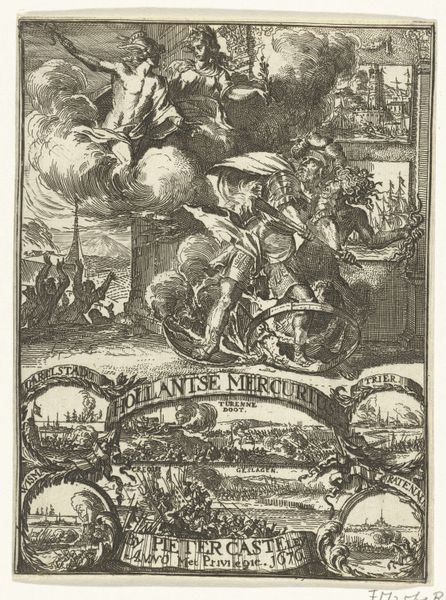
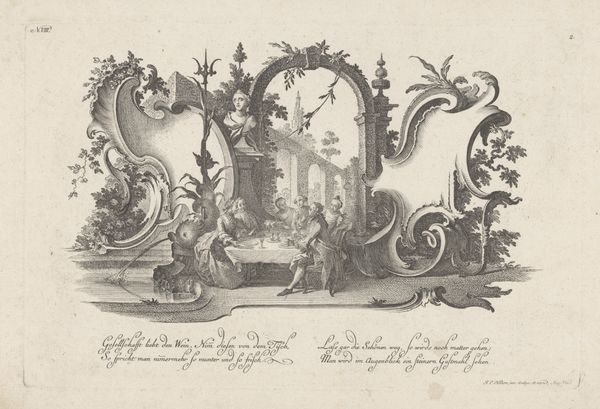
Editor: So, here we have "Cartouche met gekroond wapenschild," made sometime between 1736 and 1762, author unknown. It's an engraving, so printed. There's this over-the-top Baroque feeling with shields and lions…almost aggressively regal. What do you see as you look at this piece? Curator: I see an object steeped in the politics of imagery. Consider where such a print might have been displayed and *by whom*. These elaborate cartouches, announcing "newly invented signs of victory and honour," are inherently about projecting power. Who commissions such a work? And to what end? Is it simple decoration, or something more strategic? Editor: Strategic? What do you mean? Curator: Think about the Baroque era and its audiences. This wasn't a world of mass media. So, to see such symbolism repeated, perhaps within aristocratic circles or in spaces frequented by those in power, serves to constantly reinforce that power. It's a visual language understood by the elite. Who gets to see it, and who *doesn’t*, matters greatly. Editor: That makes sense. So, the image isn't just pretty; it's actually *doing* something politically? Curator: Exactly. And note the framing in different languages. German, then French – suggesting a multi-cultural, possibly aspirational, audience. The print itself is engaging in a political dialogue across borders. Who's reading that? Who are they trying to reach? Editor: That is a good question. Curator: The Rijksmuseum collecting such an object adds another layer, doesn't it? How do *we* view and interpret this former status symbol now? Has its role changed simply because it is in a public space? Editor: Definitely something to think about, this all gives new perspectives to the historical meaning of an artwork!