drawing, print, paper, ink
portrait
drawing
narrative-art
landscape
figuration
paper
11_renaissance
ink
northern-renaissance
Dimensions: 169 × 108 mm (image/sheet, trimmed partly within block)
Copyright: Public Domain
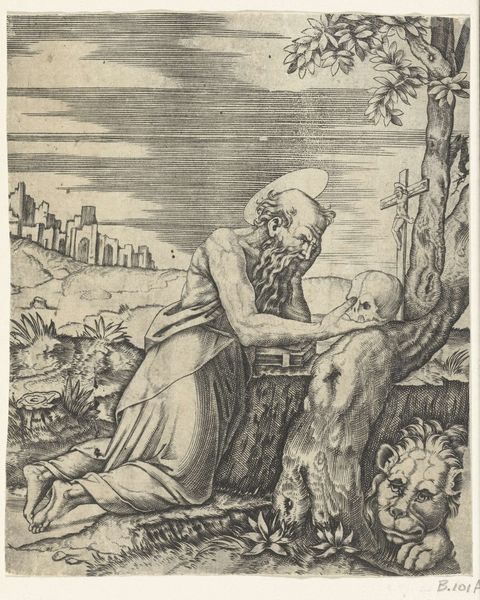
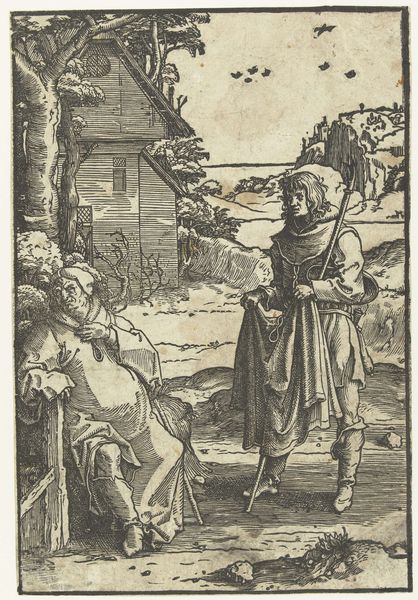
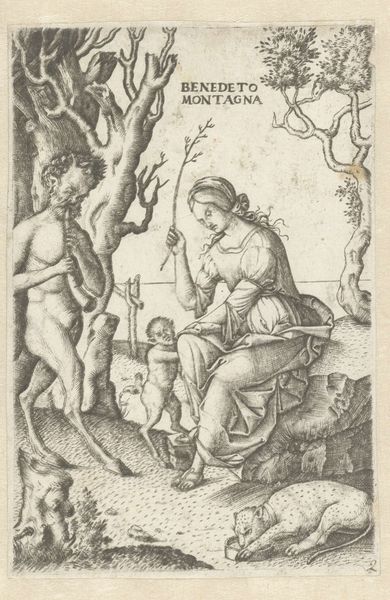
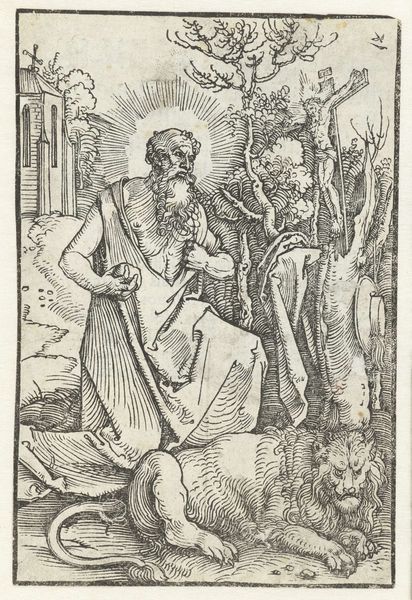
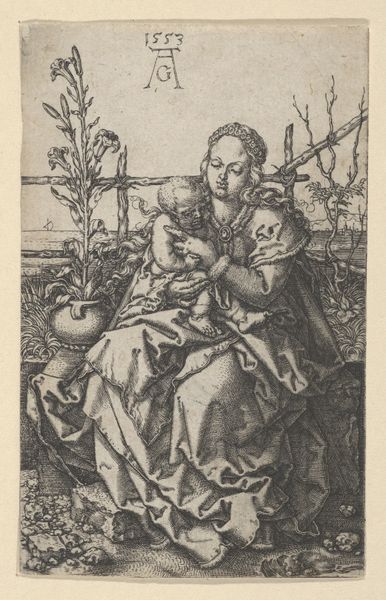
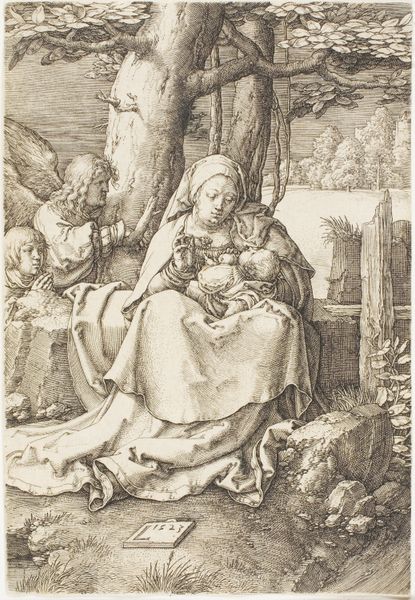
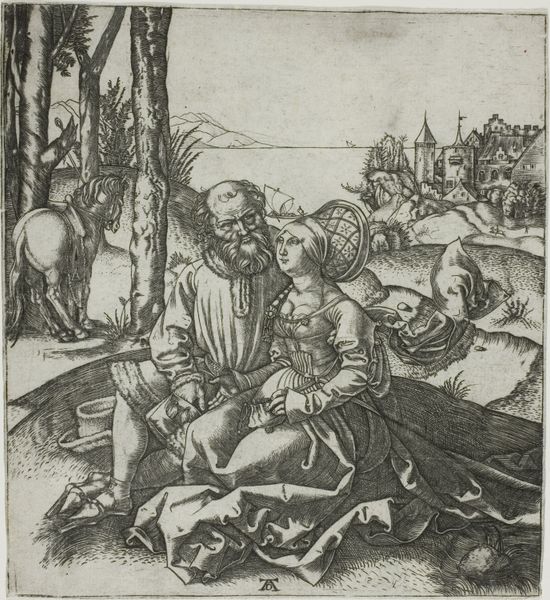
Editor: Here we have Sebald Beham's "The Virgin with the Pear and Child on the Bank" from 1521, a print rendered in ink on paper, currently held at the Art Institute of Chicago. I'm struck by how earthy and grounded this Madonna and Child seem. It's so different from the idealized depictions I'm used to seeing. What stands out to you in this piece? Curator: The striking thing to me is precisely this tension you've identified: the spiritual rendered through the very tangible process of printmaking. Consider the social context; printmaking during the Reformation wasn’t just about images, it was about mass production, about making the divine accessible through a craft. Look at the density of line, the labour involved in carving that matrix – that is labor enmeshed with the divine. The medium is as important as the message. Editor: So, the physical act of creation using printmaking elevates the sacred subject? Curator: Not elevates exactly. It complicates it. It asks us to consider what we value and how value is made. A print such as this could be widely circulated and relatively accessible to those outside the elite circles that could afford panel paintings, which is really a material and financial constraint shaping this image. Editor: That’s a very different lens through which to see this image. Curator: Think about the materiality. Ink, paper, the press—these are not traditionally associated with high art, but here they become instruments of devotional expression and, more subtly, perhaps even agents of religious change during the Reformation. What might this suggest about the role of the "humble" crafts within shifting structures of patronage at the time? Editor: It puts the labor involved front and center, connecting art with broader societal shifts, more akin to craft making and local access rather than simply spiritual iconography. This makes me rethink its context entirely! Curator: Precisely! The means of production shape our understanding of the message. The earthly creation reflects on, and perhaps even defines, the divine.
Comments
No comments
Be the first to comment and join the conversation on the ultimate creative platform.
 React
React Comment