About this artwork
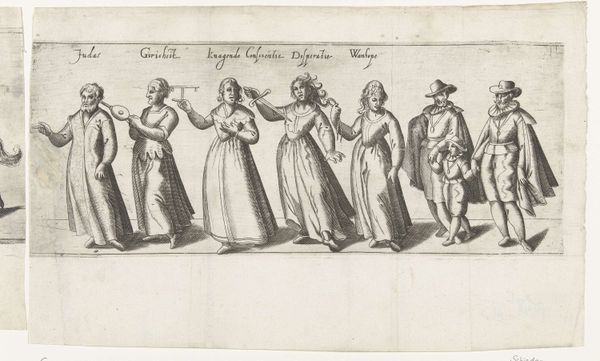
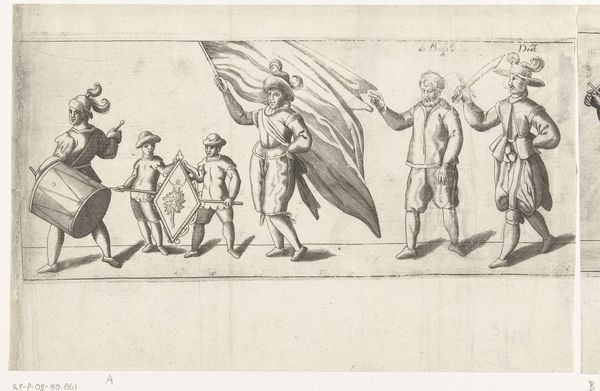
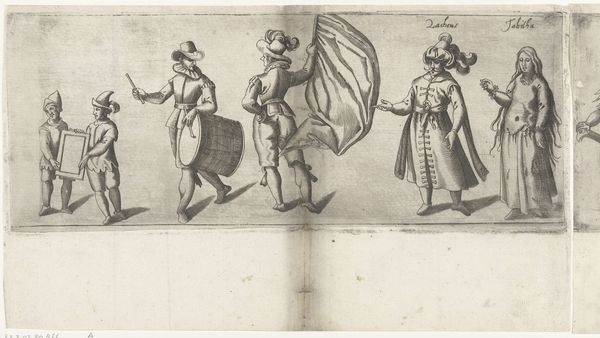
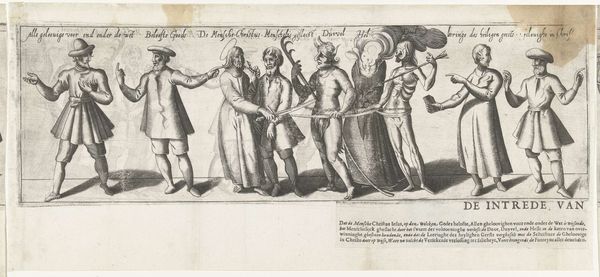
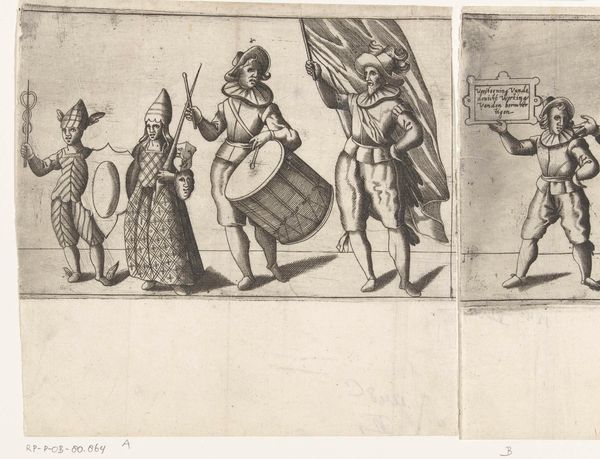
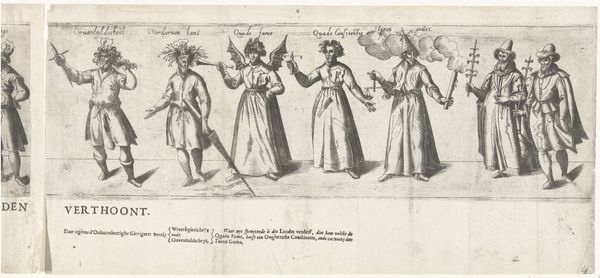
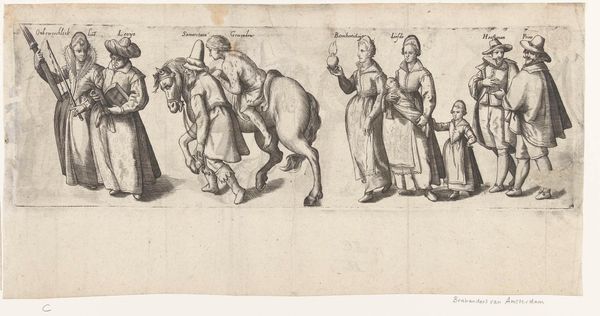
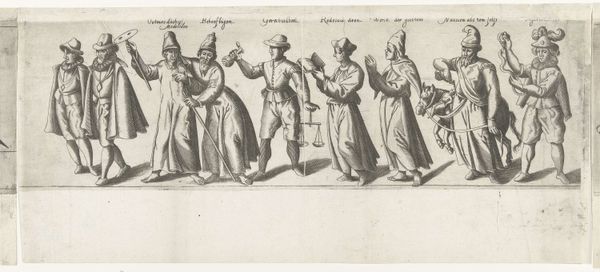
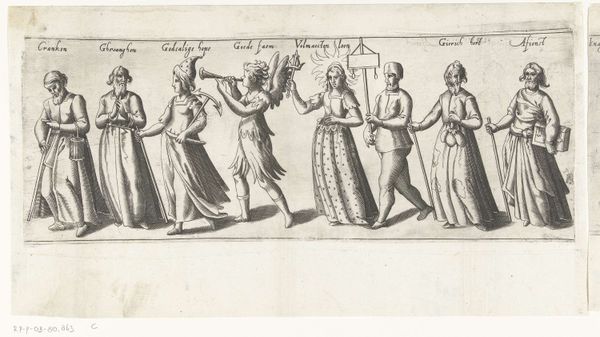
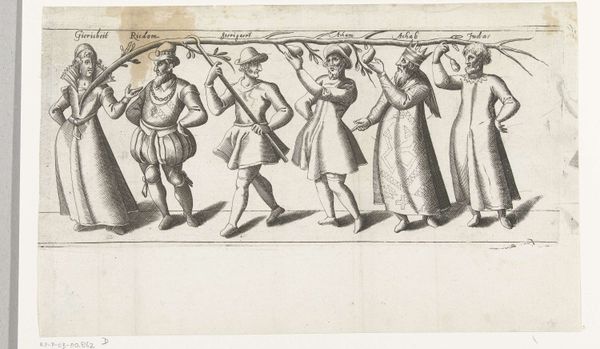
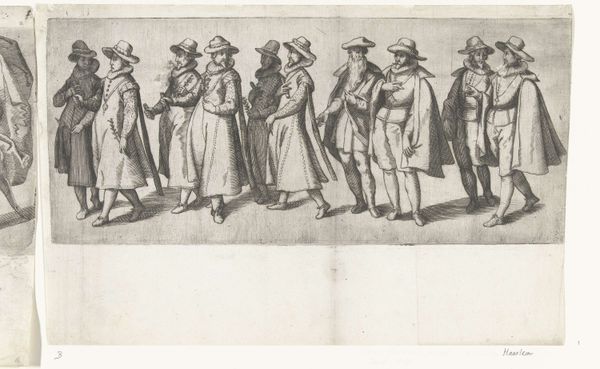
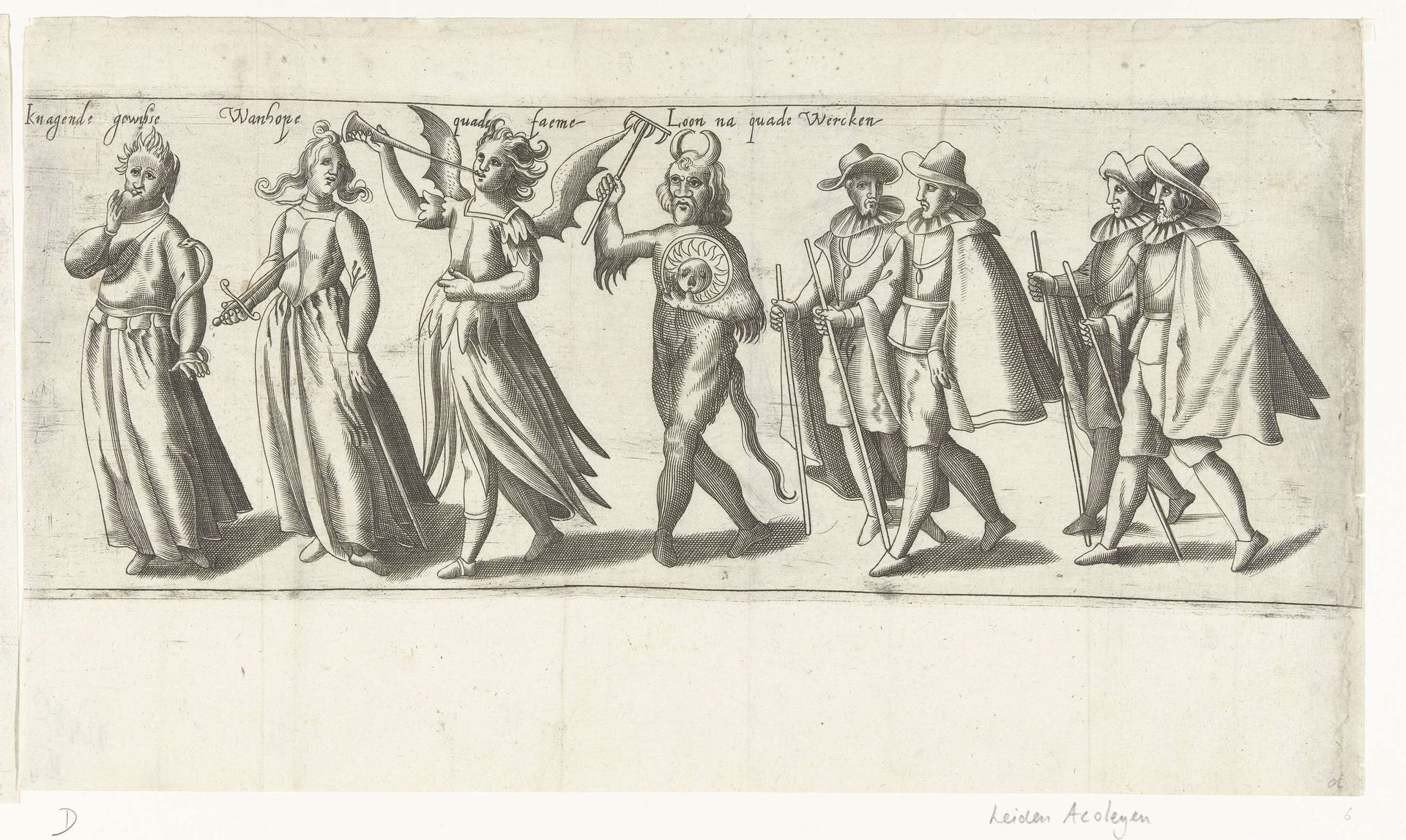
This line engraving by an anonymous artist, made in the Netherlands in 1607, depicts a procession by the Leiden Chamber of Rhetoric, 'De Witte Ackoleyen'. These Chambers were literary societies, popular in the Low Countries during the 15th and 16th centuries. They combined poetry, drama, and rhetoric, often with a competitive edge, staging elaborate public performances. In this print, we see allegorical figures marching alongside the Chamber’s members. The figures include recognizable virtues and vices, a devil carrying the face of the sun, and other people in various clothing with sticks in their hands. Prints like this document the Chamber’s activities and, perhaps, promoted their social standing within the community. Through careful study of costume, symbolic objects, and the Chamber’s own records, we can better understand the cultural values and social dynamics of this period. As historians, we examine such details to reveal the complex interplay between art, performance, and social life in the Dutch Golden Age.
Optocht door de rederijkerskamer De Witte Ackoleyen uit Leiden (vierde deel), 1607
1607

Anonymous
@anonymousLocation
RijksmuseumArtwork details
- Medium
- print, engraving
- Dimensions
- height 195 mm, width 338 mm
- Location
- Rijksmuseum
- Copyright
- Rijks Museum: Open Domain
Tags
Comments
Share your thoughts
About this artwork
This line engraving by an anonymous artist, made in the Netherlands in 1607, depicts a procession by the Leiden Chamber of Rhetoric, 'De Witte Ackoleyen'. These Chambers were literary societies, popular in the Low Countries during the 15th and 16th centuries. They combined poetry, drama, and rhetoric, often with a competitive edge, staging elaborate public performances. In this print, we see allegorical figures marching alongside the Chamber’s members. The figures include recognizable virtues and vices, a devil carrying the face of the sun, and other people in various clothing with sticks in their hands. Prints like this document the Chamber’s activities and, perhaps, promoted their social standing within the community. Through careful study of costume, symbolic objects, and the Chamber’s own records, we can better understand the cultural values and social dynamics of this period. As historians, we examine such details to reveal the complex interplay between art, performance, and social life in the Dutch Golden Age.
Comments
Share your thoughts