1605 - 1606
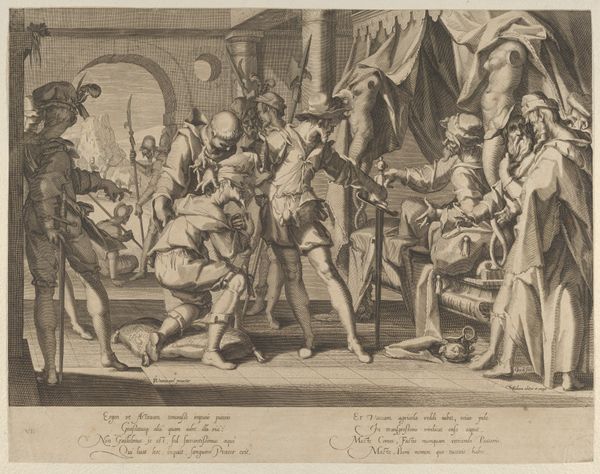
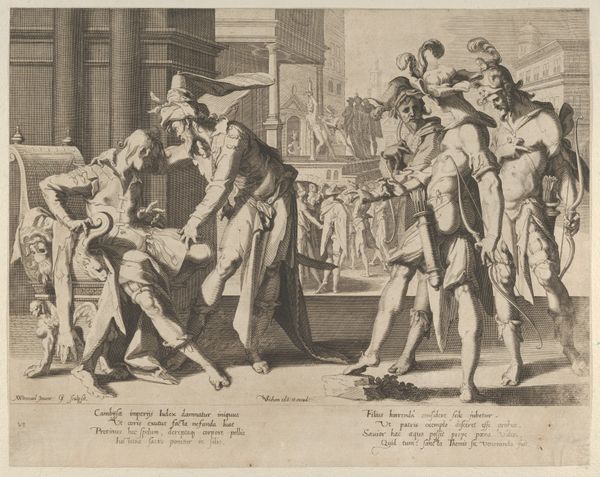
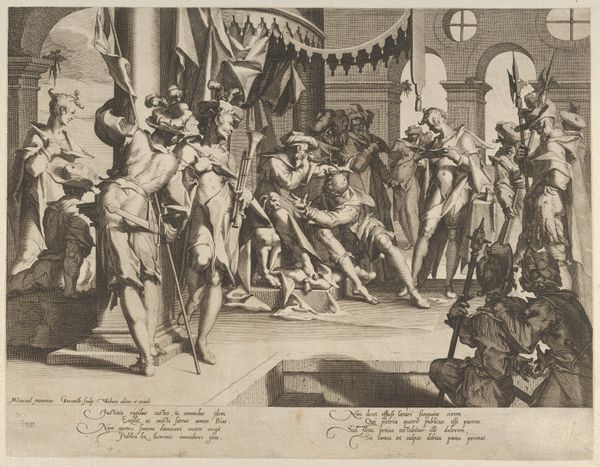
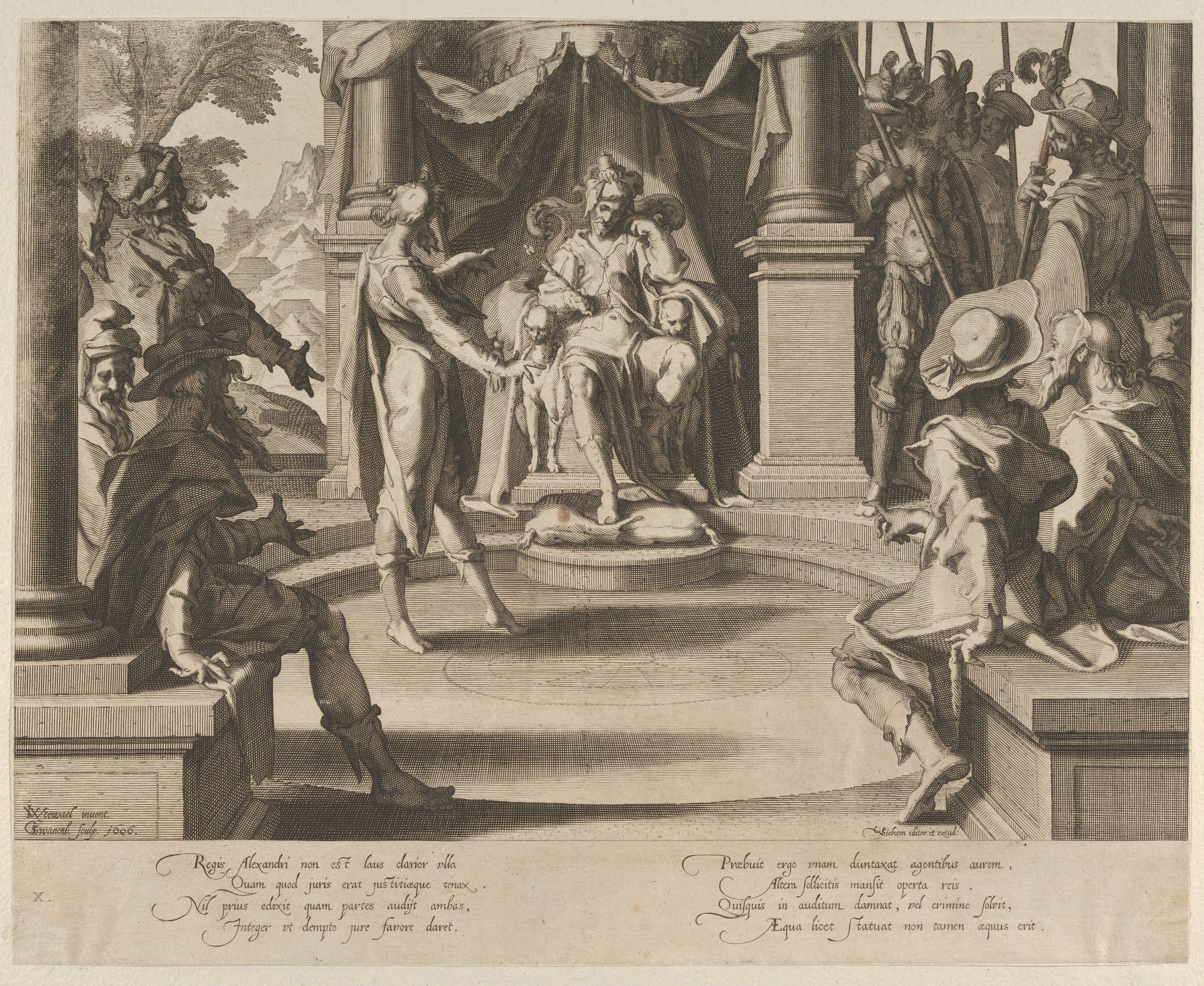
Alexander the Great as a Judge, from Thronus Justitiae, tredecim pulcherrimus tabulis..., plate 10

Willem van Swanenburg
1581 - 1612
The Metropolitan Museum of Art
Metropolitan Museum of Art, New York, NYListen to curator's interpretation
Curatorial notes
Willem van Swanenburg created this print, *Alexander the Great as a Judge*, around 1606, using engraving on paper. Notice how the composition is structured around a central, elevated figure, Alexander, framed by architectural elements. Swanenburg uses a complex arrangement of figures, with stark contrasts between light and shadow. The artist employs line to define form and texture, creating a sense of depth and volume. The formal structure suggests a hierarchy, placing Alexander at the apex of judicial power. This elevation isn't just physical; it reflects a philosophical position. We can analyze the semiotic system at work to understand how Swanenburg uses visual cues to communicate power, justice, and order. The work functions as a discourse on power, law, and representation. It invites us to interpret and re-interpret the relationships between art, authority, and meaning within a specific historical context.