1785
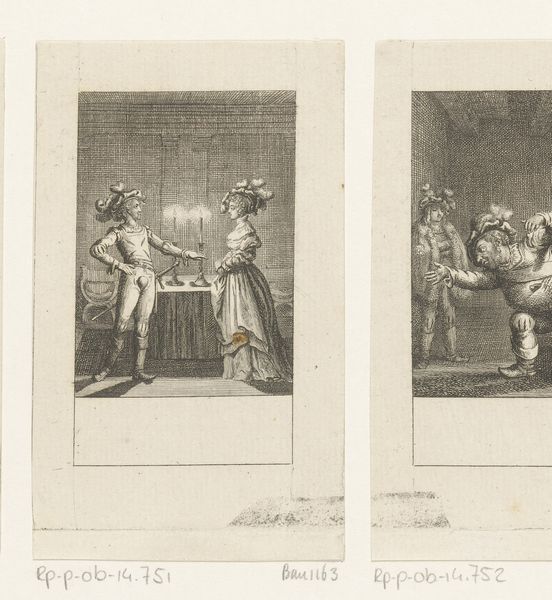
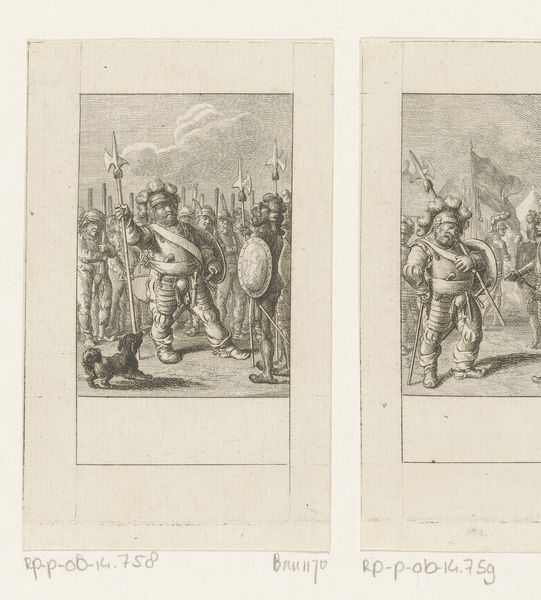
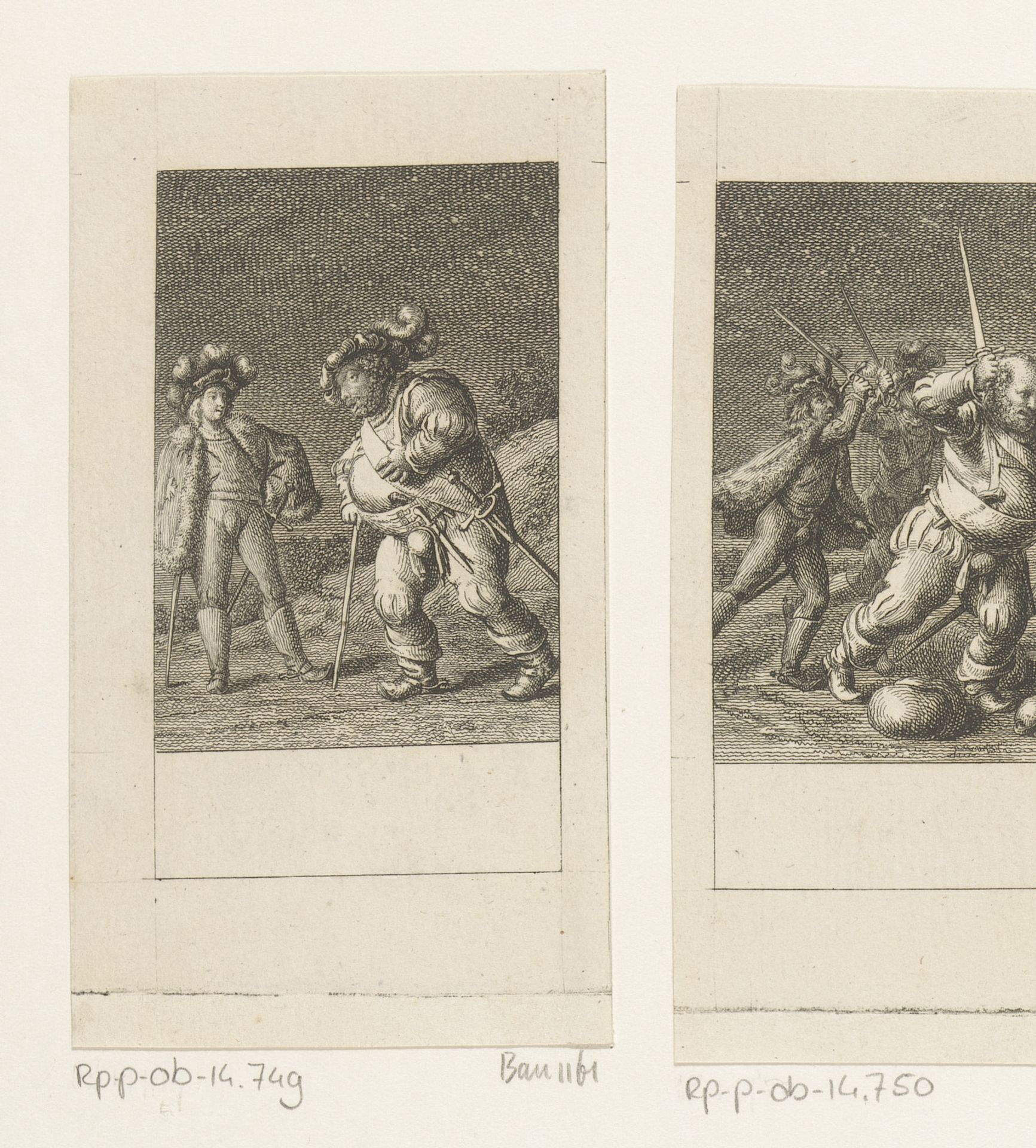
Prins Henry en Falstaff in de buurt van Gadshill

Daniel Nikolaus Chodowiecki
1726 - 1801Location
RijksmuseumListen to curator's interpretation
Curatorial notes
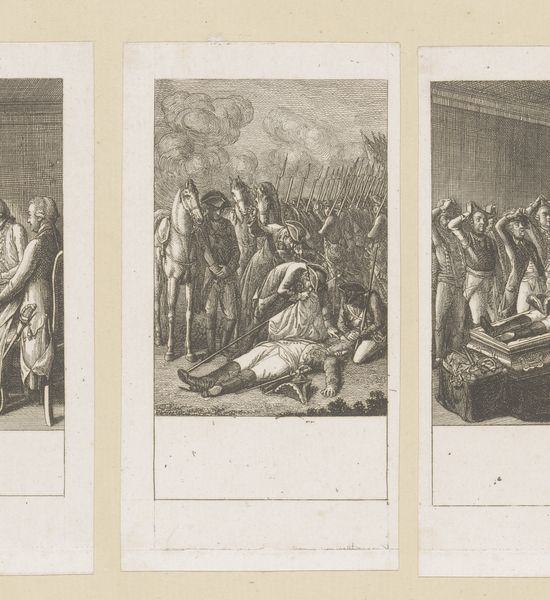
Daniel Nikolaus Chodowiecki etched this print depicting "Prins Henry en Falstaff in de buurt van Gadshill," part of Shakespeare’s "Henry IV," capturing a scene rife with symbolic undertones. Observe Falstaff, the rotund knight, and Prince Henry, amidst an ambush, illustrating themes of deception and moral ambiguity, potent elements in the human theater of life. Consider Falstaff’s corpulence, a visual motif harking back to images of Bacchus, embodying excess and the appetites. This depiction echoes through art history—from Rubens' fleshy figures to caricatures lampooning societal decadence. The sword, a symbol of power, is juxtaposed against Falstaff’s comical posture, revealing a satire. The attack itself reminds me of similar scenes in classical Roman plays. The collective subconscious, steeped in such motifs, lends a rich interpretive layer. Note the emotional and psychological tension palpable in their faces; Chodowiecki brilliantly captures the precarious balance between comedy and desperation, engaging us on a deep, almost primal level. The cyclical progression of these symbols—power, corruption, and human fallibility—resonates across epochs, evolving and resurfacing to reflect our perennial struggles and moral inquiries.