About this artwork
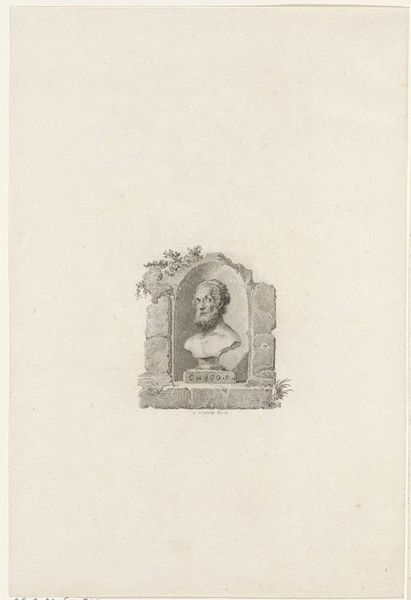
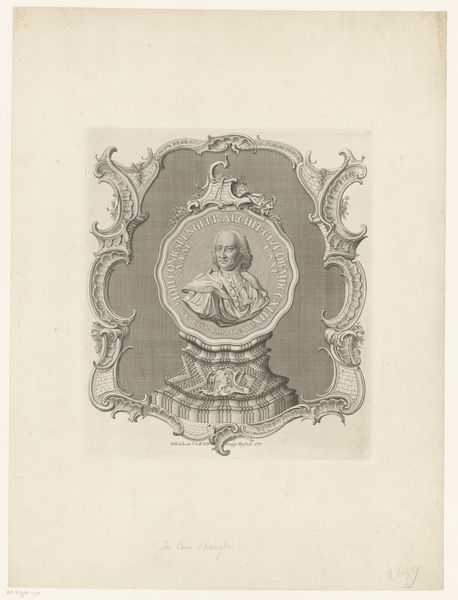
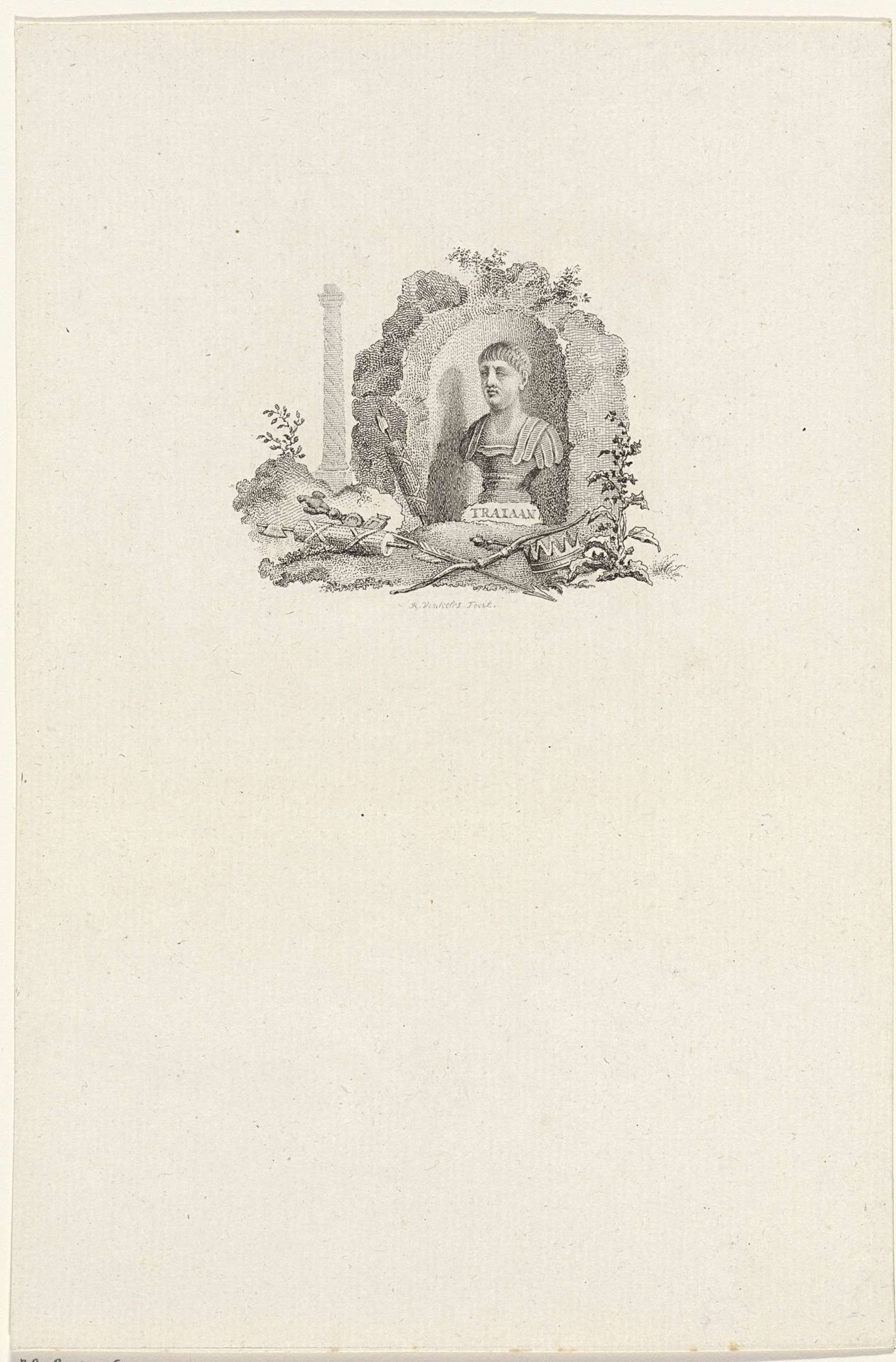
Reinier Vinkeles created this print of a bust of Emperor Trajan in the late 18th or early 19th century. The image evokes classical antiquity, a period whose ideals deeply influenced European art and politics at that time. Notice how Trajan appears in an artificial grotto, like a garden ornament. The column to the left and the Roman arms below are all visual cues of this image's meaning. It reminds us that the Dutch Republic, like other European states, looked to the Roman Empire for models of governance and military prowess. It also reflects a fascination with the antique that was promoted by institutions like the art academy where Vinkeles trained. The image implicitly comments on Dutch identity, inviting viewers to consider their nation’s place in the longer history of empires. In order to better understand the image, scholars consult a variety of sources, including emblem books, garden design manuals, and the records of art academies. By understanding the context that shaped its creation, we can better appreciate the public role of art.
Buste van Trajanus, keizer van het Romeinse Rijk 1751 - 1816

Reinier Vinkeles
1741 - 1816Location
RijksmuseumArtwork details
- Medium
- drawing, print, pen, engraving
- Dimensions
- height 253 mm, width 168 mm
- Location
- Rijksmuseum
- Copyright
- Rijks Museum: Open Domain
Tags
portrait
drawing
light pencil work
neoclassicism
pen sketch
pencil sketch
old engraving style
personal sketchbook
ink drawing experimentation
pen-ink sketch
pen work
sketchbook drawing
pen
sketchbook art
engraving
Comments
No comments
About this artwork
Reinier Vinkeles created this print of a bust of Emperor Trajan in the late 18th or early 19th century. The image evokes classical antiquity, a period whose ideals deeply influenced European art and politics at that time. Notice how Trajan appears in an artificial grotto, like a garden ornament. The column to the left and the Roman arms below are all visual cues of this image's meaning. It reminds us that the Dutch Republic, like other European states, looked to the Roman Empire for models of governance and military prowess. It also reflects a fascination with the antique that was promoted by institutions like the art academy where Vinkeles trained. The image implicitly comments on Dutch identity, inviting viewers to consider their nation’s place in the longer history of empires. In order to better understand the image, scholars consult a variety of sources, including emblem books, garden design manuals, and the records of art academies. By understanding the context that shaped its creation, we can better appreciate the public role of art.
Comments
No comments