About this artwork
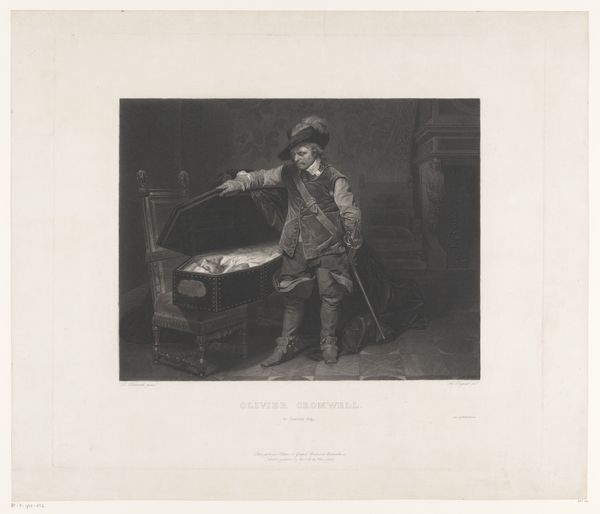
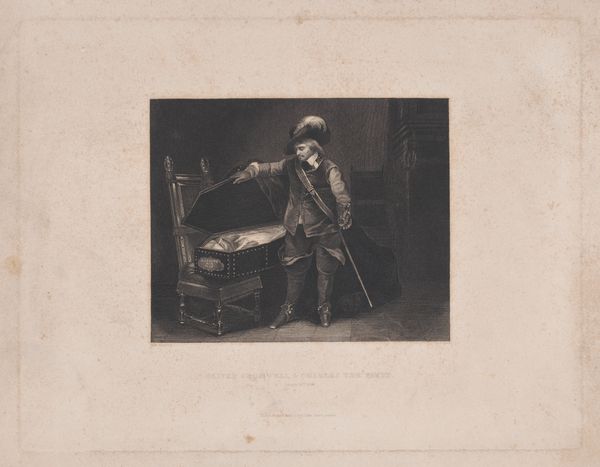
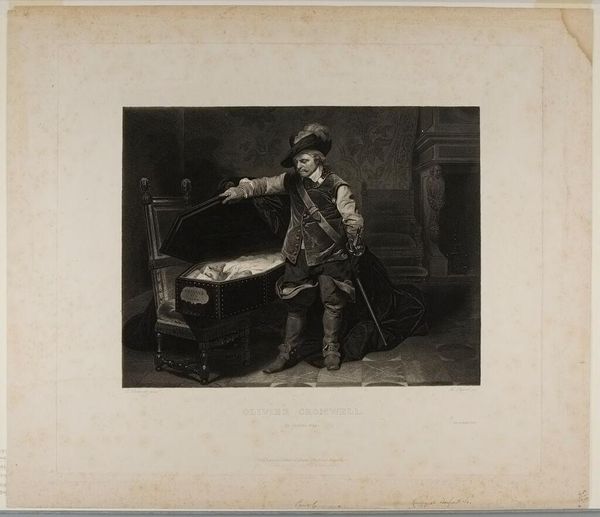
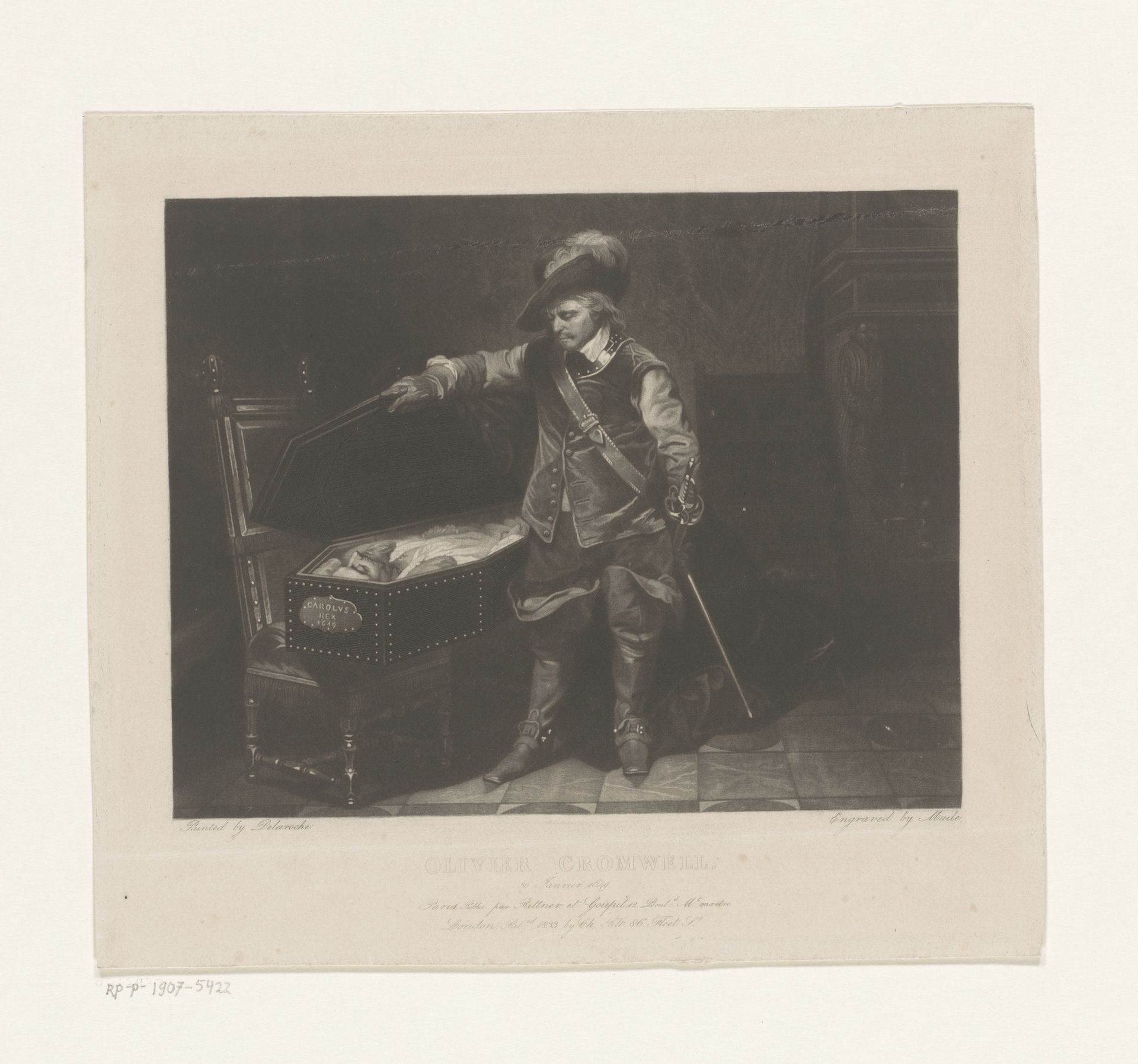
George Maile’s print depicts Oliver Cromwell gazing into the opened coffin of Charles I. A stark image of death and power. The open coffin is a powerful symbol, a motif that echoes through art history. Think of the entombment of Christ, the opened sarcophagi of ancient rulers – all images of mortality. Here, it represents not just death, but a deposition of power. Cromwell's gesture toward the body is reminiscent of a saint showing relics, yet inverted to be a symbol of earthly triumph over divine right. Consider how the skull, often featured in vanitas paintings, serves as a memento mori, a reminder of the fleeting nature of life. Cromwell’s gaze suggests more than mere victory. It’s a confrontation with mortality, and perhaps, a subconscious attempt to reconcile the weight of his actions with the inevitable fate that awaits all men. The image resonates with a deep-seated cultural anxiety about power, death, and the cyclical nature of history.
Oliver Cromwell bij de geopende grafkist van Karel I
1883

George Maile
1800 - 1842Location
RijksmuseumArtwork details
- Dimensions
- height 242 mm, width 217 mm
- Location
- Rijksmuseum
- Copyright
- Rijks Museum: Open Domain
Comments
Share your thoughts
About this artwork
George Maile’s print depicts Oliver Cromwell gazing into the opened coffin of Charles I. A stark image of death and power. The open coffin is a powerful symbol, a motif that echoes through art history. Think of the entombment of Christ, the opened sarcophagi of ancient rulers – all images of mortality. Here, it represents not just death, but a deposition of power. Cromwell's gesture toward the body is reminiscent of a saint showing relics, yet inverted to be a symbol of earthly triumph over divine right. Consider how the skull, often featured in vanitas paintings, serves as a memento mori, a reminder of the fleeting nature of life. Cromwell’s gaze suggests more than mere victory. It’s a confrontation with mortality, and perhaps, a subconscious attempt to reconcile the weight of his actions with the inevitable fate that awaits all men. The image resonates with a deep-seated cultural anxiety about power, death, and the cyclical nature of history.
Comments
Share your thoughts