About this artwork
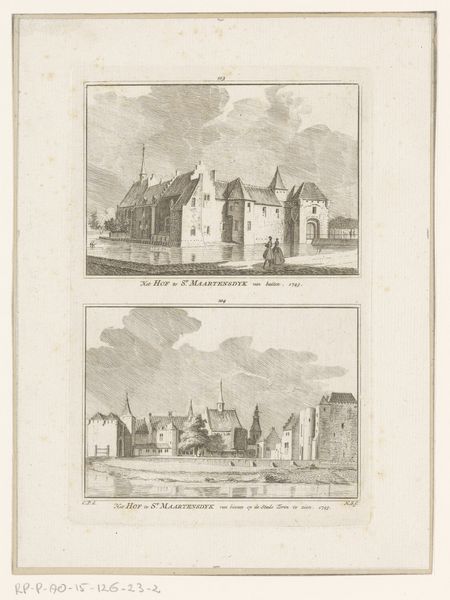
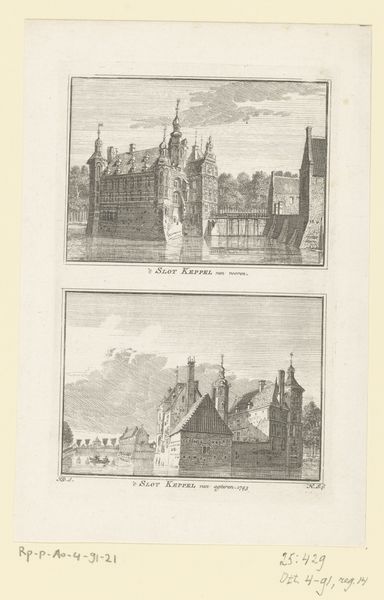
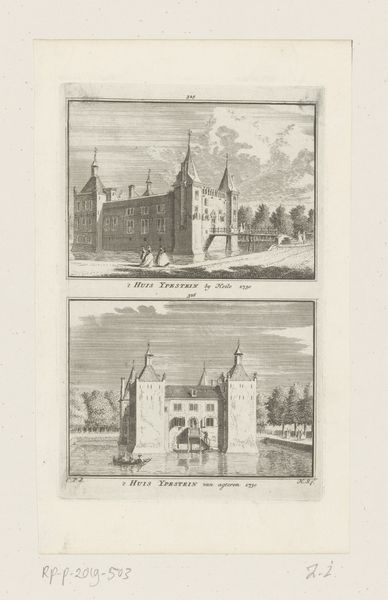
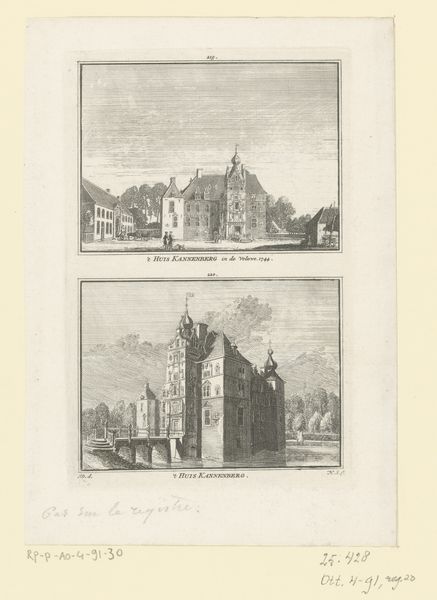
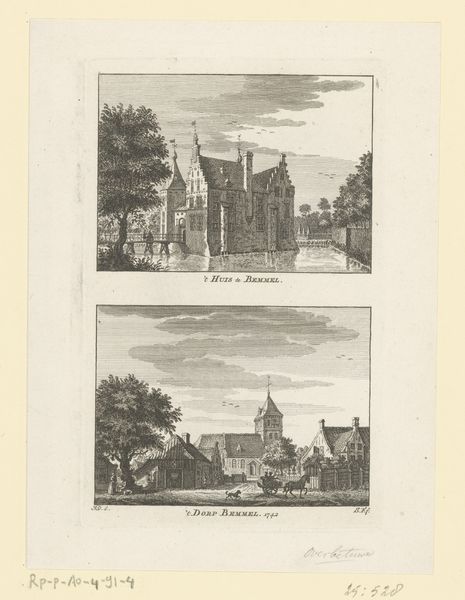
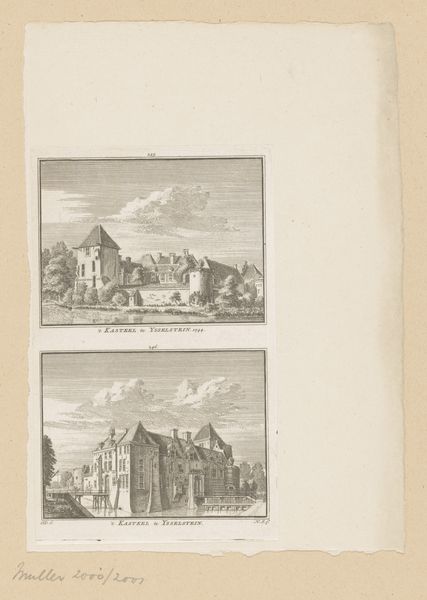
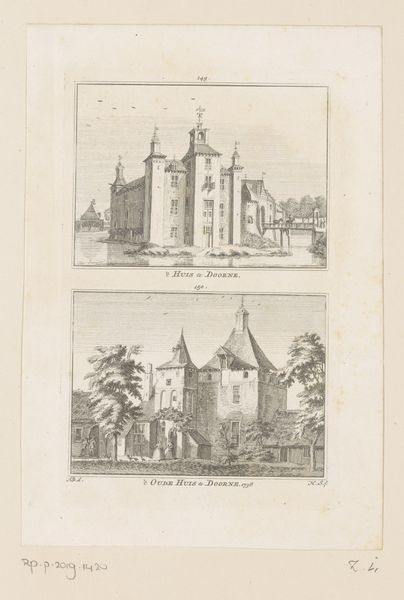
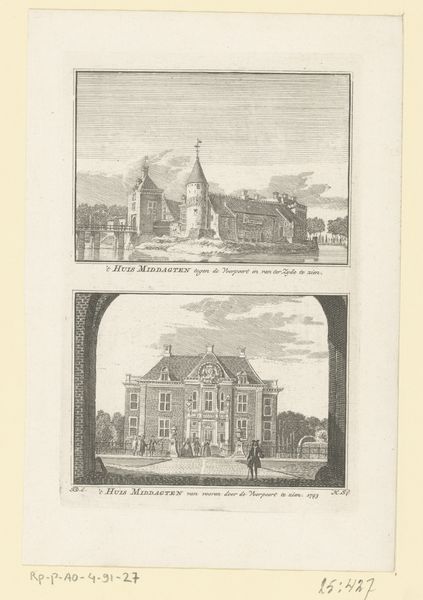
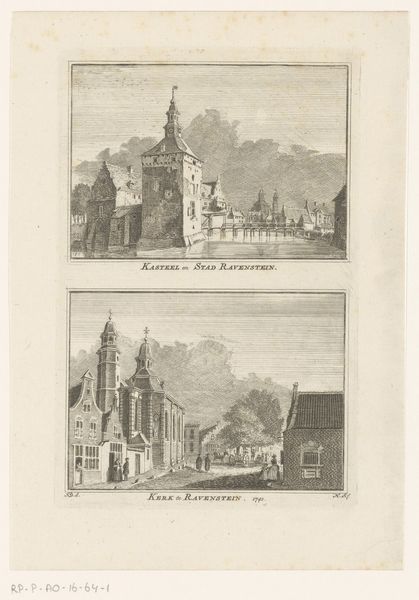
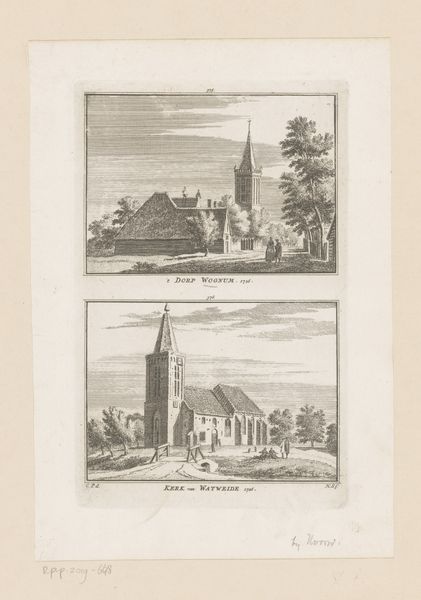
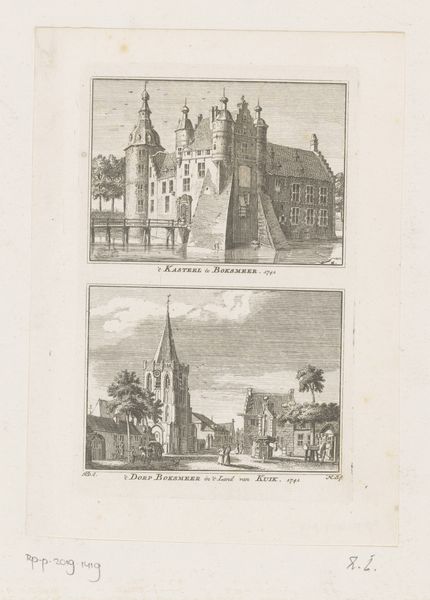
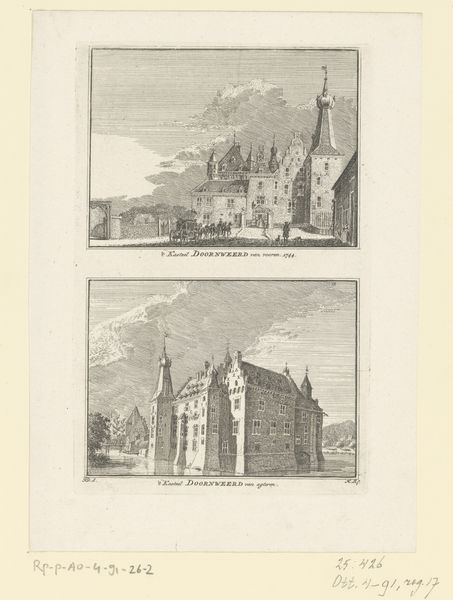
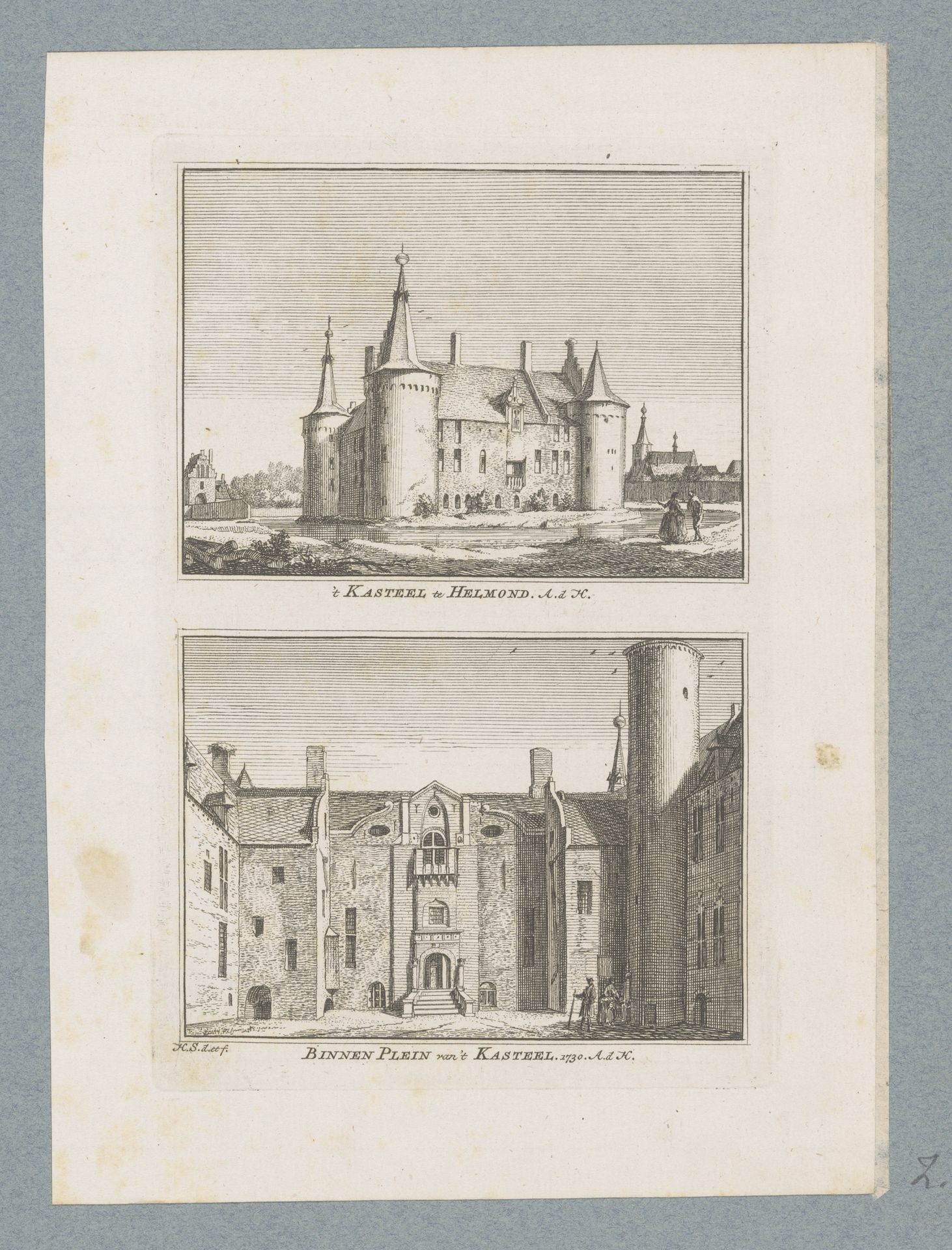
Editor: This is "Views of the Exterior and Courtyard of Helmond Castle" by Hendrik Spilman, created around 1745. It’s a detailed etching. What strikes me most is how Spilman divided the scene, exterior on top, interior below; it gives such a balanced yet contrasting view of the same structure. What do you see in this piece? Curator: Indeed. Considering it from a formal perspective, observe the strong linear quality inherent in the etching technique. Spilman masterfully employs hatching and cross-hatching to delineate form and space, creating a sophisticated interplay of light and shadow. How do you perceive the use of perspective? Editor: Well, the perspective in the top panel showing the exterior feels…flatter. It’s representational but lacks a deep recession. The courtyard below feels more dynamic and immediate. Curator: Precisely. And what is the effect of these almost detached framings within a singular plane? Note that these visual articulations are distinct stylistic decisions; what meaning can you derive through these contrasting techniques? Editor: Maybe to contrast the outer image of the castle versus the reality of life inside? One grand and imposing, the other… lived in? Curator: A plausible interpretation. Focus too on the architecture itself—the stark lines of the buildings, the strategic placement of the towers in the top panel. The forms carry significant visual weight. Editor: It's like the composition itself reinforces the power and solid stability the castle represents. I hadn't thought about how much the visual language contributes to the symbolic. Curator: Exactly. A thorough look at form offers the most direct insight, allowing visual elements to illuminate meanings often missed in narrative or biographical considerations. This piece, above all, highlights that inherent characteristic of this architectural landscape. Editor: I agree, the structure of the work is such an essential and intriguing part of its communication. Thank you for the perspective.
Gezichten op de buitenzijde en het binnenplein van het Kasteel van Helmond
1745

Hendrik Spilman
1721 - 1784Location
RijksmuseumArtwork details
- Medium
- drawing, print, etching, paper, architecture
- Dimensions
- height 166 mm, width 108 mm
- Location
- Rijksmuseum
- Copyright
- Rijks Museum: Open Domain
Tags
Comments
Share your thoughts
About this artwork
Editor: This is "Views of the Exterior and Courtyard of Helmond Castle" by Hendrik Spilman, created around 1745. It’s a detailed etching. What strikes me most is how Spilman divided the scene, exterior on top, interior below; it gives such a balanced yet contrasting view of the same structure. What do you see in this piece? Curator: Indeed. Considering it from a formal perspective, observe the strong linear quality inherent in the etching technique. Spilman masterfully employs hatching and cross-hatching to delineate form and space, creating a sophisticated interplay of light and shadow. How do you perceive the use of perspective? Editor: Well, the perspective in the top panel showing the exterior feels…flatter. It’s representational but lacks a deep recession. The courtyard below feels more dynamic and immediate. Curator: Precisely. And what is the effect of these almost detached framings within a singular plane? Note that these visual articulations are distinct stylistic decisions; what meaning can you derive through these contrasting techniques? Editor: Maybe to contrast the outer image of the castle versus the reality of life inside? One grand and imposing, the other… lived in? Curator: A plausible interpretation. Focus too on the architecture itself—the stark lines of the buildings, the strategic placement of the towers in the top panel. The forms carry significant visual weight. Editor: It's like the composition itself reinforces the power and solid stability the castle represents. I hadn't thought about how much the visual language contributes to the symbolic. Curator: Exactly. A thorough look at form offers the most direct insight, allowing visual elements to illuminate meanings often missed in narrative or biographical considerations. This piece, above all, highlights that inherent characteristic of this architectural landscape. Editor: I agree, the structure of the work is such an essential and intriguing part of its communication. Thank you for the perspective.
Comments
Share your thoughts