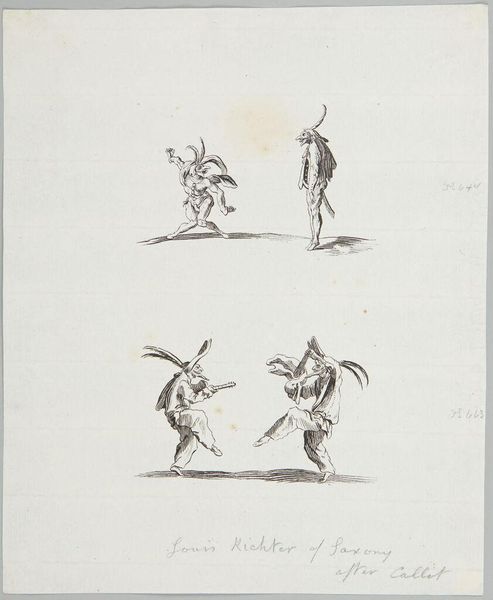
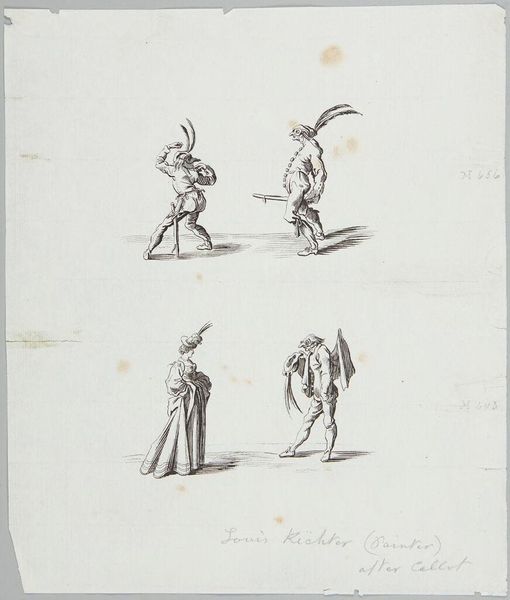
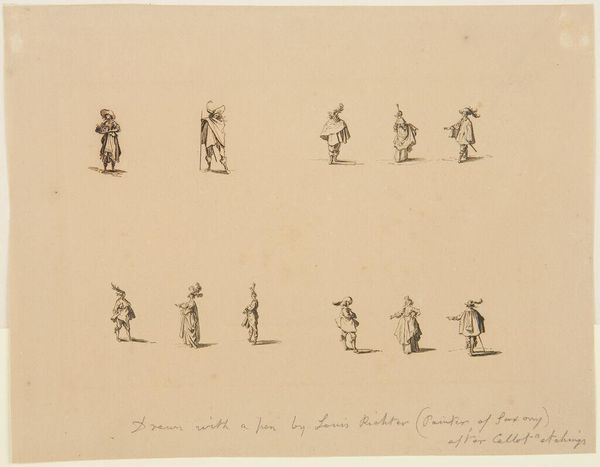
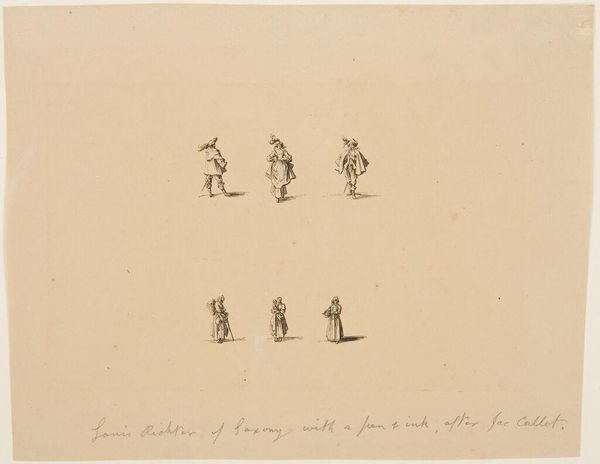
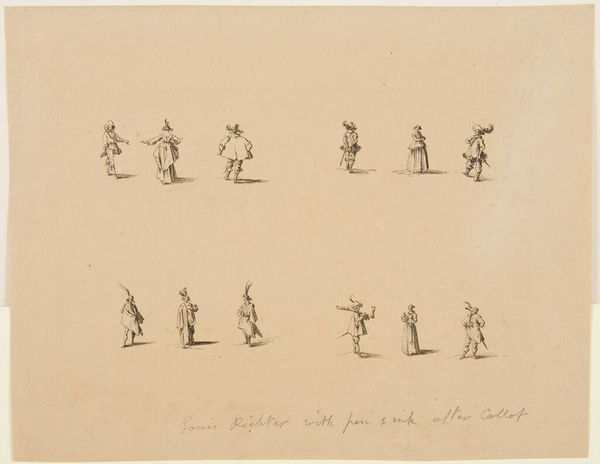
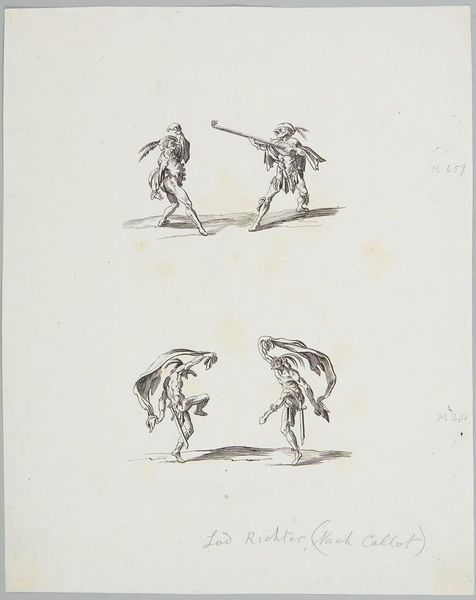
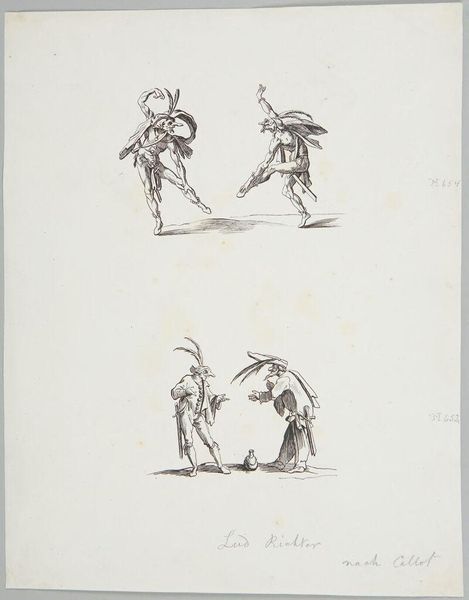
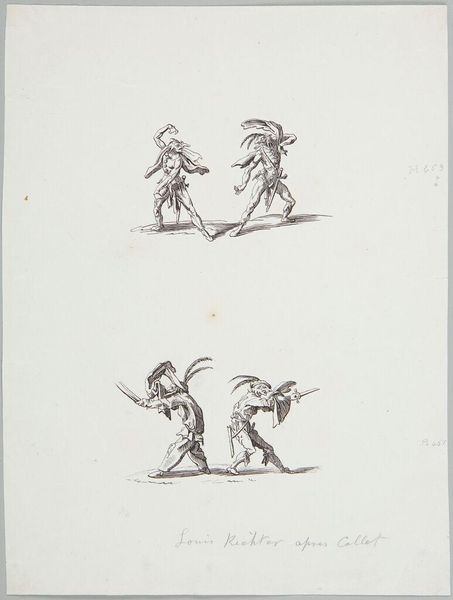
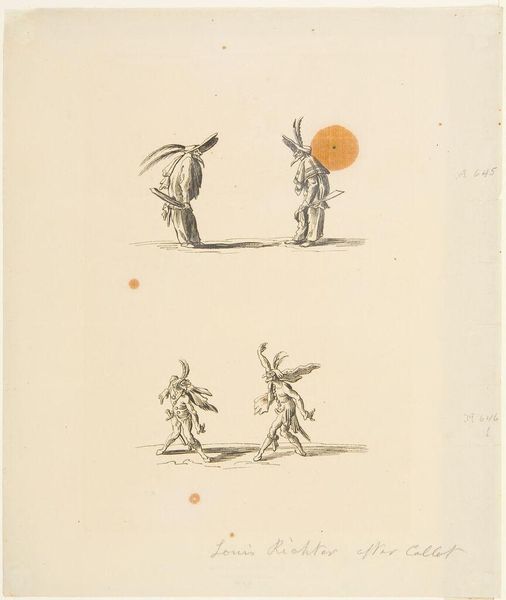
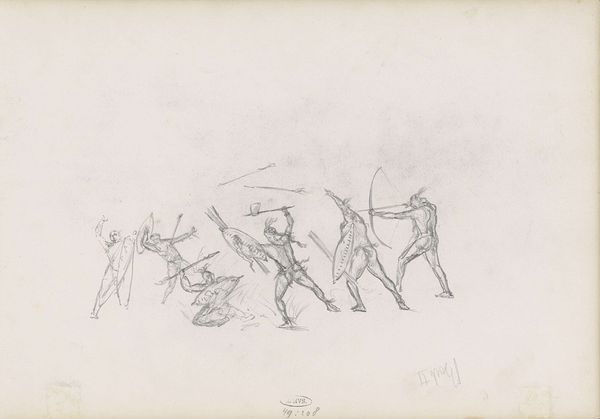
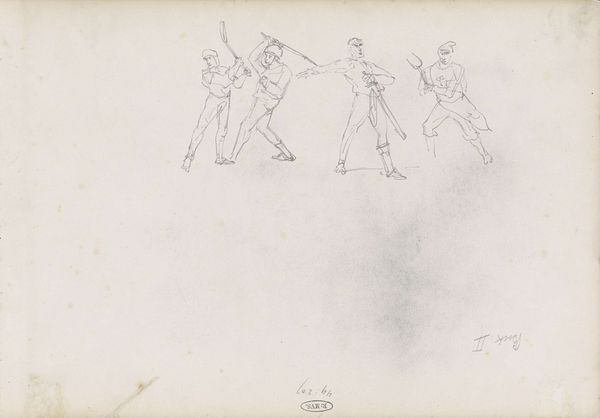
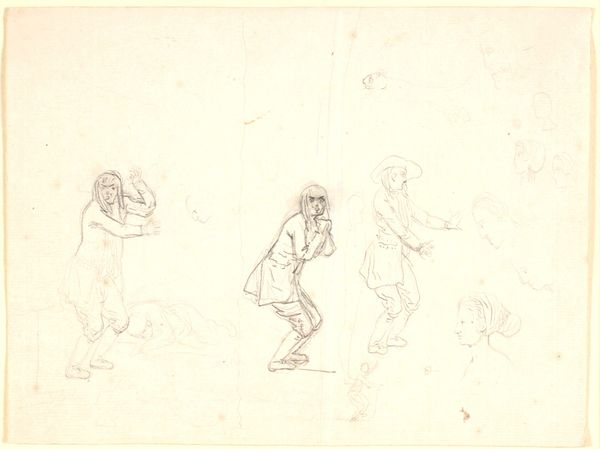
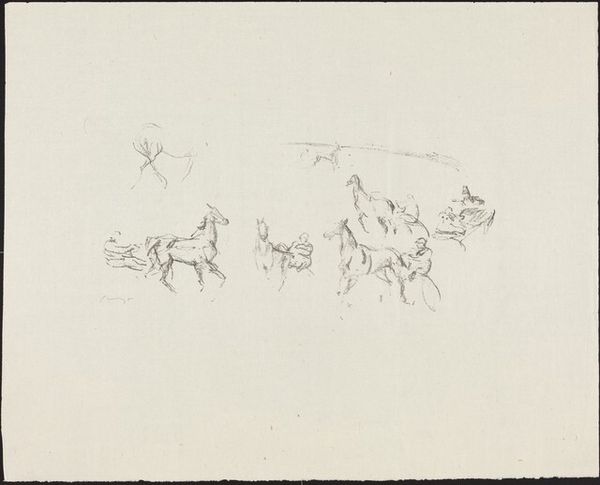
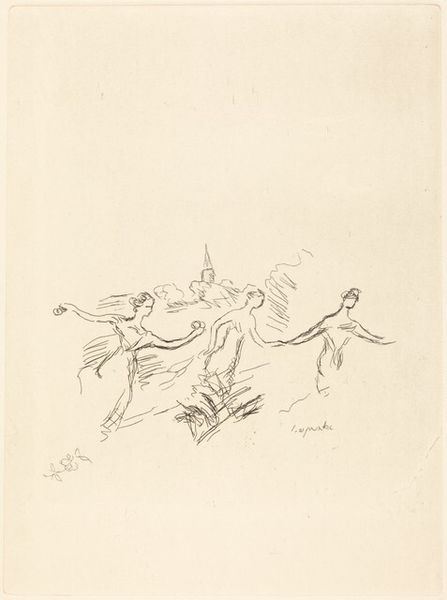
Capitano Bonbardon and Capitano Grillo, and Capitano Cardoni and Maramao, after Callot c. 19th century


Copyright: CC0 1.0
Editor: This is Adrian Ludwig Richter's "Capitano Bonbardon and Capitano Grillo, and Capitano Cardoni and Maramao, after Callot" at the Harvard Art Museums. I find the characters quite theatrical, almost like figures from a play. What do you see in this piece? Curator: These characters borrow from the Commedia dell'Arte tradition, a rich source of archetypes. Notice how their exaggerated costumes and postures evoke specific roles and social commentary. The "Capitano," a stock character, often represents a boastful, cowardly soldier. What emotional associations do you have with these figures? Editor: I see a lot of playful exaggeration, so maybe the artist intended humor? Curator: Precisely. The humor underscores a deeper cultural critique of power and social roles. Think about how these symbols resonate even today in our own cultural narratives. Editor: So, it's more than just funny costumes; there's a history of meaning embedded here. Curator: Exactly! And that historical memory shapes our engagement with the work.
Comments
No comments
Be the first to comment and join the conversation on the ultimate creative platform.
 React
React Comment