Possibly 1777 - 1786
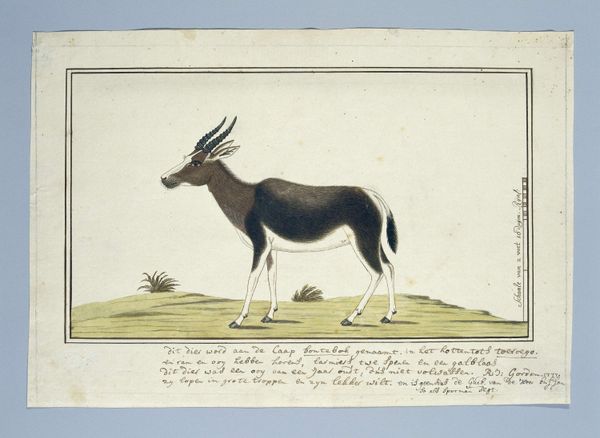
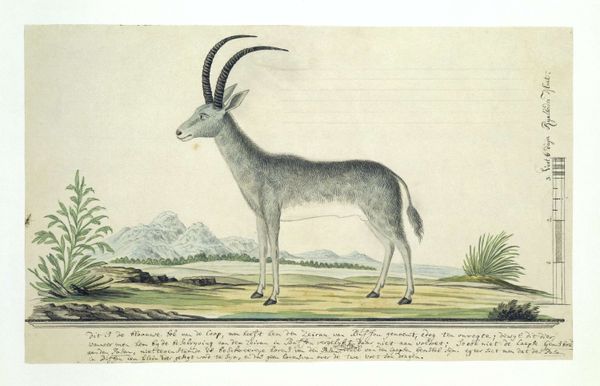
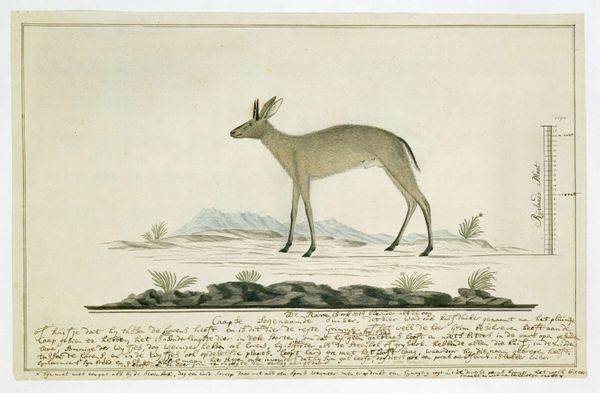
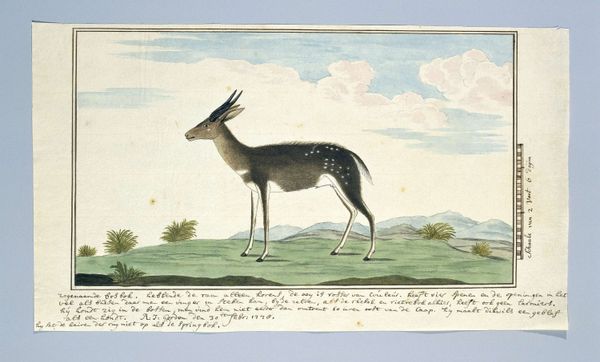
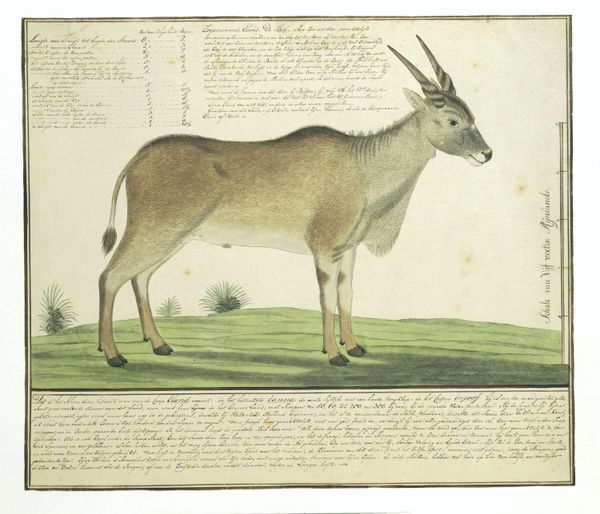
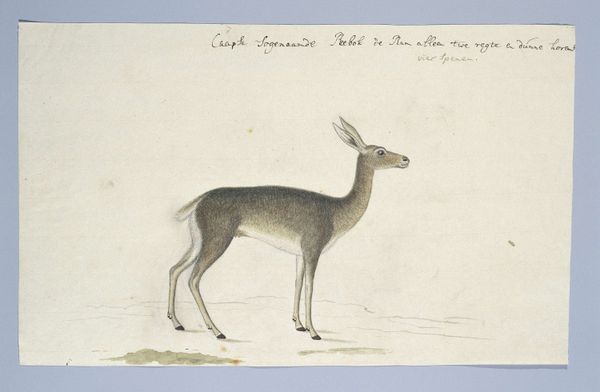
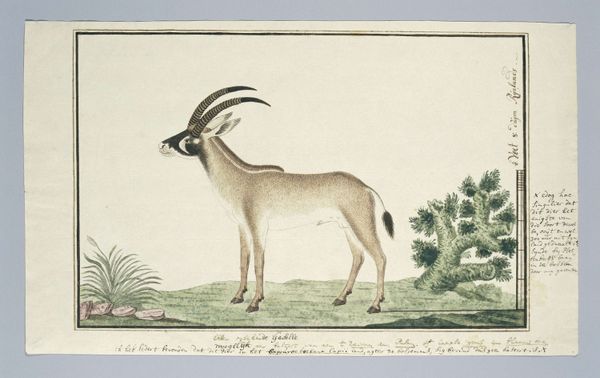
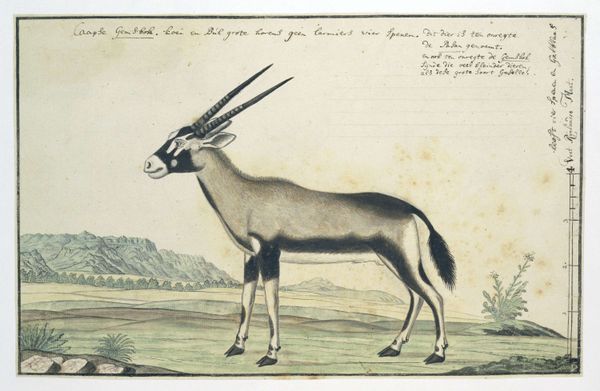
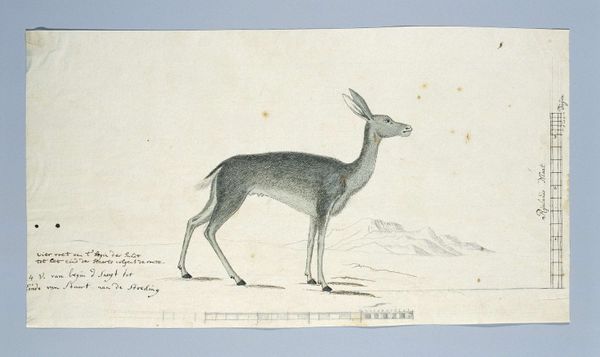
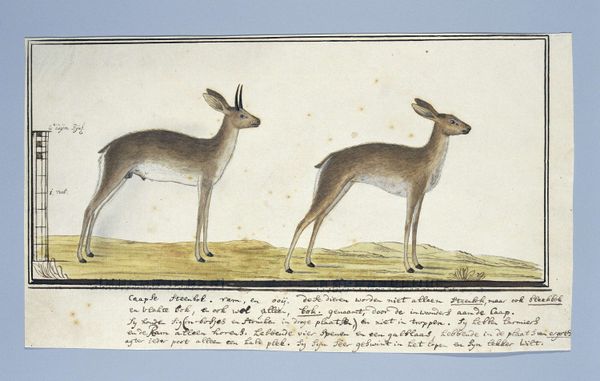
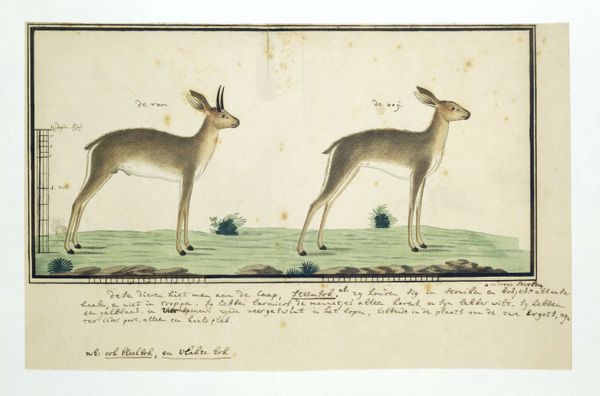
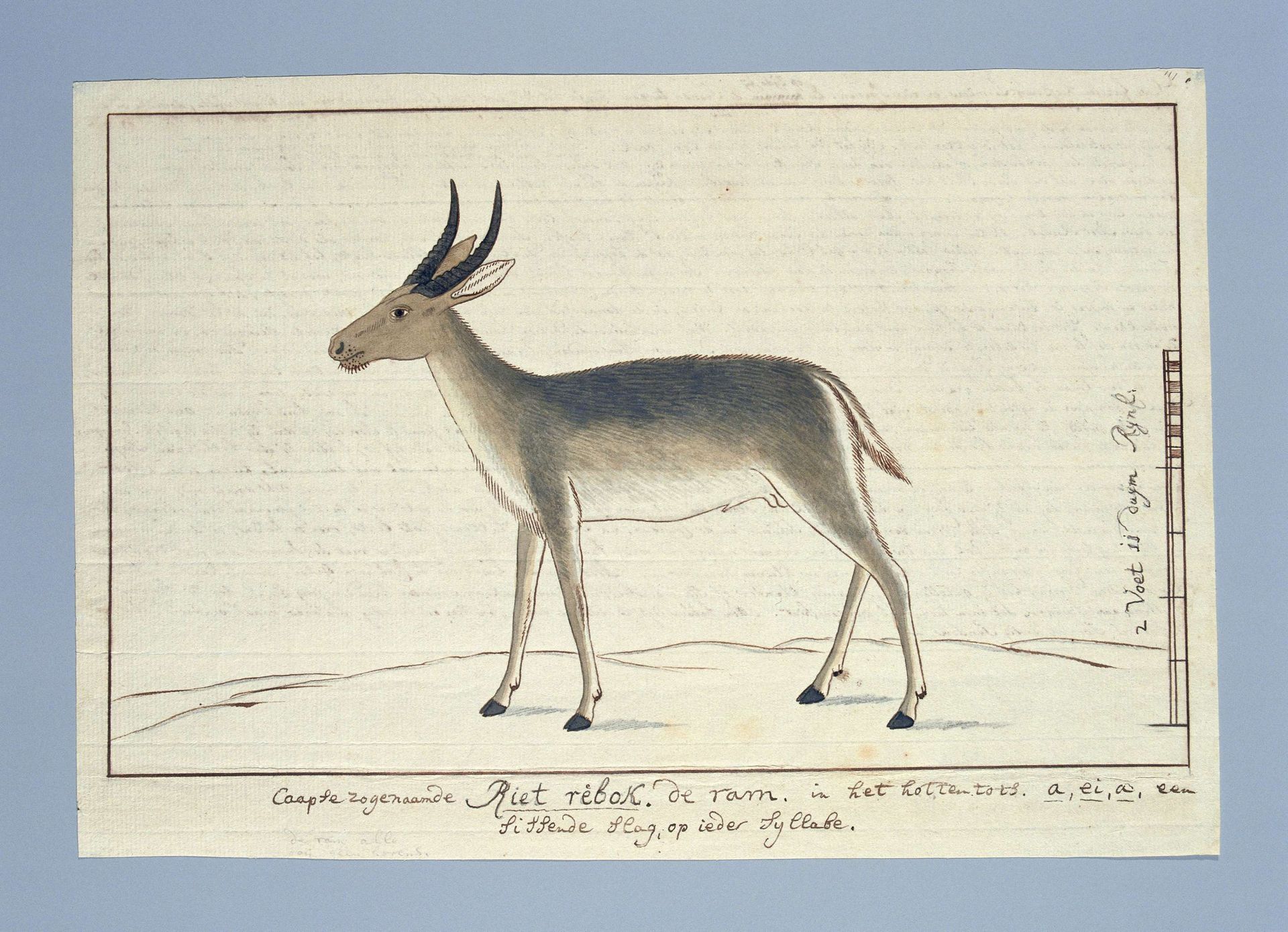
Redunca arundinum (Southern reedbuck; male)

Listen to curator's interpretation
Curatorial notes
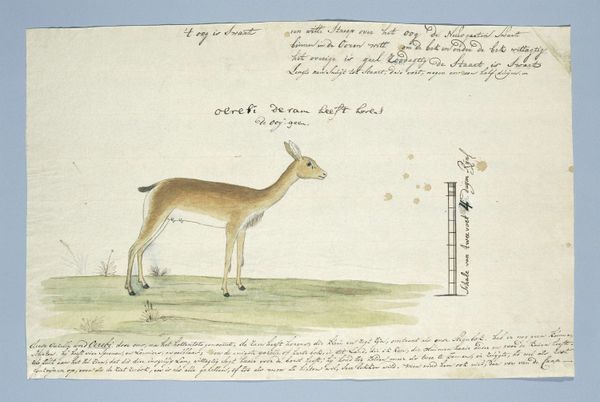
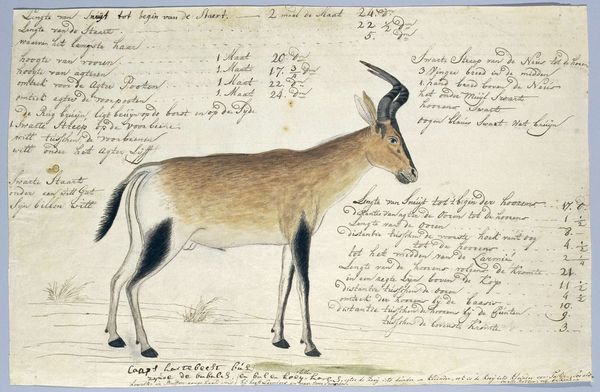
Editor: Here we have Robert Jacob Gordon's "Redunca arundinum (Southern reedbuck; male)," made sometime between 1777 and 1786, using watercolor and colored pencil. It strikes me as a very straightforward depiction, almost clinical in its approach to representing this animal. What do you see in this piece, from an art perspective? Curator: It is interesting that you used the word 'clinical' because this term accurately captures the essence and artistic qualities of this piece. Let us observe closely. Notice how the artist meticulously renders the textures of the animal's coat, employing precise and controlled linework? Note the subtle gradations of color and value that sculpt the form, giving it a three-dimensionality? Are there any indications to make a suggestion about what these attributes imply? Editor: It highlights the form, certainly, but perhaps also signifies the importance of objective observation during that period. It's like the image functions as a record. Curator: Precisely. The composition is deceptively simple, with the subject placed centrally against a blank background, eliminating any distractions. This draws our attention to the artist's skill in capturing the essential form and structure of the animal. Now, observe how Gordon renders space using purely linear cues, with what effects? Editor: Now that you point that out, the drawing's depth does feel ambiguous. More focus is on contour, on lines. I initially saw the blank space as a lack of background, but it really brings out the shapes in the animal. Curator: Absolutely. Through this process, we might suggest that Gordon, while seemingly objective, is in fact highlighting form as the primary vehicle of meaning. Did our dialogue alter your initial response to the work? Editor: It definitely did. Now, instead of seeing a mere animal study, I notice how line and color come together. Thanks for pointing that out.