About this artwork
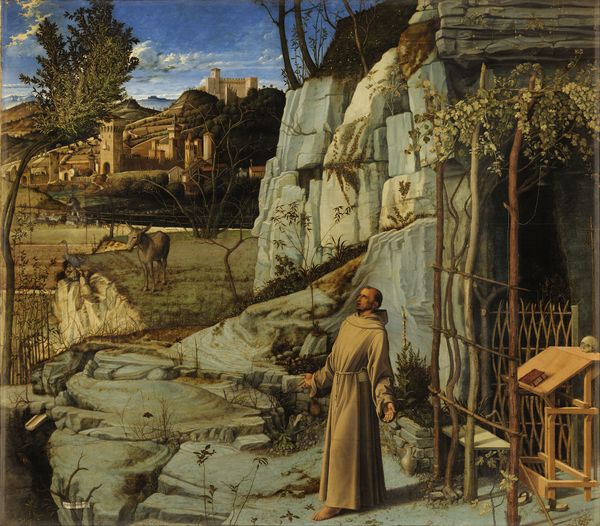
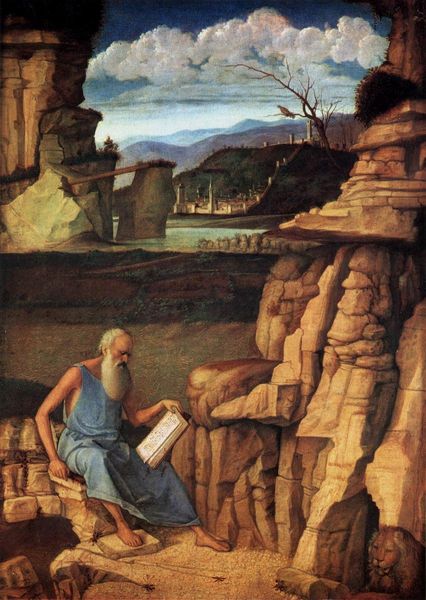
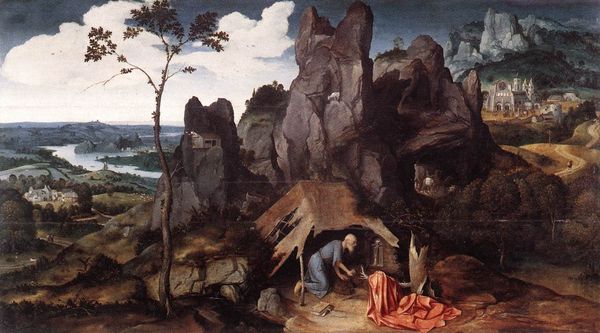
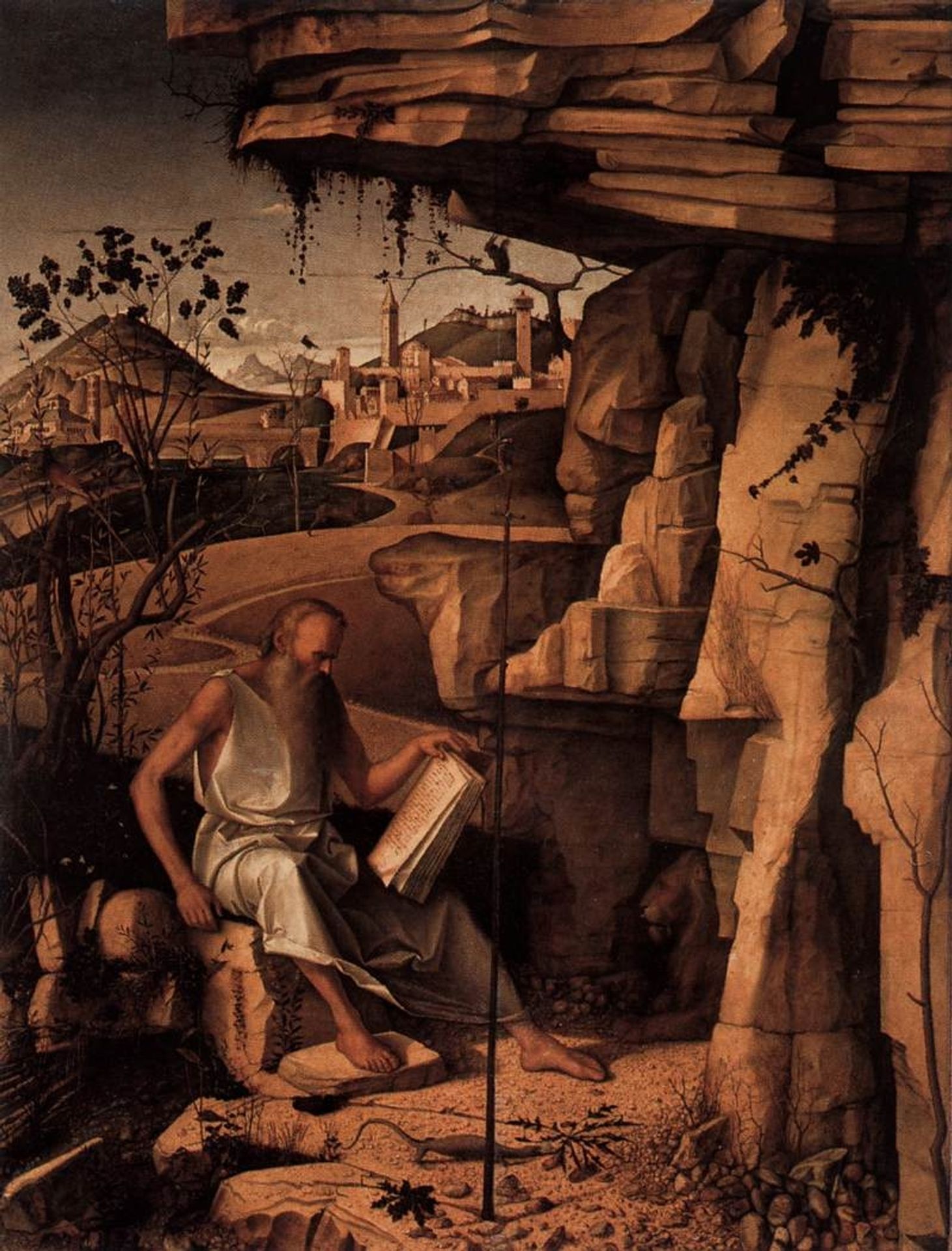
Giovanni Bellini painted “Saint Jerome in the Desert” around 1480, a tempera on panel work that reflects the complex intersection of religious devotion and humanist scholarship characteristic of the Italian Renaissance. Bellini’s placement of Saint Jerome, not as an ascetic figure of deprivation, but as a scholar amidst a carefully rendered landscape, speaks to a cultural shift towards valuing knowledge and earthly experience alongside spiritual pursuit. Jerome, traditionally a figure of the church is seen here as an individual immersed in study. The artist situates Jerome in a liminal space, between the wild, untamed desert and a distant cityscape, suggesting a dialogue between the natural world and human civilization, between the contemplative life and active engagement with society. Bellini captures the tensions inherent in the pursuit of knowledge: the solitary quest for understanding and how that quest can be rooted in tangible, material realities.
St. Jerome in the Desert
1480


Artwork details
- Medium
- painting, oil-paint
- Dimensions
- 113 x 151 cm
- Location
- Uffizi Gallery, Florence, Italy
- Copyright
- Public domain
Tags
Comments
Share your thoughts
About this artwork
Giovanni Bellini painted “Saint Jerome in the Desert” around 1480, a tempera on panel work that reflects the complex intersection of religious devotion and humanist scholarship characteristic of the Italian Renaissance. Bellini’s placement of Saint Jerome, not as an ascetic figure of deprivation, but as a scholar amidst a carefully rendered landscape, speaks to a cultural shift towards valuing knowledge and earthly experience alongside spiritual pursuit. Jerome, traditionally a figure of the church is seen here as an individual immersed in study. The artist situates Jerome in a liminal space, between the wild, untamed desert and a distant cityscape, suggesting a dialogue between the natural world and human civilization, between the contemplative life and active engagement with society. Bellini captures the tensions inherent in the pursuit of knowledge: the solitary quest for understanding and how that quest can be rooted in tangible, material realities.
Comments
Share your thoughts