1925
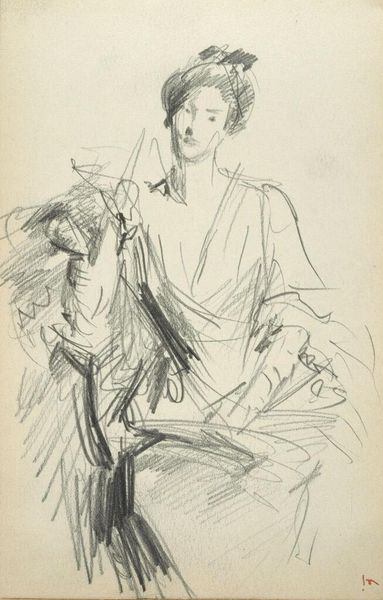
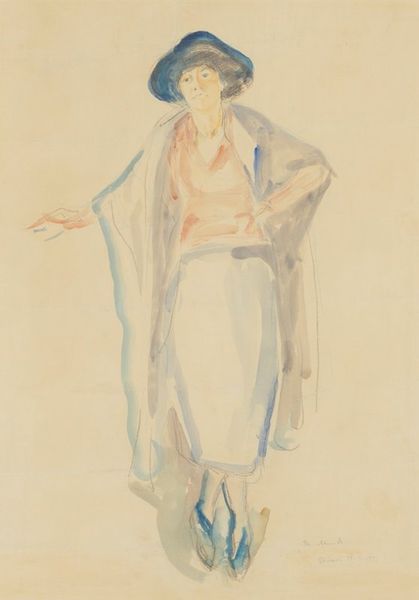
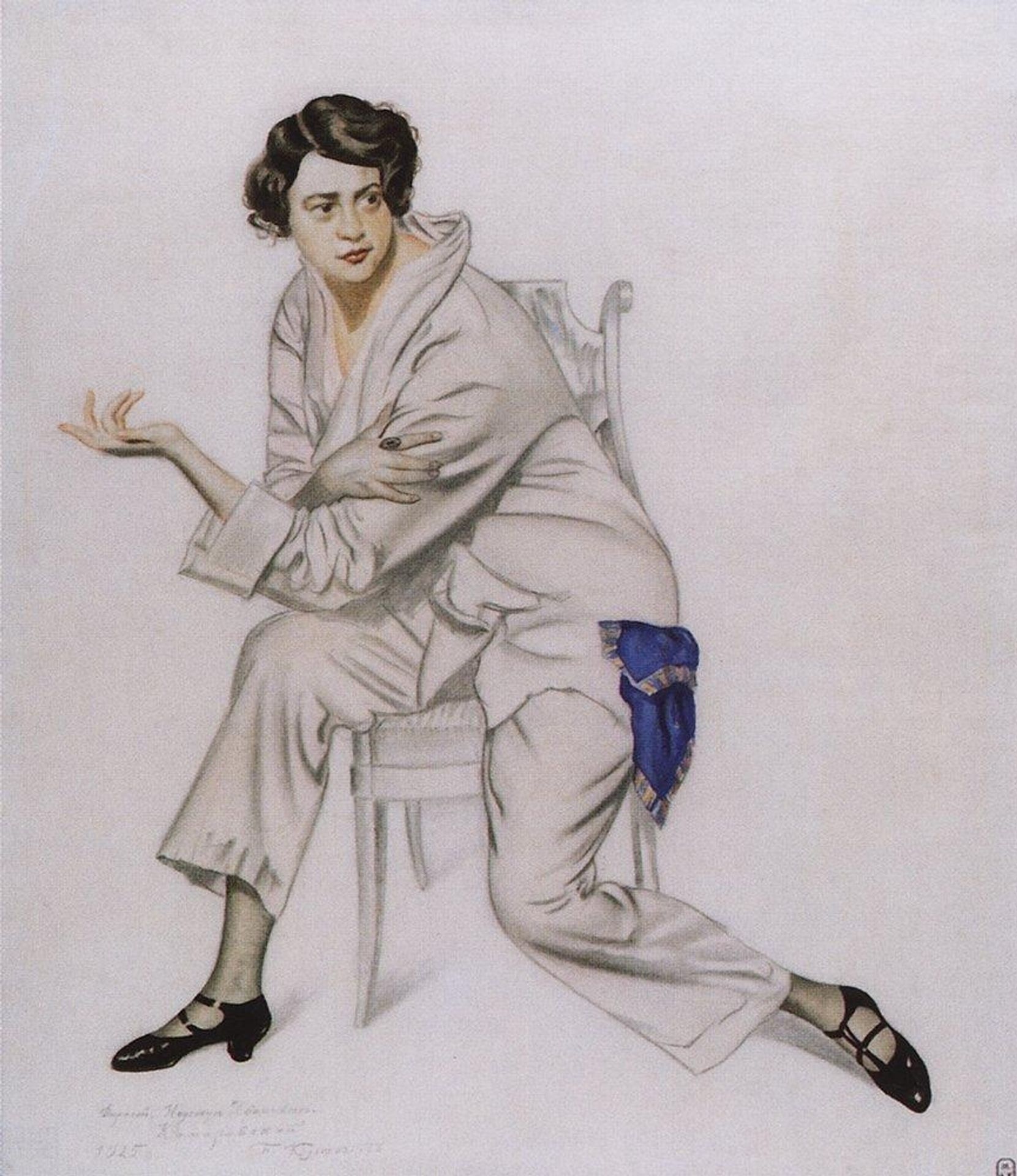
Portrait of the artist Nadezhda Komarovskaya

Listen to curator's interpretation
Curatorial notes
Editor: This is Boris Kustodiev’s "Portrait of the Artist Nadezhda Komarovskaya" from 1925. It’s a painting, and what strikes me most is how casually she’s posed, yet her gaze feels so direct and… knowing. What do you see in this piece? Curator: The symbolism here is fascinating. Nadezhda's somewhat theatrical pose, that elegant but almost excessively loose clothing—it speaks to a shift in societal roles for women during that era. Editor: How so? Curator: The early 20th century was a time of great change. Notice her clothing. It suggests freedom, perhaps a move away from restrictive garments of the past. Her intelligent, direct gaze, as you pointed out, Editor, doesn't shy away from the viewer, conveying an intellectual confidence. And then there’s the blue fabric draped behind her. Does that detail perhaps carry associations with creativity or even a hint of melancholy? The blue may function as the symbol of dream and mystery. Editor: So, it's not just a portrait but a statement about the changing role of women in the arts? Curator: Exactly. She’s not just a subject, but an active participant in the dialogue of her time, and Kustodiev captures that perfectly, subtly hinting at what lies beneath the surface. There’s almost a sense of foreshadowing woven in – an anticipation of a brave new world, or at least, the artist's idea of such a place. Editor: I hadn't considered that before. I was too focused on her expression, but seeing the symbols you pointed out adds so much depth. Curator: Precisely! The layers within portraits often reveal not just the individual, but the whole world which they were experiencing, interpreted by the artist.