About this artwork
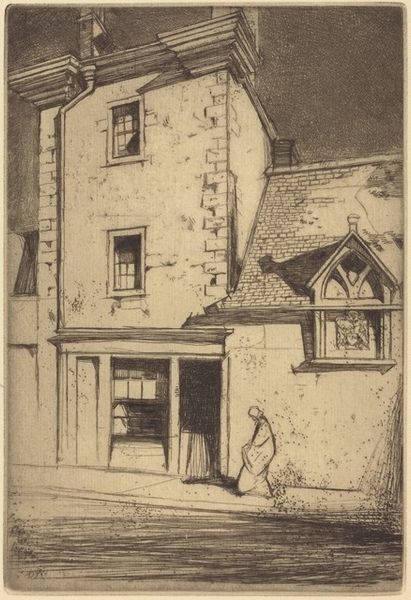
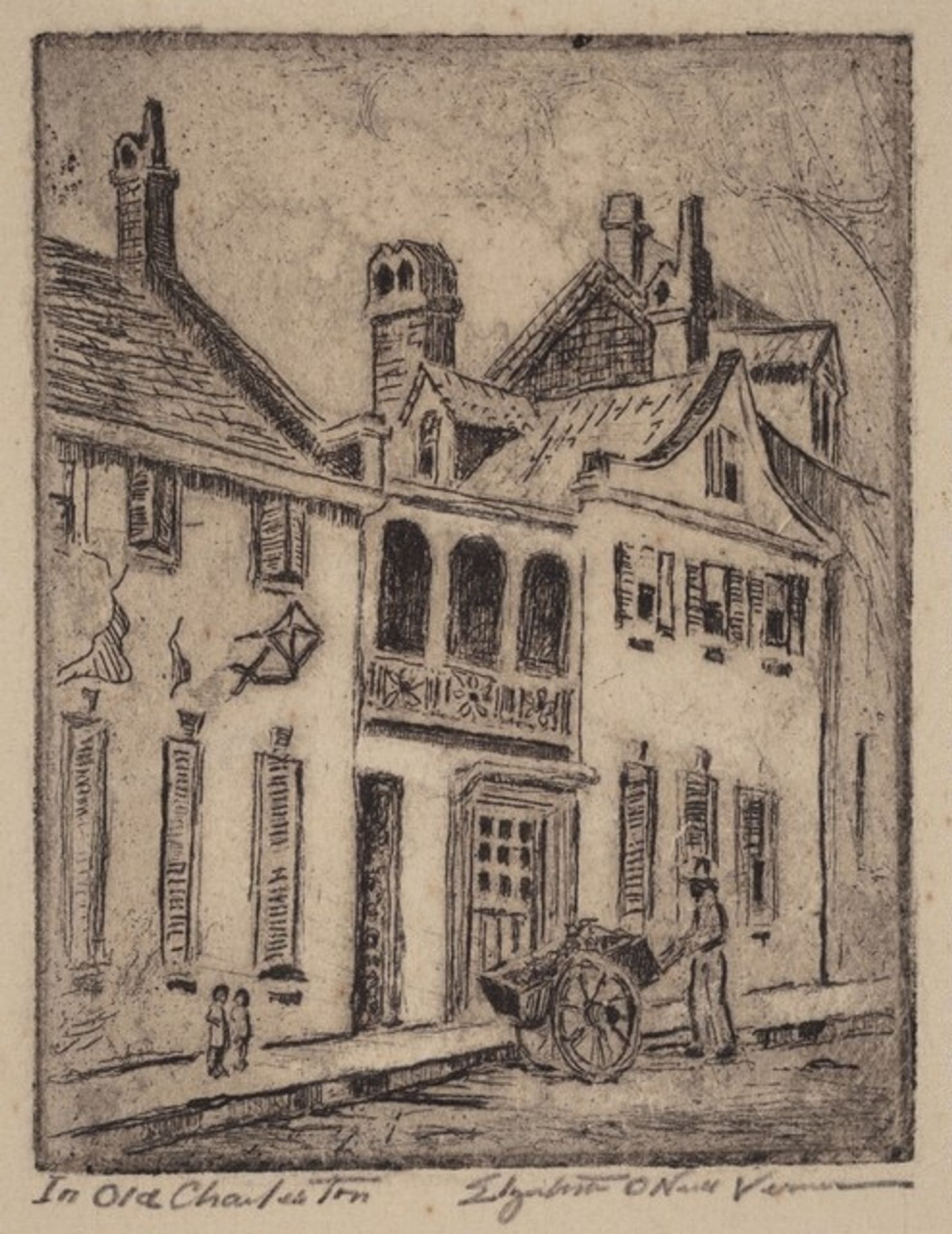
Elizabeth O'Neill Verner made this etching, "In Old Charleston," using metal plates, acid, and ink. Verner engaged with the skilled traditions of printmaking, a field with its own rich history of creative practices. In the etching process, the metal plate's material qualities are crucial. The artist protects parts of the plate with a waxy, acid-resistant coating, and then the exposed metal is bitten away by the acid, creating lines that hold ink. This print depicts a street scene with a laborer pushing a cart, suggesting themes of daily life and labor in Charleston. The etching technique, with its fine lines and tonal variations, captures the architectural details and the atmosphere of the city. Verner's focus on everyday scenes and the lives of ordinary people blurs the lines between fine art and craft. By highlighting the work and traditions of printmaking, and reflecting on the labor evident in the scene itself, Verner elevated the lives and culture of Charleston’s community.
In Old Charleston
c. 1925


Artwork details
- Medium
- drawing, print, etching
- Copyright
- National Gallery of Art: CC0 1.0
Tags
Comments
Share your thoughts
About this artwork
Elizabeth O'Neill Verner made this etching, "In Old Charleston," using metal plates, acid, and ink. Verner engaged with the skilled traditions of printmaking, a field with its own rich history of creative practices. In the etching process, the metal plate's material qualities are crucial. The artist protects parts of the plate with a waxy, acid-resistant coating, and then the exposed metal is bitten away by the acid, creating lines that hold ink. This print depicts a street scene with a laborer pushing a cart, suggesting themes of daily life and labor in Charleston. The etching technique, with its fine lines and tonal variations, captures the architectural details and the atmosphere of the city. Verner's focus on everyday scenes and the lives of ordinary people blurs the lines between fine art and craft. By highlighting the work and traditions of printmaking, and reflecting on the labor evident in the scene itself, Verner elevated the lives and culture of Charleston’s community.
Comments
Share your thoughts