About this artwork
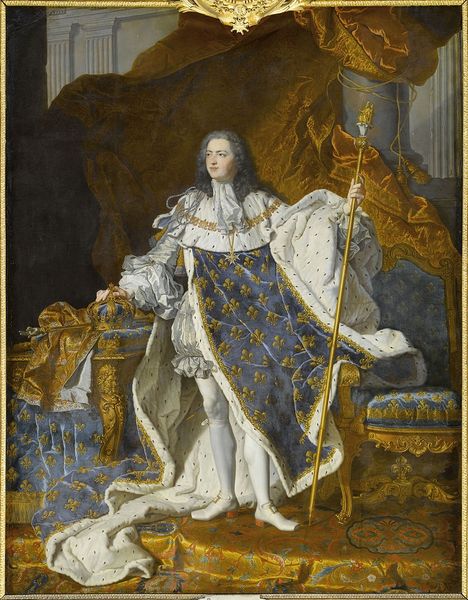
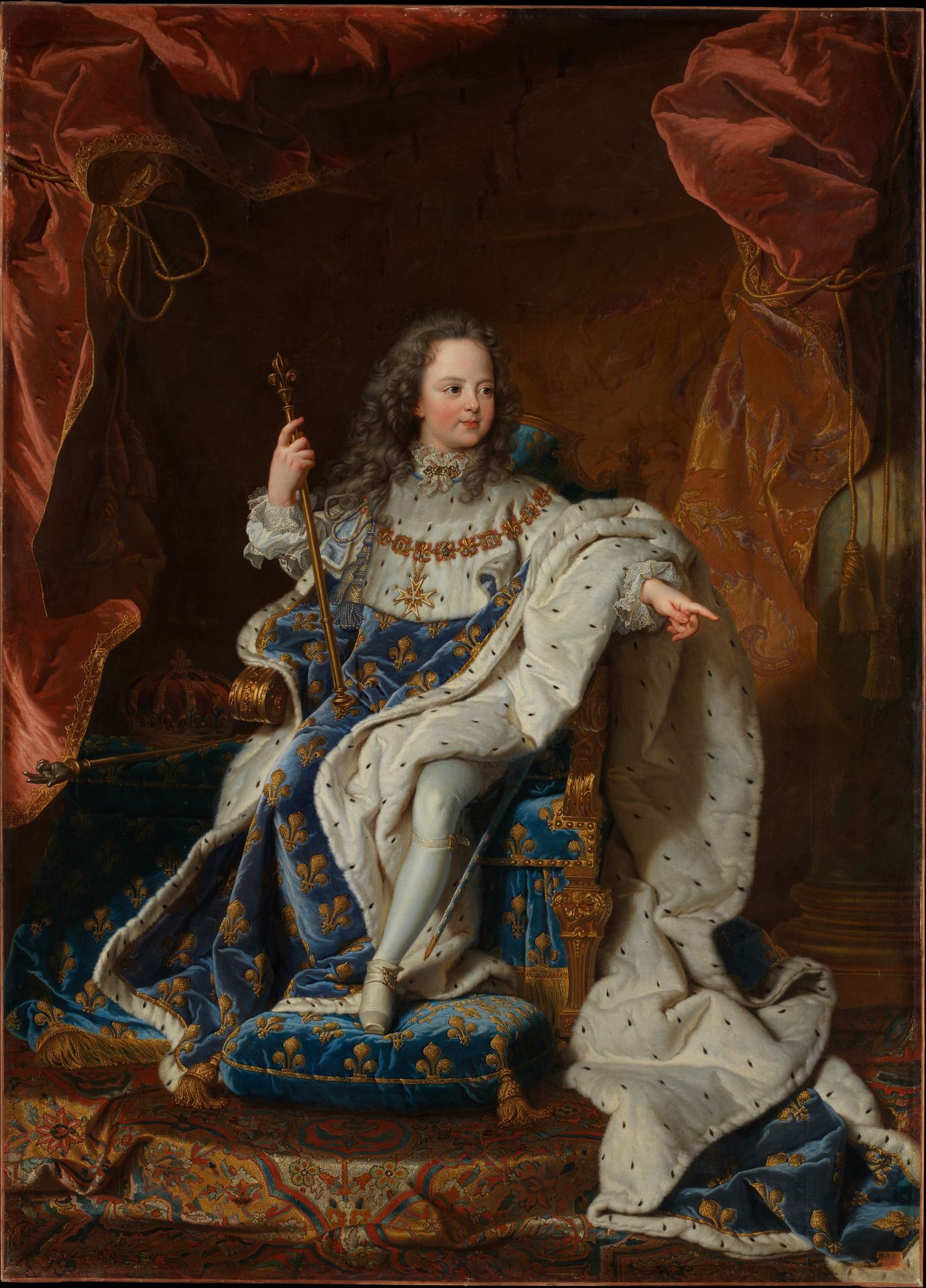
Hyacinthe Rigaud painted this portrait of Louis XV as a Child, sometime in the early 18th century. It depicts the five-year-old heir to the French throne swathed in royal regalia. Rigaud was a master of the Baroque portrait, a genre that served to reinforce the power and mystique of the aristocracy. Here, the young Louis is adorned with symbols of sovereignty, from the fleur-de-lis robe to the scepter he holds. Yet, the child's delicate features and long, flowing hair present a softer image. The artist creates a vision of divine right, inherited through blood, yet embodied by the vulnerable form of a child. What does it mean to be born into power? What burden does this place on an individual? Rigaud captures a moment of innocence overshadowed by the weight of destiny, inviting us to reflect on the complex relationship between identity, privilege, and the expectations of history.
Louis XV (1710–1774) as a Child
1716 - 1724


Artwork details
- Medium
- oil-paint
- Dimensions
- 77 x 55 1/2 in. (195.6 x 141 cm)
- Location
- Metropolitan Museum of Art, New York, NY
- Copyright
- Public Domain
Tags
Comments
Share your thoughts
About this artwork
Hyacinthe Rigaud painted this portrait of Louis XV as a Child, sometime in the early 18th century. It depicts the five-year-old heir to the French throne swathed in royal regalia. Rigaud was a master of the Baroque portrait, a genre that served to reinforce the power and mystique of the aristocracy. Here, the young Louis is adorned with symbols of sovereignty, from the fleur-de-lis robe to the scepter he holds. Yet, the child's delicate features and long, flowing hair present a softer image. The artist creates a vision of divine right, inherited through blood, yet embodied by the vulnerable form of a child. What does it mean to be born into power? What burden does this place on an individual? Rigaud captures a moment of innocence overshadowed by the weight of destiny, inviting us to reflect on the complex relationship between identity, privilege, and the expectations of history.
Comments
Share your thoughts