print, metal, sculpture
#
portrait
#
neoclacissism
# print
#
metal
#
sculpture
#
sculpture
#
history-painting
Dimensions: diameter 6.8 cm, weight 134.39 gr
Copyright: Rijks Museum: Open Domain
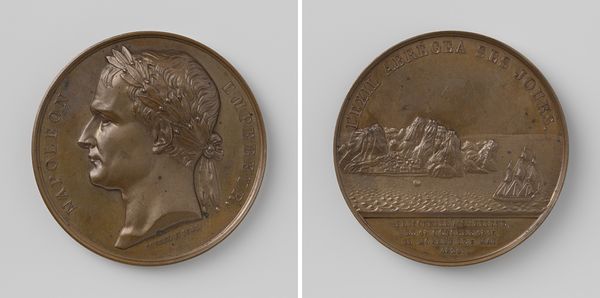
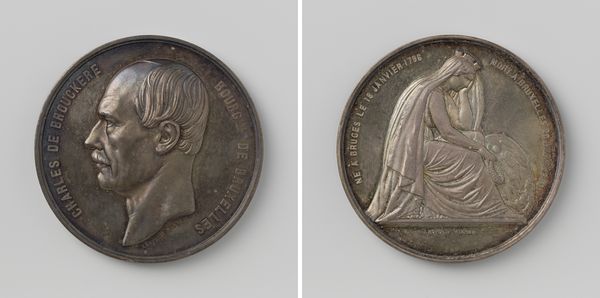
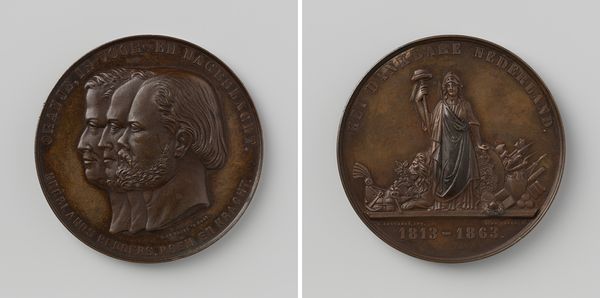
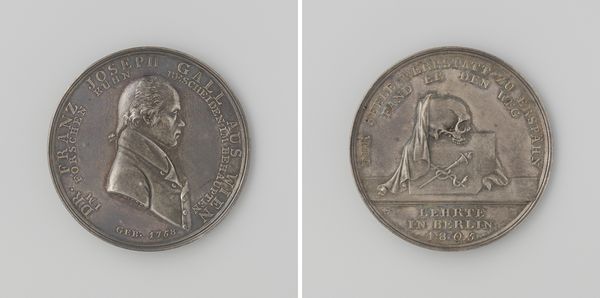
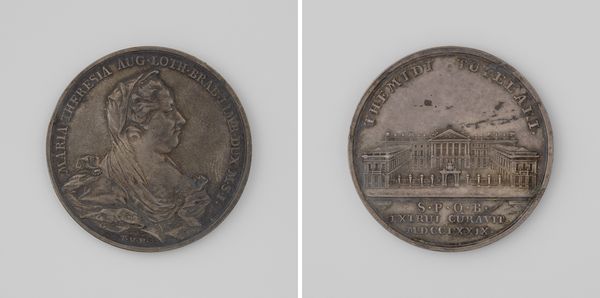
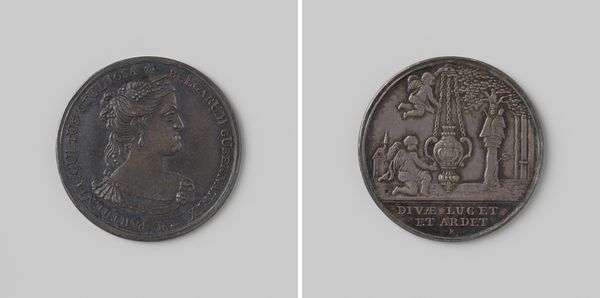
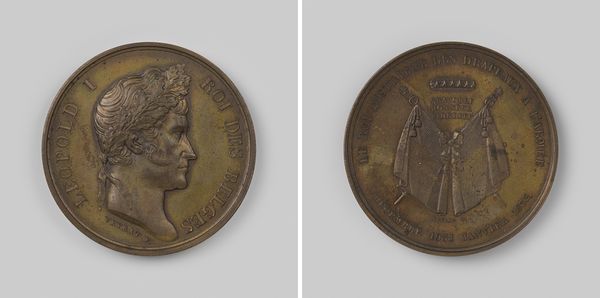
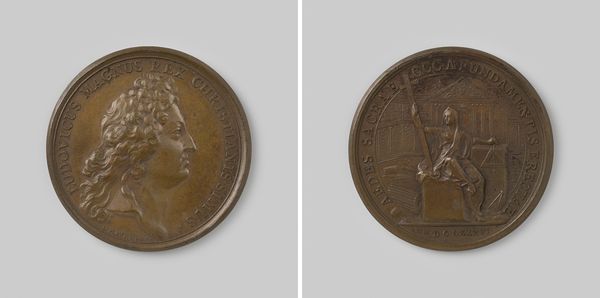
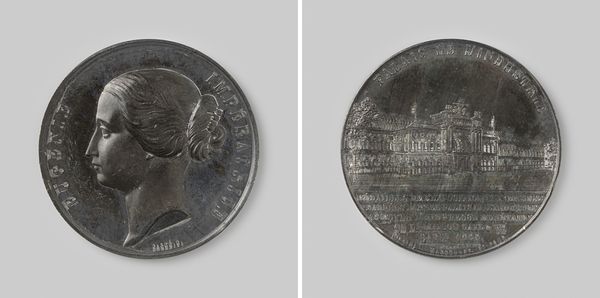
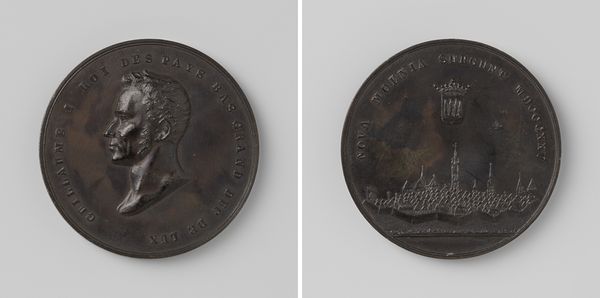
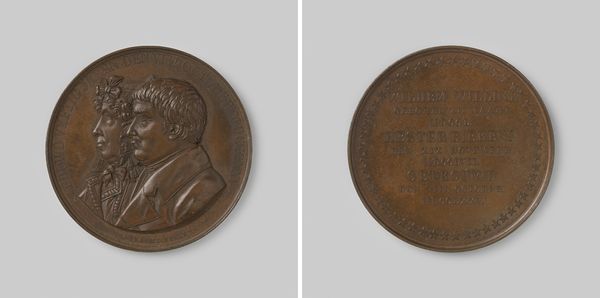
Curator: Well, that’s a funny little thing, isn't it? Almost like a flattened ashtray. Editor: This metal sculpture from 1855 is titled "Opening van het Palais de l'Industrie te Parijs 1855" by Caqué, capturing the opening of the Palace of Industry in Paris. This Neoclassical print presents an event rife with political, industrial, and cultural significance. Curator: Rife is a strong word. But yes, the Palace! An industrial whoosit, huh? Like a super-shiny greenhouse, strutting its stuff to the world. The detail is marvelous, like the whole scene’s squashed in there, a proper little metal microcosm of ambition! Editor: It represents more than mere ambition; it encapsulates the burgeoning industrial age under Napoleon III, an attempt to symbolize progress and imperial power through architecture. The dual portraits signify political consolidation, and it must have functioned almost as propaganda in the aftermath of the 1848 revolution. Curator: Propaganda. Oh, come on, all that’s heavy metal! Still, the portraits give it such an important and immediate personal feeling. The profiles are cold and… sculpted! But I am curious to know, did this object truly rally hearts or minds? Did people clutch these metal tokens, and whisper thanks to Napoleon for the good days coming? Or was it… something of a curio from the start, an official souvenir soon forgotten? Editor: What’s especially intriguing, though, is this historical juncture itself: The artwork sits precisely at the crossroads where technological advancement was intertwined inextricably with socio-political control. One can consider how gender might influence this era of industrial progression: how did social policies, the labor movement, the patriarchal gaze affect women’s opportunities at the time? The question seems highly pertinent given that there are no people present at the event memorialized on this piece. Curator: Indeed, a haunting omission that underscores all its aspirations. I leave with a sense of awe and a tiny bit of regret, actually. But maybe it is simply that heavy metal always puts a strain on me. Editor: Yes, let’s just ponder, briefly, how those omissions continue to shape our perception of history itself. What does it omit to present this perspective, who stands to benefit and, crucially, what could that teach us about modern practices?
Comments
No comments
Be the first to comment and join the conversation on the ultimate creative platform.
 Collect
 React
React Comment
More like this