About this artwork
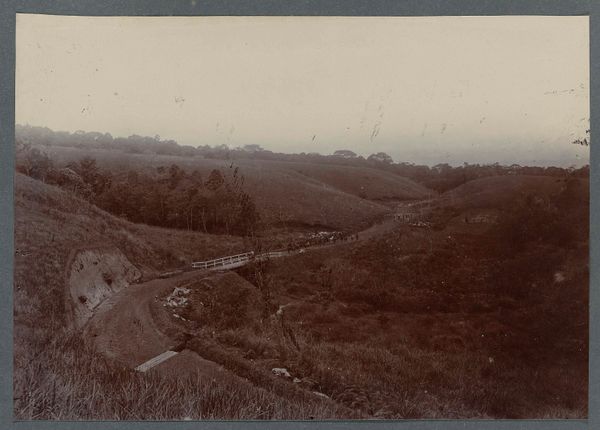
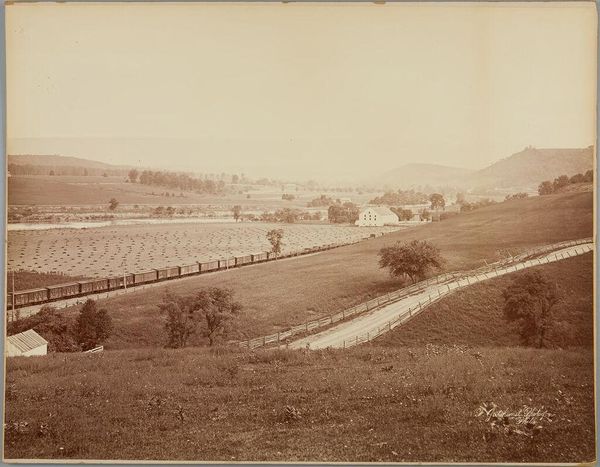
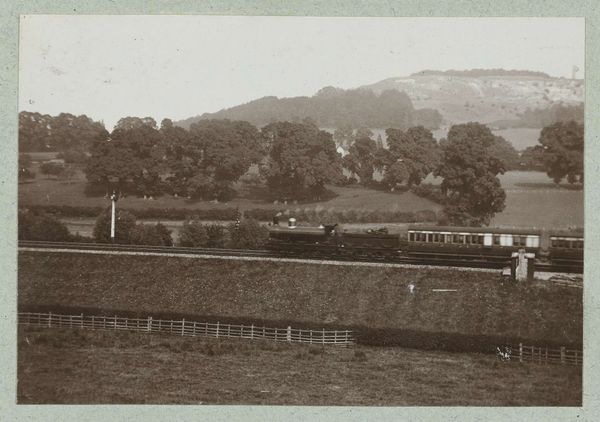
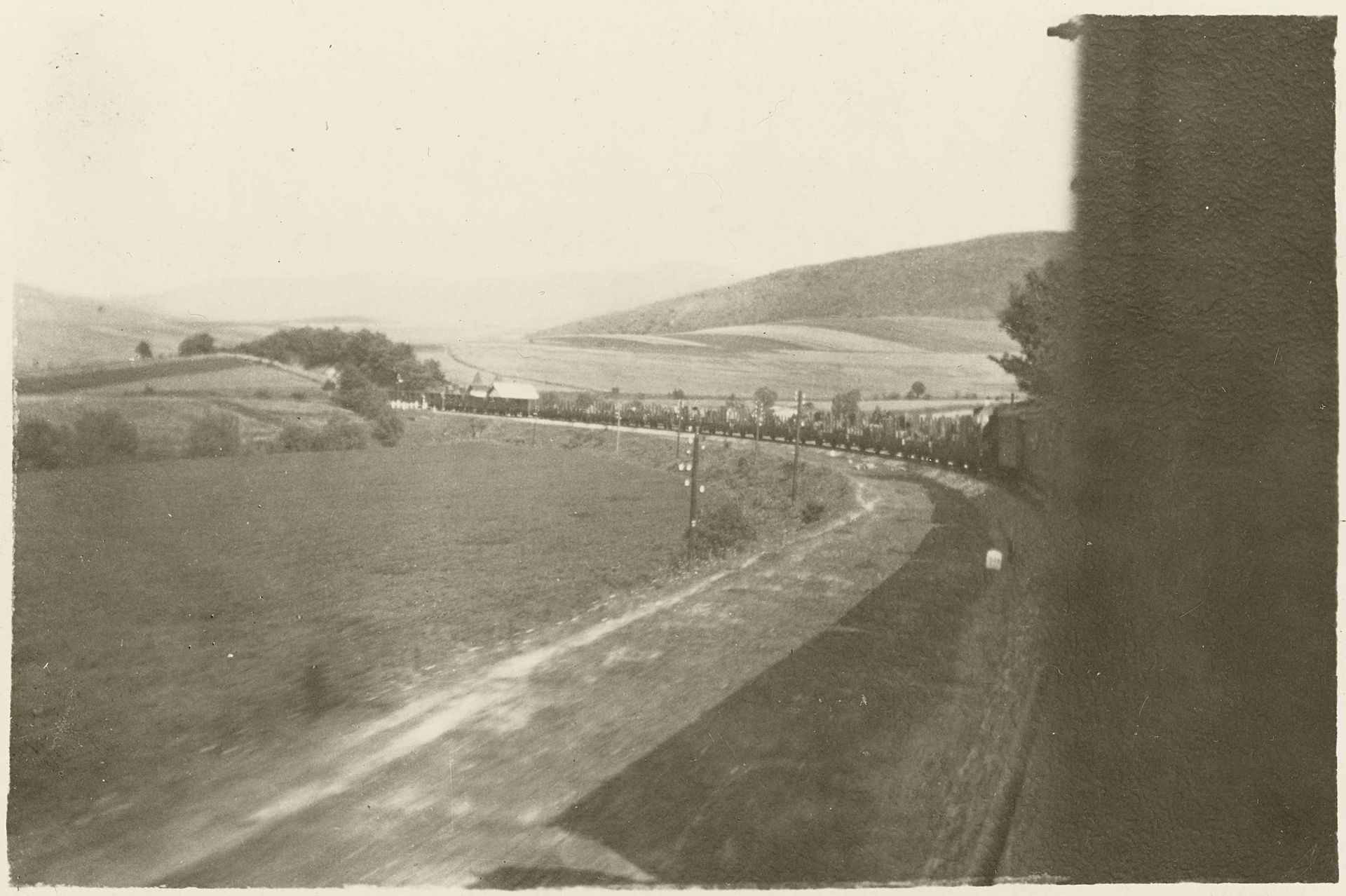
Editor: This photograph, "Heuvelachtig landschap gezien vanuit een trein," or "Hilly landscape seen from a train" was taken anonymously sometime between 1940 and 1945. The black and white image shows a landscape as seen from a moving train. The way the landscape is blurred in the background makes me feel like the future is uncertain, even though the view looks beautiful. How do you interpret this work, especially considering the time period it was taken? Curator: Considering the time frame, during World War II, this landscape, taken anonymously and seemingly spontaneously, resists the typical heroic or tragic narratives. Instead, we're presented with a rather ordinary scene, yet the very act of documenting the landscape from a train carries significant weight. Editor: What do you mean by significant weight? Curator: The train becomes a powerful symbol. Is it a vehicle of escape, of forced relocation, or simply a means of transport for someone trying to maintain normalcy amidst upheaval? This photograph asks us to consider whose gaze is privileged – who is on that train, observing the landscape? Editor: So it challenges us to think beyond a simple, pretty picture? Curator: Precisely. Consider also the "plein-air" tag. Traditionally associated with leisure, here it's almost subversive. The war's impact is unseen, but implied, creating a tension between the pastoral and the political. Does this perspective change how you see the “uncertain future” you mentioned? Editor: Definitely. Now, it makes me think about who might have been looking out that window, and what their future really held. I appreciate that it’s not just about the landscape, but the untold stories within the landscape. Curator: Absolutely, and in acknowledging that anonymity, we're also acknowledging the silenced voices of history, making this seemingly simple image a complex and potent commentary.
Heuvelachtig landschap gezien vanuit een trein
1940 - 1945

Anonymous
@anonymousLocation
RijksmuseumArtwork details
- Medium
- plein-air, photography
- Dimensions
- height 60 mm, width 90 mm
- Location
- Rijksmuseum
- Copyright
- Rijks Museum: Open Domain
Tags
Comments
Share your thoughts
About this artwork
Editor: This photograph, "Heuvelachtig landschap gezien vanuit een trein," or "Hilly landscape seen from a train" was taken anonymously sometime between 1940 and 1945. The black and white image shows a landscape as seen from a moving train. The way the landscape is blurred in the background makes me feel like the future is uncertain, even though the view looks beautiful. How do you interpret this work, especially considering the time period it was taken? Curator: Considering the time frame, during World War II, this landscape, taken anonymously and seemingly spontaneously, resists the typical heroic or tragic narratives. Instead, we're presented with a rather ordinary scene, yet the very act of documenting the landscape from a train carries significant weight. Editor: What do you mean by significant weight? Curator: The train becomes a powerful symbol. Is it a vehicle of escape, of forced relocation, or simply a means of transport for someone trying to maintain normalcy amidst upheaval? This photograph asks us to consider whose gaze is privileged – who is on that train, observing the landscape? Editor: So it challenges us to think beyond a simple, pretty picture? Curator: Precisely. Consider also the "plein-air" tag. Traditionally associated with leisure, here it's almost subversive. The war's impact is unseen, but implied, creating a tension between the pastoral and the political. Does this perspective change how you see the “uncertain future” you mentioned? Editor: Definitely. Now, it makes me think about who might have been looking out that window, and what their future really held. I appreciate that it’s not just about the landscape, but the untold stories within the landscape. Curator: Absolutely, and in acknowledging that anonymity, we're also acknowledging the silenced voices of history, making this seemingly simple image a complex and potent commentary.
Comments
Share your thoughts