c. 1900 - 1940
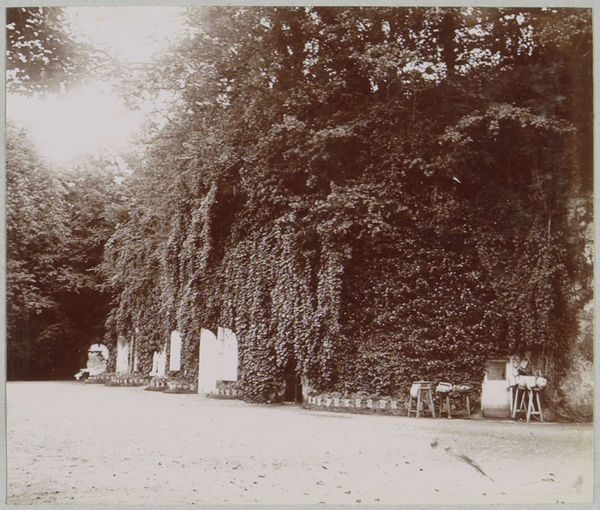
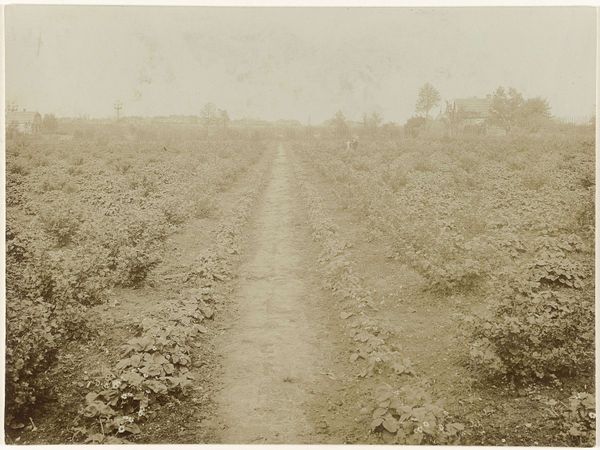
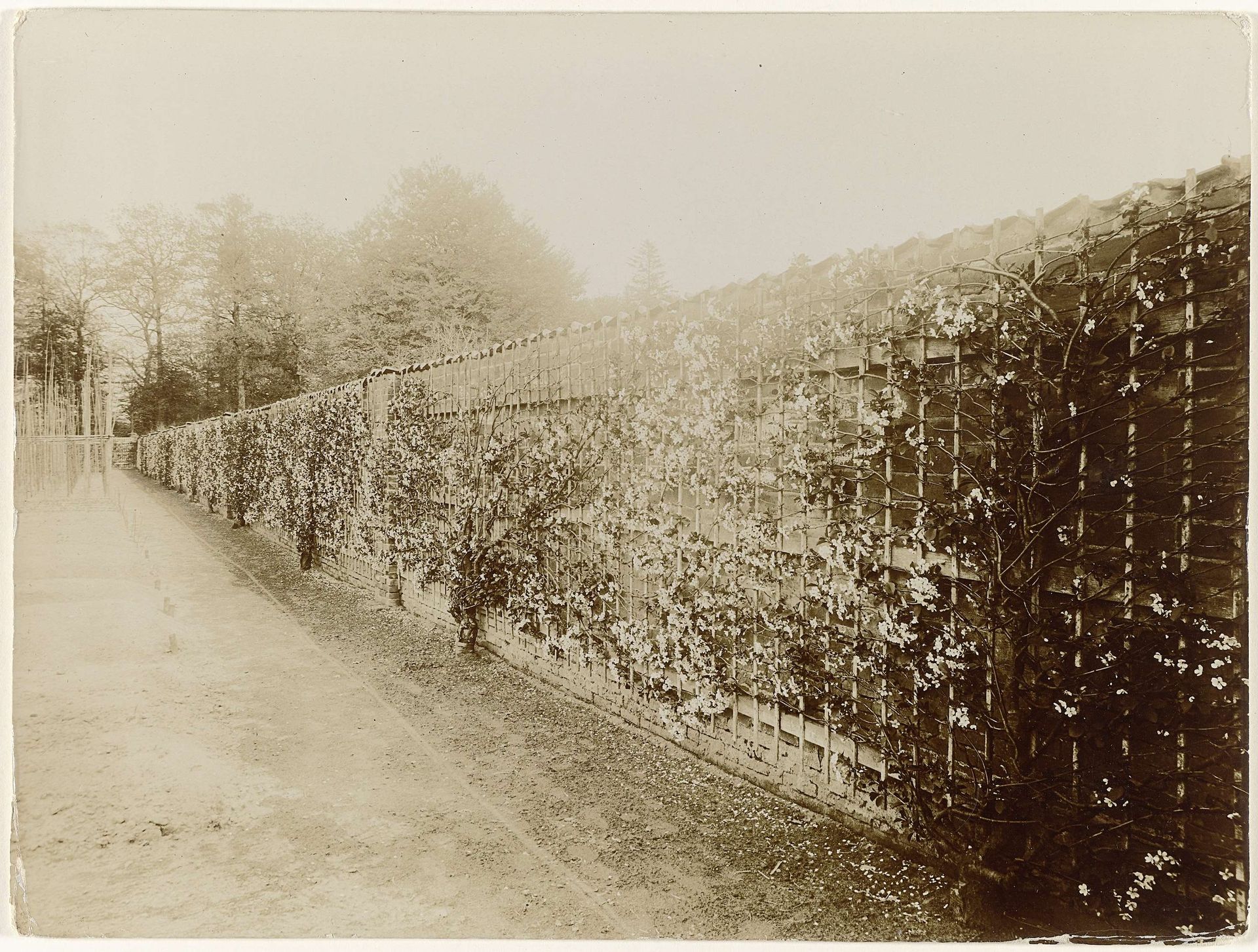
Muur met morellen en heibomen in de moestuin van huize 'De Poll' te Voorst

Richard Tepe
1864 - 1952Location
RijksmuseumListen to curator's interpretation
Curatorial notes
Richard Tepe made this silver gelatin print of a wall with sweet cherry trees in the kitchen garden of 'De Poll' in Voorst. The muted sepia tones give a sense of something timeless, a classic scene, but the eye is drawn to the formal structure, the process. Look closely at the trellis and how the plants almost mimic its grid-like design. You see how the linear constraints of the wooden supports guide the organic forms of the cherry trees. There's a dance between control and freedom, order and chaos. It’s like when you are painting, you try to guide the paint, but it does its own thing, too. Tepe, like any good artist, shows us that the beauty isn't just in the subject, but in how we see it, how we arrange our perception. This piece reminds me a little of Karl Blossfeldt's plant studies, a similar way of looking at nature through a structured lens. Art’s always a conversation, right? No fixed meanings, just different ways of seeing.