About this artwork
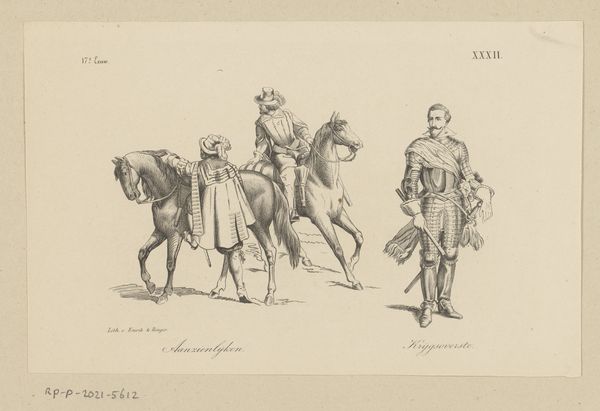
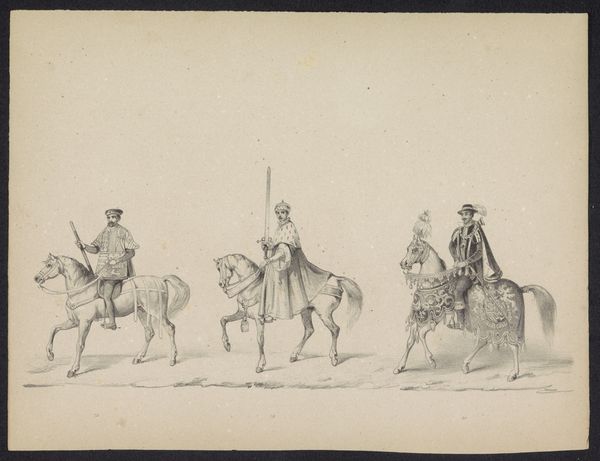
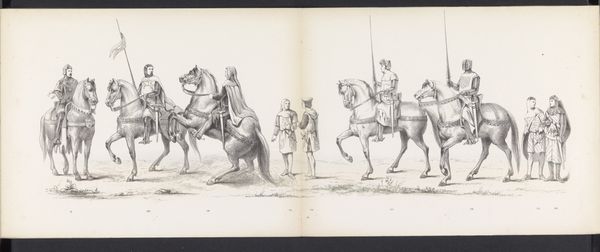
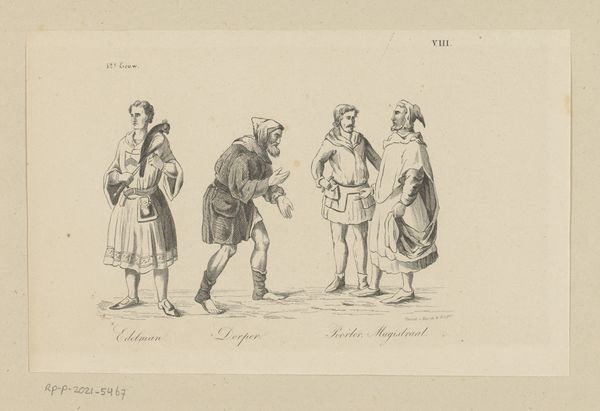
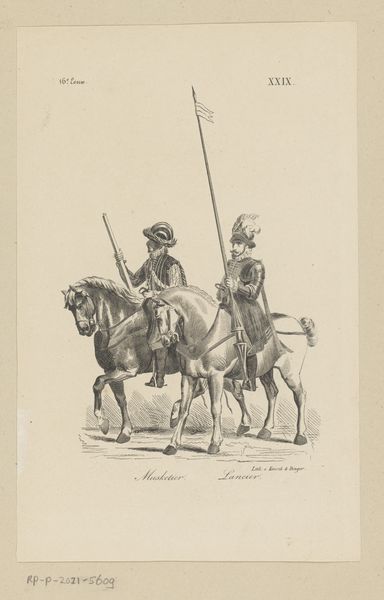
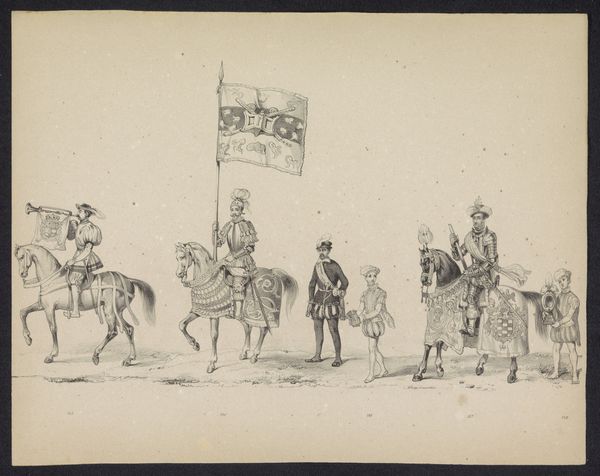
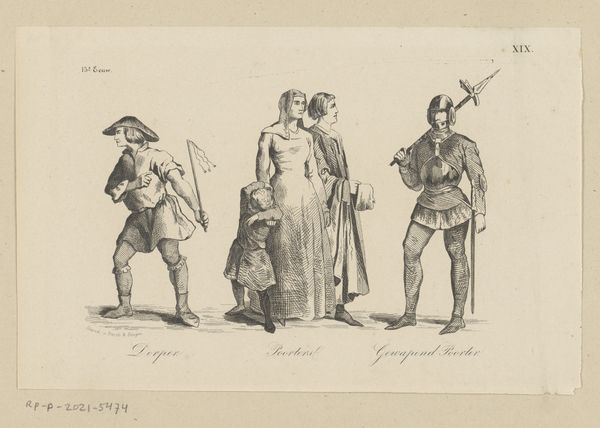
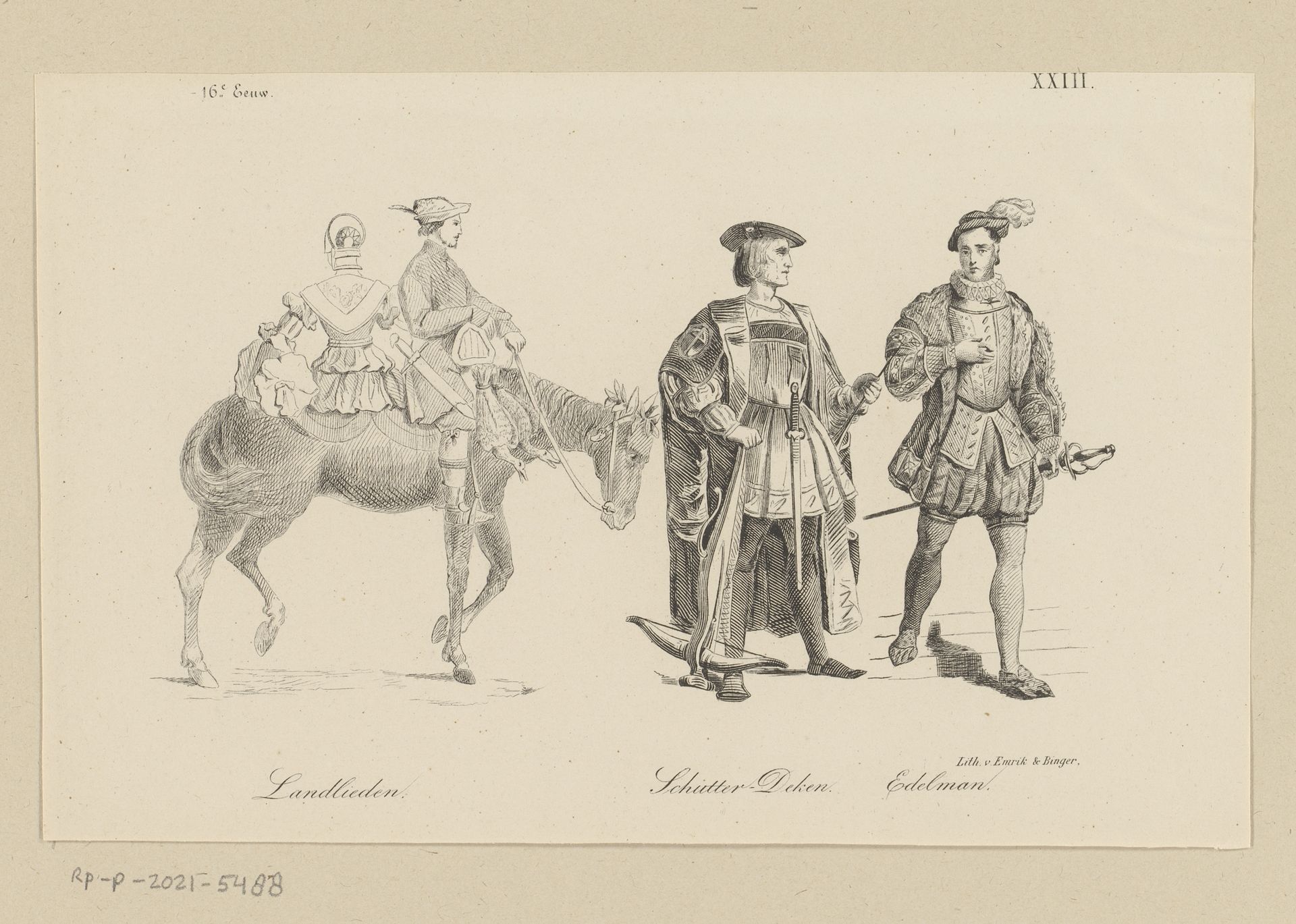
This print, by an anonymous artist, depicts figures from the sixteenth century using lithography – a relatively new technology at the time. It enabled the efficient reproduction of images, a key development in the history of visual culture and the expansion of literacy. Lithography involves drawing with a greasy crayon on a stone or metal plate, then applying ink which adheres only to the drawn areas. This print showcases the technique’s capacity for fine detail, crucial for illustrating the intricate garments worn by the figures. These clothes are not just fabric; they are potent signifiers of social standing. Look at the differences in attire: the ‘Landlieden’ (country folk) in simpler garb, the ‘Schutter-Deken’ (militia officer) in ceremonial robes, and the ‘Edelman’ (nobleman) in his stylish doublet and hose. Each layer of fabric, each embellishment, speaks to the wearer’s position in a rigid social hierarchy. Consider the labor involved in producing such clothing – from the cultivation of raw materials like flax and wool, to the spinning, weaving, and tailoring by skilled artisans. This print, with its attention to detail, invites us to consider the relationship between fashion, labor, and social identity in the early modern period.
Man en vrouw op paard, schutter-deken en edelman in kleding uit de zestiende eeuw
1857

Anonymous
@anonymousLocation
RijksmuseumArtwork details
- Dimensions
- height 150 mm, width 236 mm
- Location
- Rijksmuseum
- Copyright
- Rijks Museum: Open Domain
Comments
Share your thoughts
About this artwork
This print, by an anonymous artist, depicts figures from the sixteenth century using lithography – a relatively new technology at the time. It enabled the efficient reproduction of images, a key development in the history of visual culture and the expansion of literacy. Lithography involves drawing with a greasy crayon on a stone or metal plate, then applying ink which adheres only to the drawn areas. This print showcases the technique’s capacity for fine detail, crucial for illustrating the intricate garments worn by the figures. These clothes are not just fabric; they are potent signifiers of social standing. Look at the differences in attire: the ‘Landlieden’ (country folk) in simpler garb, the ‘Schutter-Deken’ (militia officer) in ceremonial robes, and the ‘Edelman’ (nobleman) in his stylish doublet and hose. Each layer of fabric, each embellishment, speaks to the wearer’s position in a rigid social hierarchy. Consider the labor involved in producing such clothing – from the cultivation of raw materials like flax and wool, to the spinning, weaving, and tailoring by skilled artisans. This print, with its attention to detail, invites us to consider the relationship between fashion, labor, and social identity in the early modern period.
Comments
Share your thoughts