About this artwork
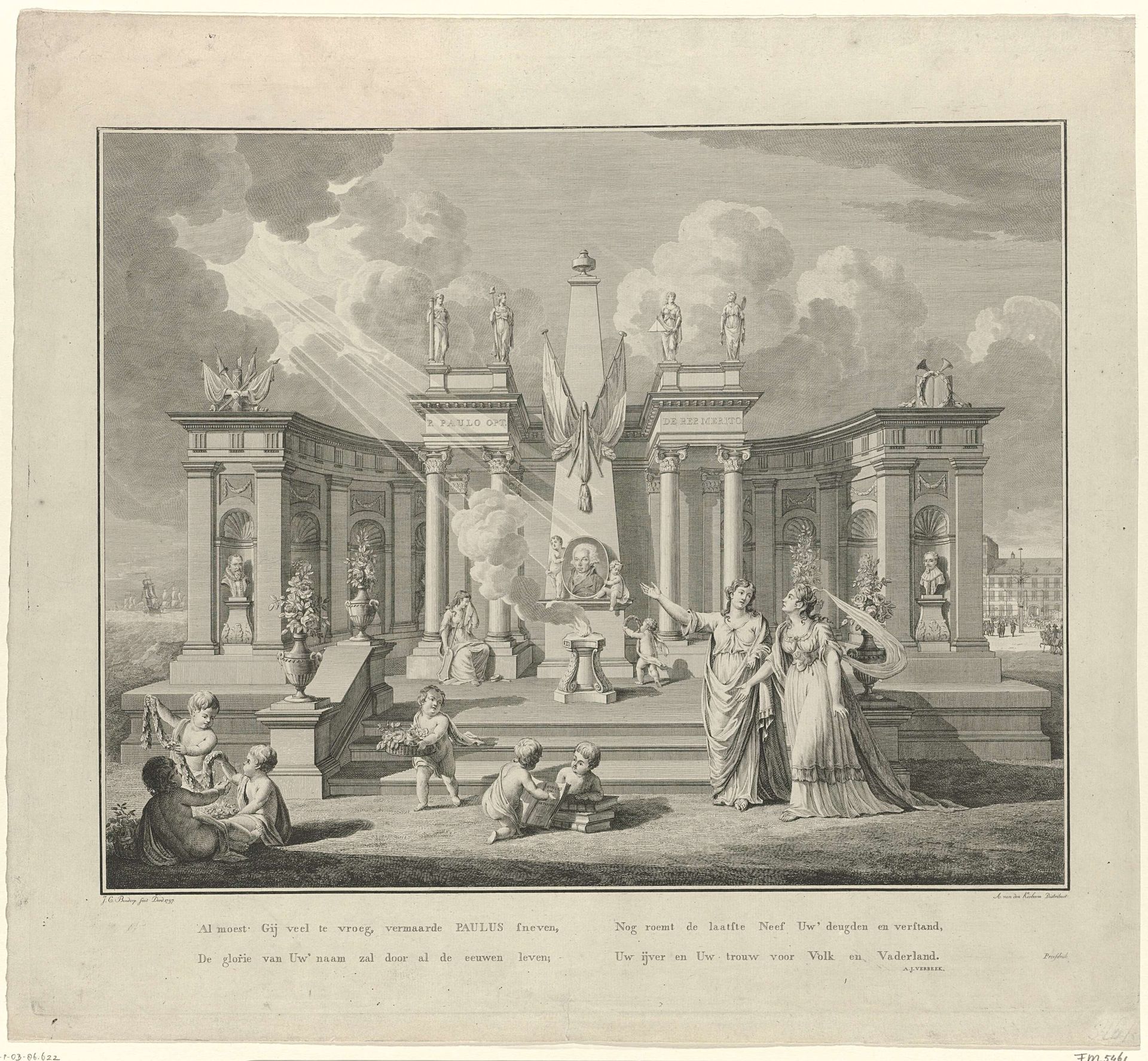
Johannes Christiaan Bendorp created this print, Monument for Pieter Paulus, in 1796. It presents an elaborate Neoclassical monument, bathed in divine light, erected in honor of Pieter Paulus. Paulus was a prominent Dutch Patriot, a political movement advocating for greater civic participation and reform during the late 18th century. This print presents the monument as a stage for civic virtue, with allegorical figures and putti enacting scenes of remembrance and honor. Made in the Batavian Republic, a revolutionary government installed with French support, the image underscores the Republic's self-conscious embrace of classical republican ideals. To fully appreciate this work, one could delve into the archives of civic organizations and political pamphlets from the period, exploring the visual language of revolution and reform in the Netherlands. The monument serves as a powerful reminder that art is not made in a vacuum, but is deeply embedded in the political and social currents of its time.
Monument voor Pieter Paulus, 1796
1797

Johannes Christiaan Bendorp
1766 - 1849Location
RijksmuseumArtwork details
- Medium
- print, engraving
- Dimensions
- height 440 mm, width 505 mm
- Location
- Rijksmuseum
- Copyright
- Rijks Museum: Open Domain
Tags
Comments
Share your thoughts
About this artwork
Johannes Christiaan Bendorp created this print, Monument for Pieter Paulus, in 1796. It presents an elaborate Neoclassical monument, bathed in divine light, erected in honor of Pieter Paulus. Paulus was a prominent Dutch Patriot, a political movement advocating for greater civic participation and reform during the late 18th century. This print presents the monument as a stage for civic virtue, with allegorical figures and putti enacting scenes of remembrance and honor. Made in the Batavian Republic, a revolutionary government installed with French support, the image underscores the Republic's self-conscious embrace of classical republican ideals. To fully appreciate this work, one could delve into the archives of civic organizations and political pamphlets from the period, exploring the visual language of revolution and reform in the Netherlands. The monument serves as a powerful reminder that art is not made in a vacuum, but is deeply embedded in the political and social currents of its time.
Comments
Share your thoughts