c. 1652 - 1653
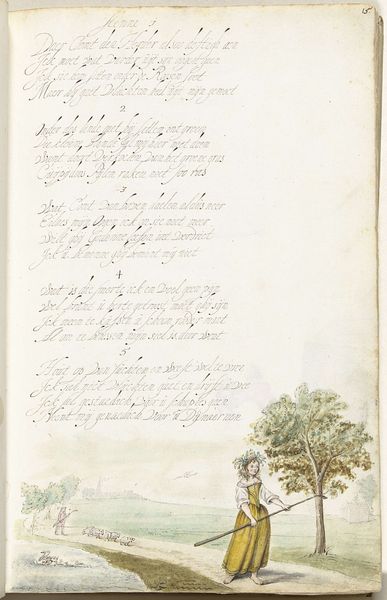
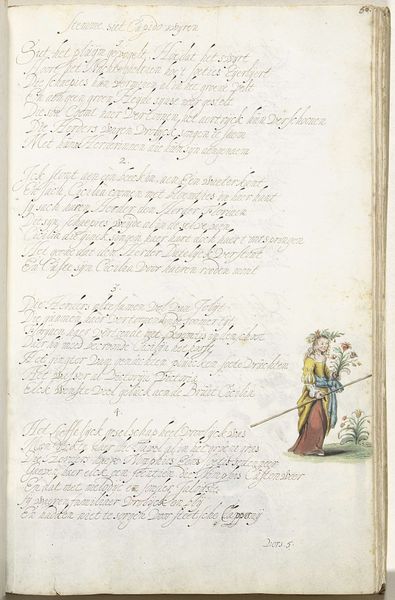
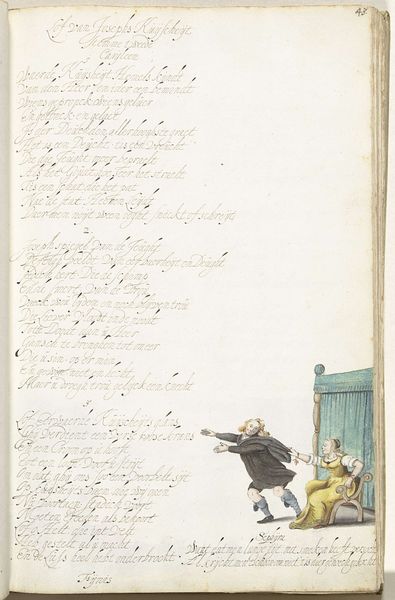
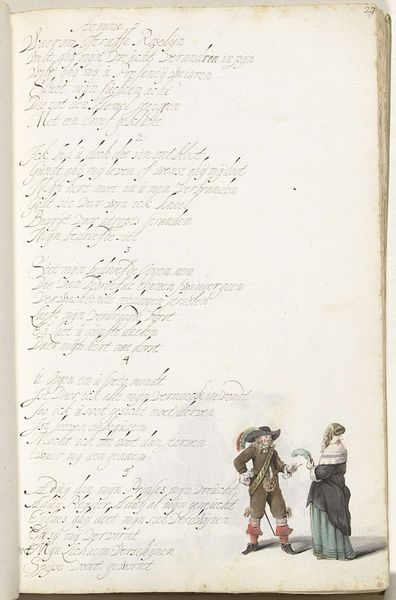
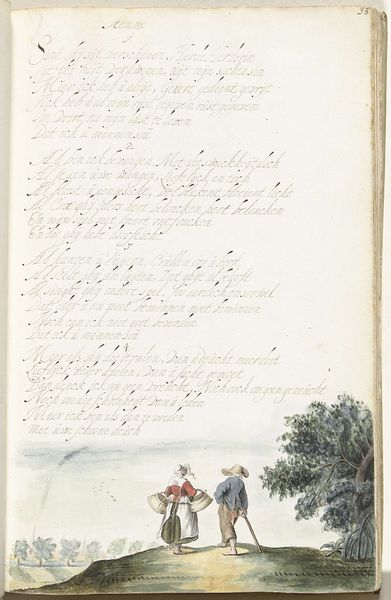
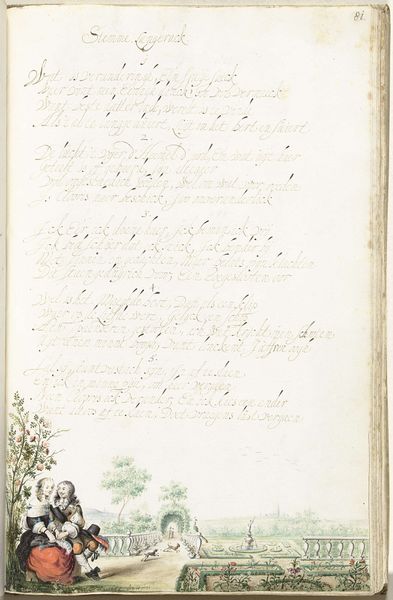
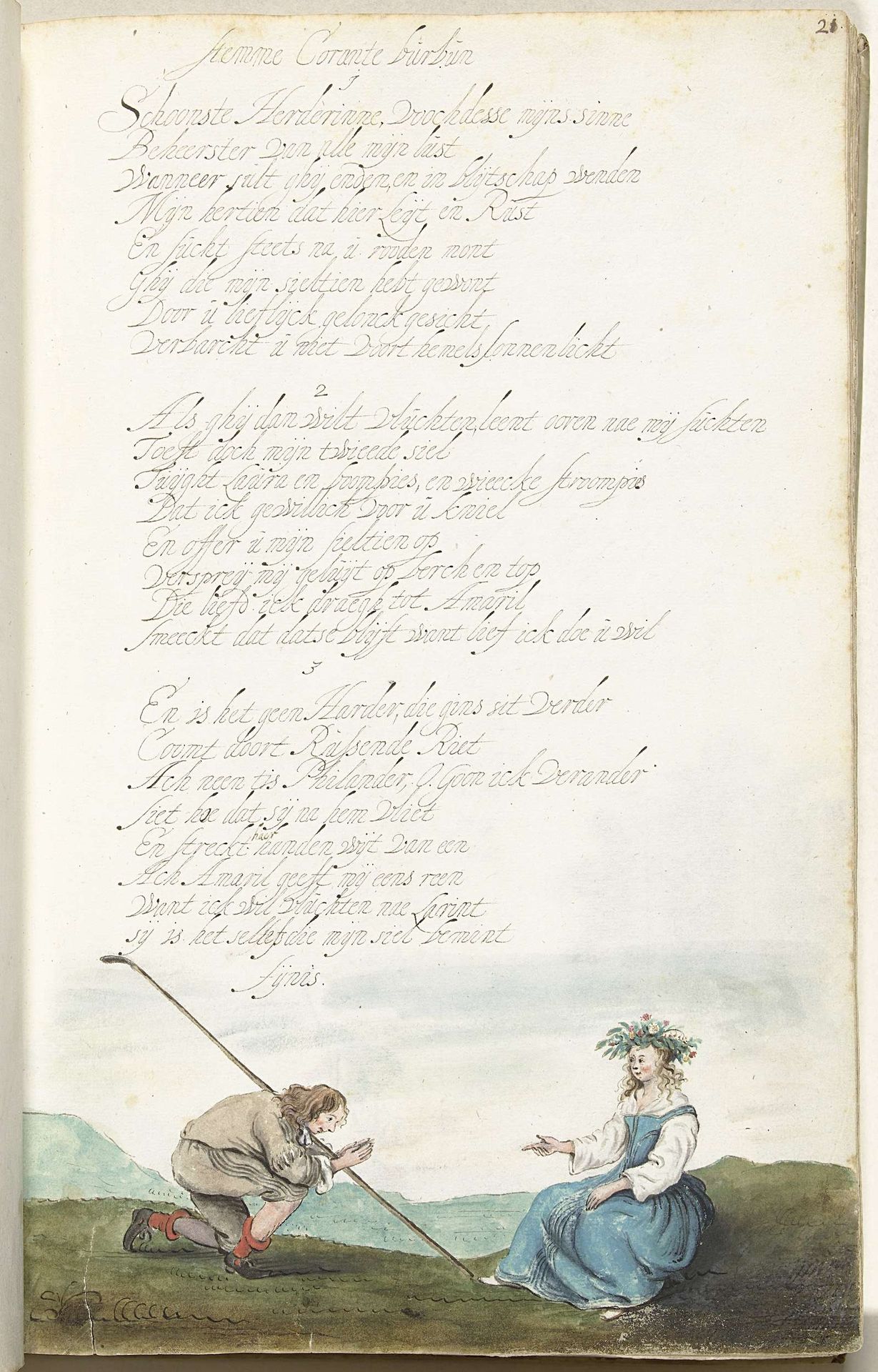
Herder knielend voor een herderin

Gesina ter Borch
1633 - 1690Location
RijksmuseumListen to curator's interpretation
Curatorial notes
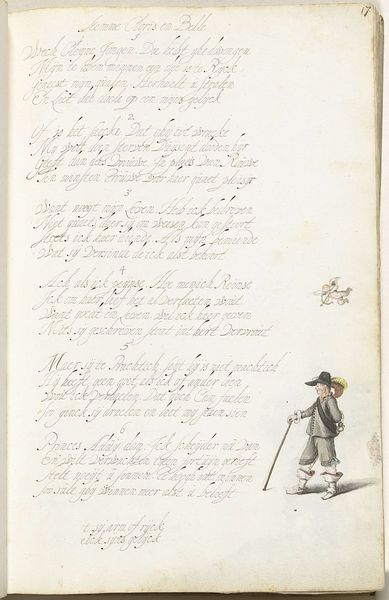
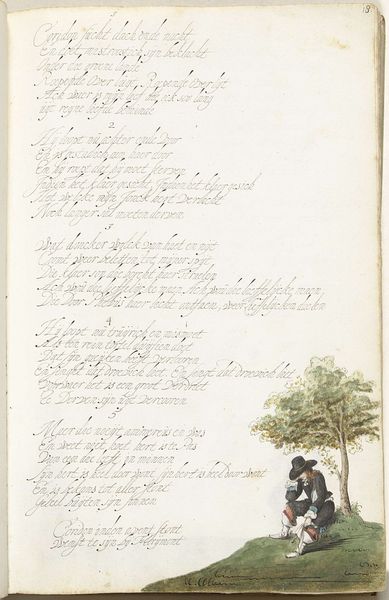
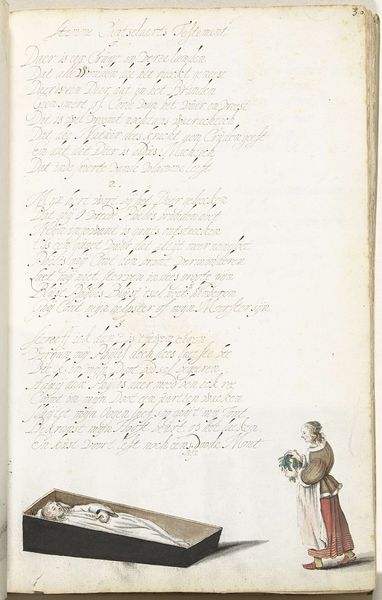
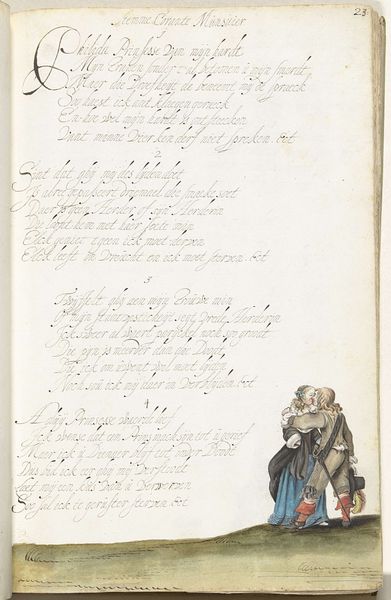
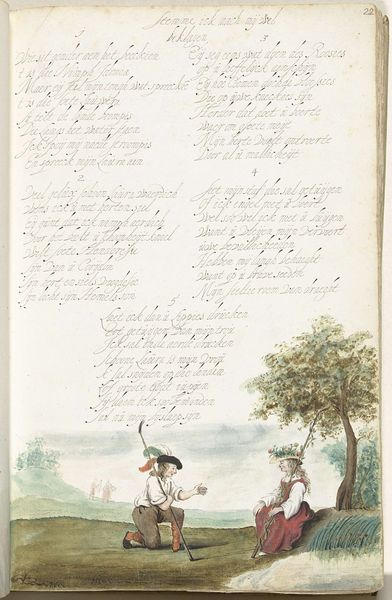
This watercolor and ink drawing, "Herder knielend voor een herderin," was created by Gesina ter Borch, a Dutch artist working in the 17th century. Ter Borch, who never married, came from an artistic family and remained in her family home for her entire life. This composition sits below lines of hand-written text and depicts a male shepherd kneeling before a shepherdess. While pastoral scenes were common in art, Gesina developed alternative narratives by focusing on intimate, domestic scenes, and elevating the status of women in her art. Consider the emotional dynamic Ter Borch creates: the shepherdess is positioned higher than the kneeling male shepherd, suggesting her dominance. How might this subtle shift challenge the traditional representations of gender roles in the 17th century? What does it suggest about Gesina ter Borch's perception of women, and her own position as an unmarried woman in Dutch society?