c. 1900
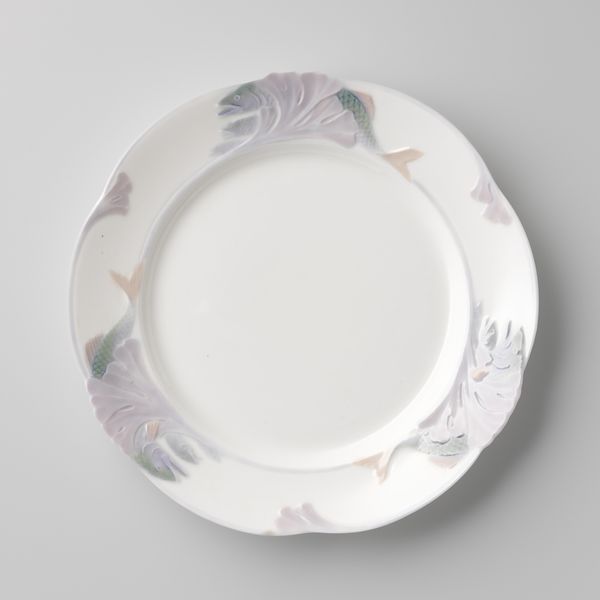
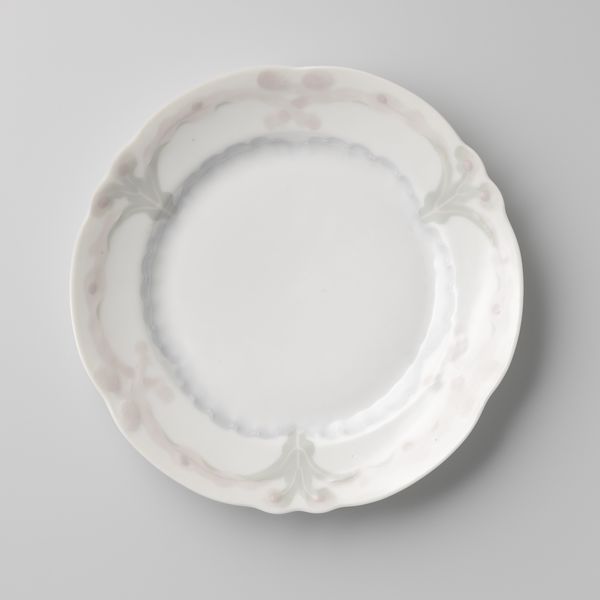
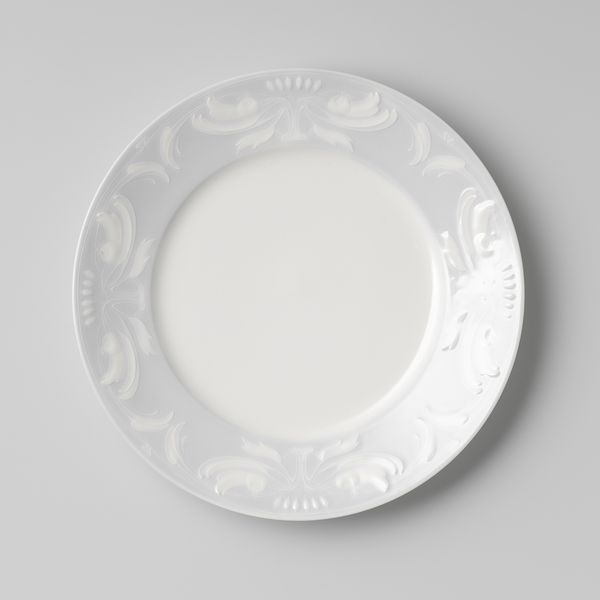
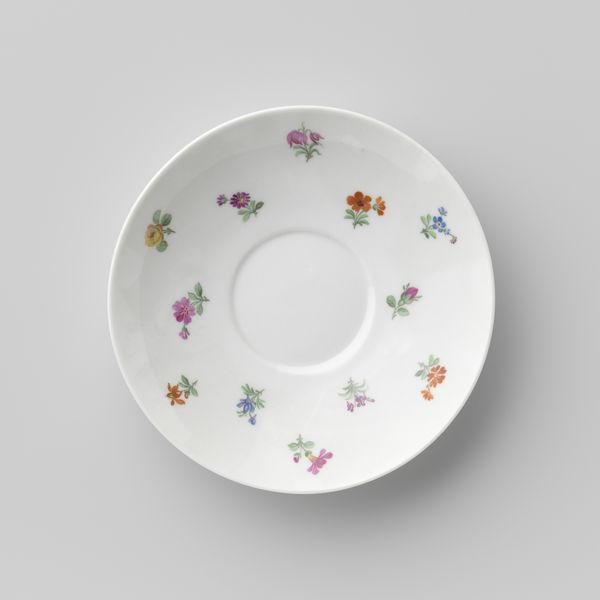
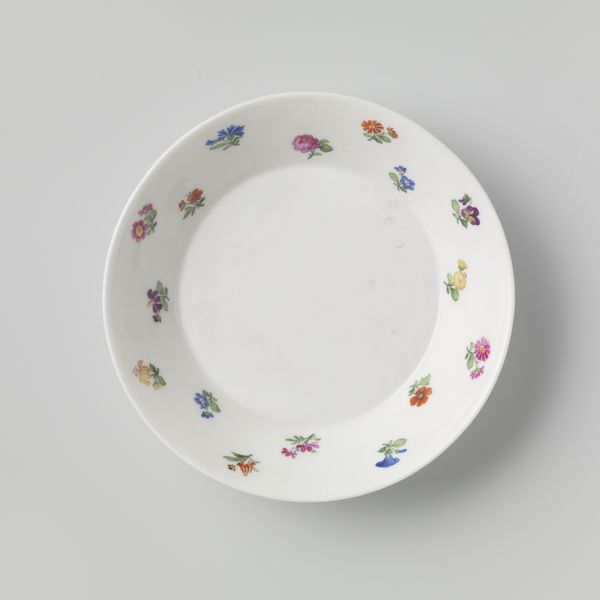
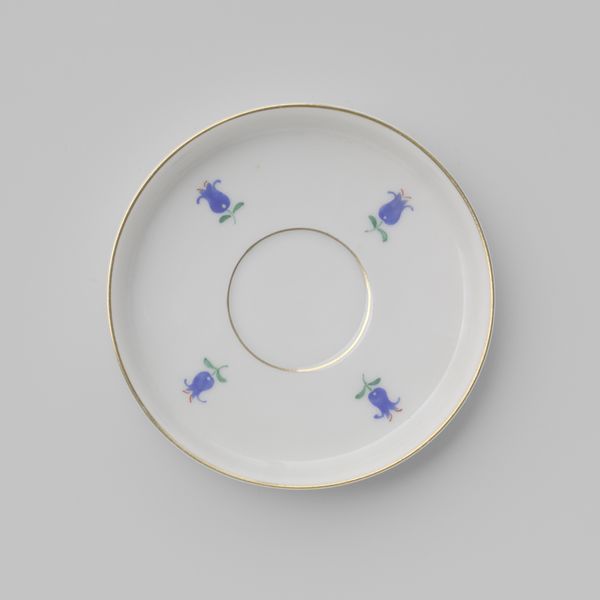
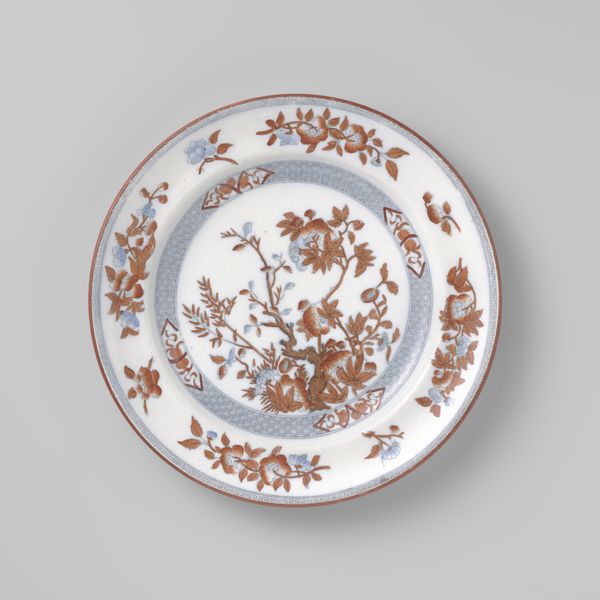
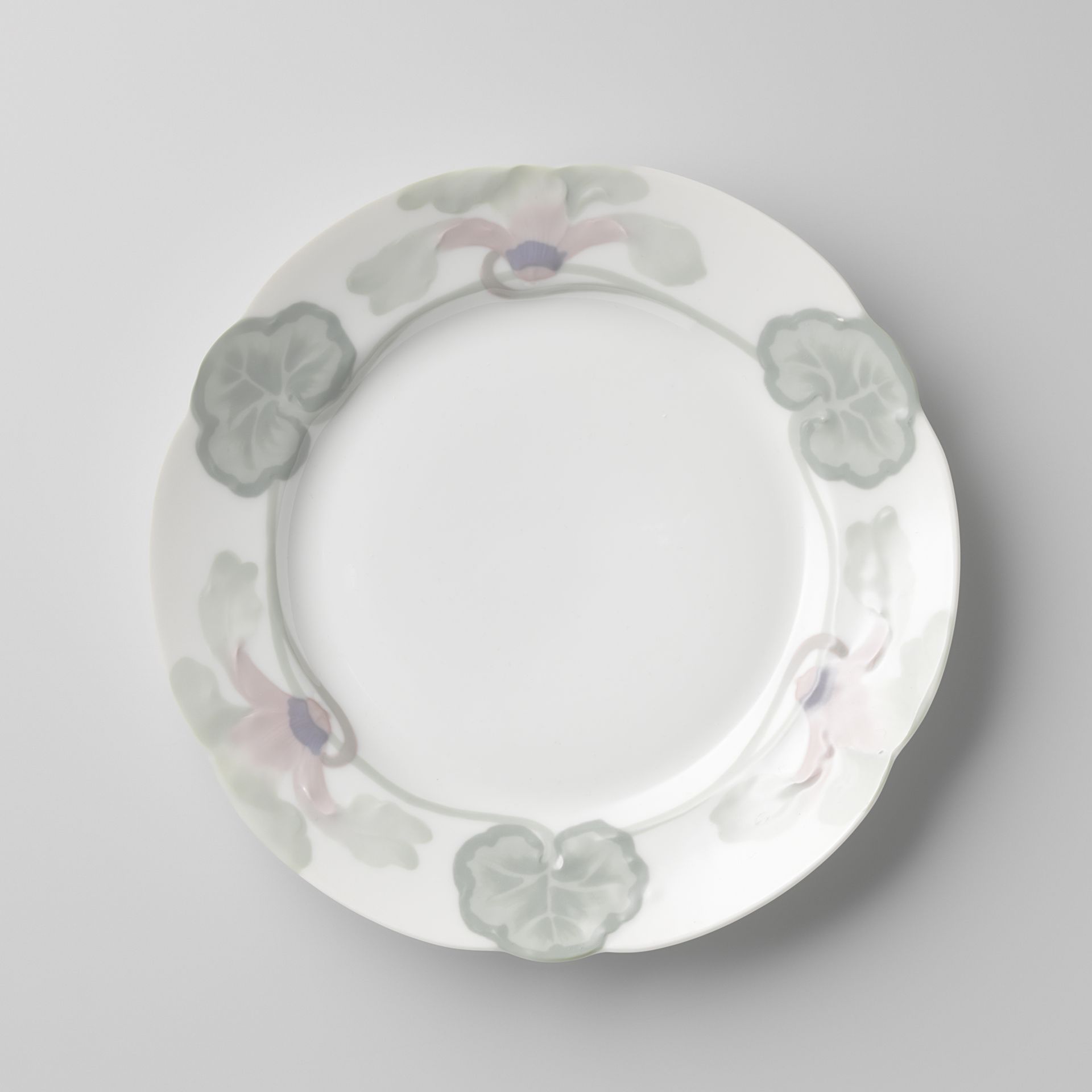
Bord van porselein versierd met randversiering van afwisselend bloemkelken en bladeren

Listen to curator's interpretation
Curatorial notes
Curator: At first glance, this porcelain plate evokes a sense of delicate fragility, wouldn't you agree? The palette is muted and the contours soft, rendering a decidedly tranquil mood. Editor: Indeed. What we have here is a porcelain plate, dating to around 1900, crafted by Rörstrand. It is ornamented with an alternating pattern of floral calyxes and foliage. It encapsulates a decorative sensibility quite emblematic of its time. Curator: Speaking of the calyxes, I see more than mere decoration. Their repetition around the rim almost creates a sacred circle. Is it fair to say that the bloom carries strong associations with transience and rebirth across diverse cultural traditions? Editor: Certainly. The floral motif, common during the Art Nouveau era, draws inspiration from organic forms, a direct rebellion against industrial aesthetics. Observe how the curving lines of the leaves and stems create dynamic tension, contrasting the circle shape of the plate. Curator: Those dynamic lines… they aren't quite as untamed as one might see in, say, a French piece. They almost look restrained by Swedish sensibility. It does lend itself nicely to my point regarding ritual. The circle is perfect, but I sense a certain melancholic elegance overall. The pale violet of the blossoms and the verdant grey of the leaves is evocative of an ethereal grace. Editor: Perhaps that speaks to the intent. The plate, undoubtedly intended for use, straddles the line between functional object and artistic statement. Curator: Right, and the subtle color choice makes it feel as if one has unearthed a cherished family artifact, one which bridges epochs and echoes histories from gatherings past. The imagery invokes this potent combination of remembrance and fleetingness. Editor: Indeed. From its artful composition to its symbolic embellishments, the piece manifests how ordinary things hold a capacity for expressing and preserving communal memory. Curator: Precisely. We've managed to unlock some of this dish’s richer meanings, haven't we? Editor: Agreed, from the perspective of design and iconography, it certainly expands how we interpret simple aesthetics of this ornamental piece.