Possibly 1847 - 1849
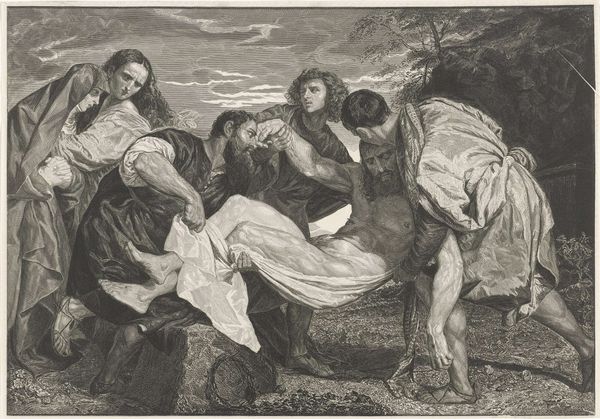
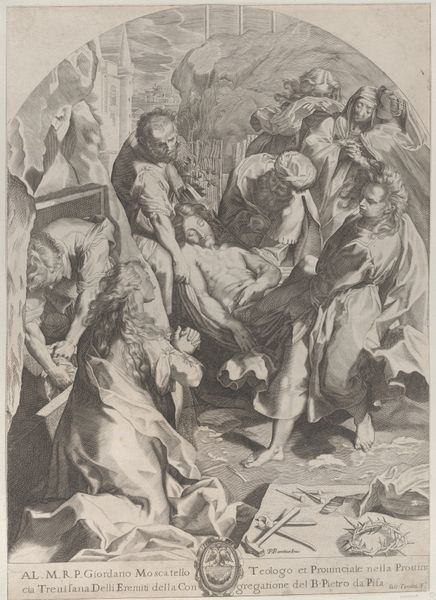
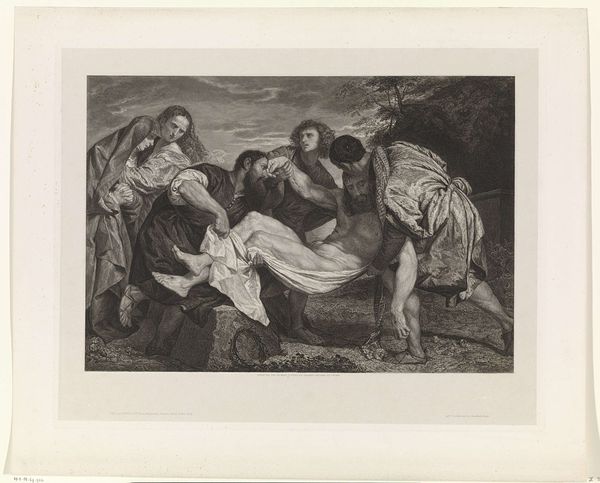
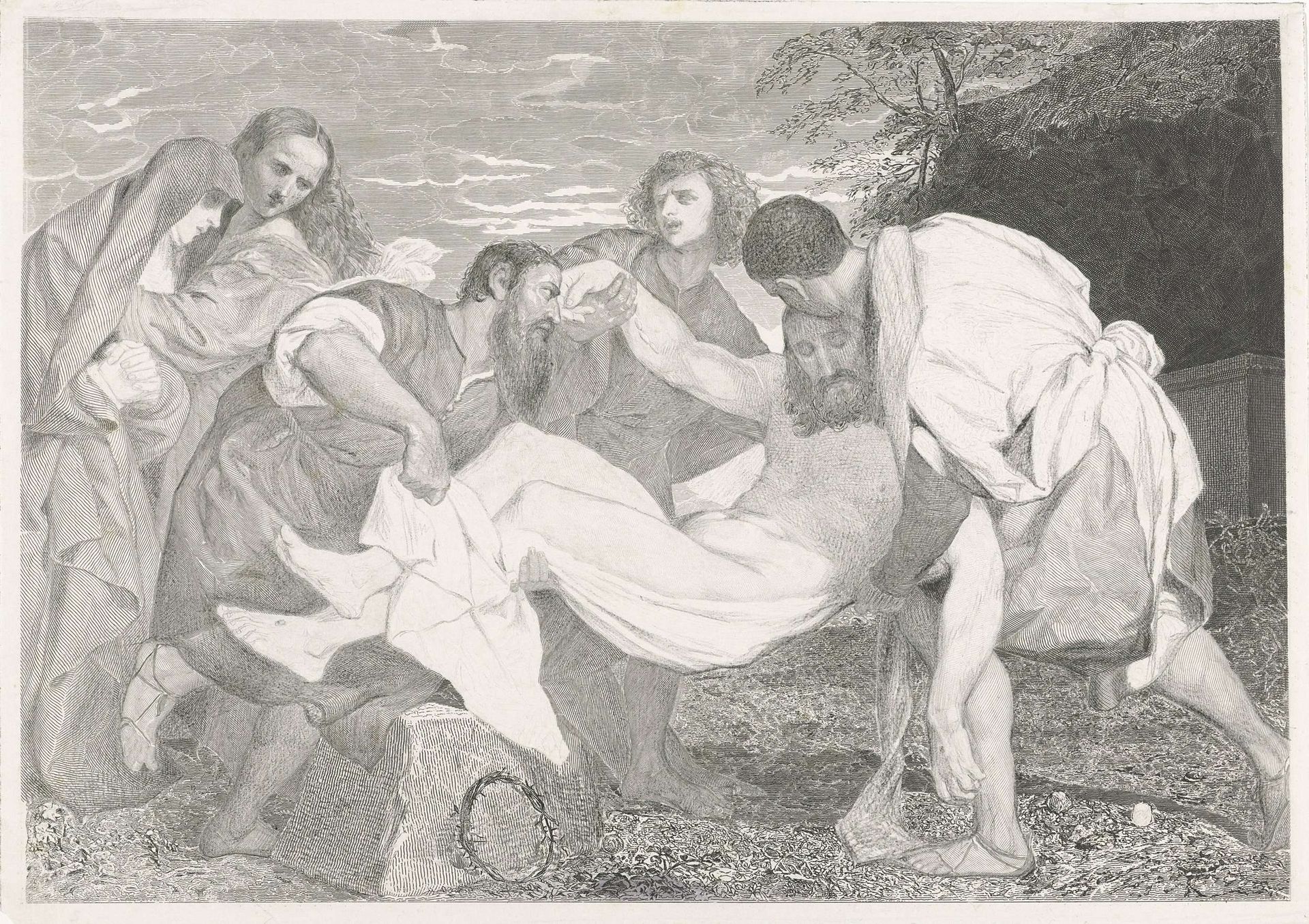
Graflegging van Christus

Listen to curator's interpretation
Curatorial notes
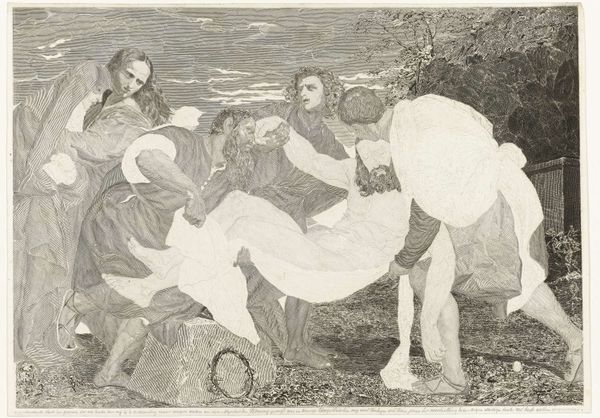
Johannes de Mare made this image of "The Entombment of Christ" in the 19th century, using a technique called etching. This printmaking method involves covering a metal plate with a waxy, protective layer. The artist then scratches away lines, exposing the metal. When the plate is dipped in acid, it bites into these exposed lines, creating grooves that will hold ink. The plate is then inked, wiped clean, and pressed onto paper, transferring the image. De Mare’s skill is evident in the fine lines and subtle shading, achieved through careful control of the etching process. The way the faces emerge into visibility, and the softness of the cloth against the hard stone. Printmaking like this was an important medium for disseminating religious imagery in the 19th century, making it accessible to a wider audience. This process democratizes image-making, emphasizing the value of both skilled handwork and mechanical reproduction. So, next time you look at a print, consider the labor, the process, and the intention behind it.