About this artwork
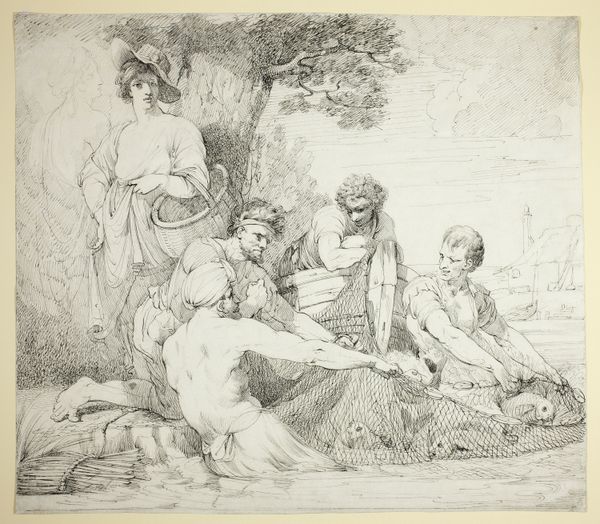
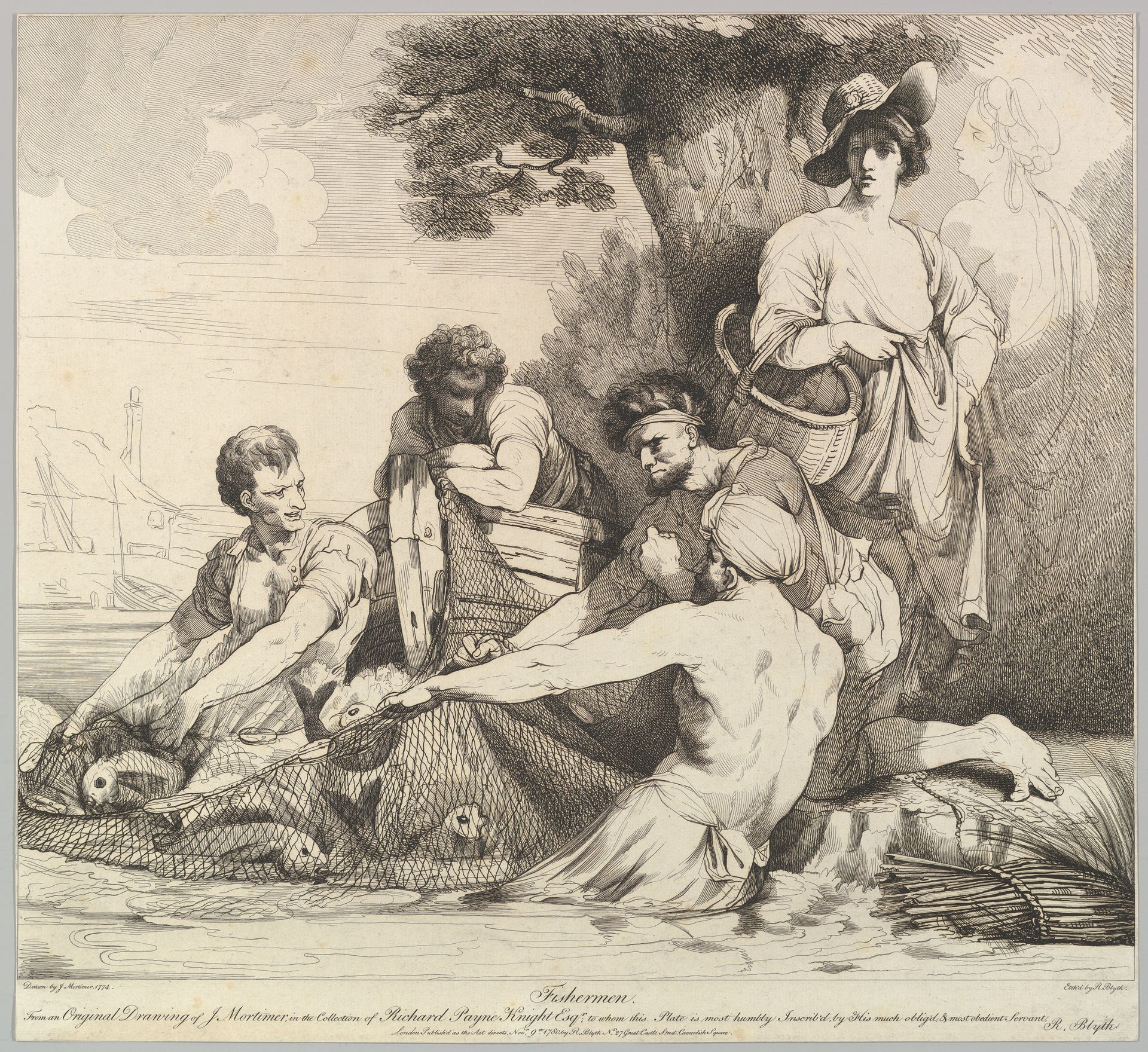
This stipple engraving, Fishermen, was made by Robert Blyth in the late 18th century. The composition, dominated by monochromatic shades, evokes a sense of neoclassical calm despite the scene's labor. Blyth uses line and form to create a detailed image of fishermen hauling in their catch. Consider the poses: the curve of their backs, the sinews of their arms, the weight of their bodies, and the details within the net, which draw our eyes to the center of the scene. A woman stands to the right, seemingly unaffected, suggesting themes of labor, class, and the aesthetic ideal. Blyth’s focus on form over overt expression subtly challenges the viewer. It moves beyond the narrative to engage with Enlightenment-era ideas about art, labor, and the social order. It prompts us to reflect on the artistic and philosophical dialogues inherent in its very structure.
Fishermen
1780


Artwork details
- Dimensions
- Sheet: 15 1/16 x 16 7/16 in. (38.2 x 41.7 cm)
- Location
- Metropolitan Museum of Art, New York, NY
- Copyright
- Public Domain
Comments
Share your thoughts
About this artwork
This stipple engraving, Fishermen, was made by Robert Blyth in the late 18th century. The composition, dominated by monochromatic shades, evokes a sense of neoclassical calm despite the scene's labor. Blyth uses line and form to create a detailed image of fishermen hauling in their catch. Consider the poses: the curve of their backs, the sinews of their arms, the weight of their bodies, and the details within the net, which draw our eyes to the center of the scene. A woman stands to the right, seemingly unaffected, suggesting themes of labor, class, and the aesthetic ideal. Blyth’s focus on form over overt expression subtly challenges the viewer. It moves beyond the narrative to engage with Enlightenment-era ideas about art, labor, and the social order. It prompts us to reflect on the artistic and philosophical dialogues inherent in its very structure.
Comments
Share your thoughts