print, engraving
# print
#
landscape
#
perspective
#
cityscape
#
northern-renaissance
#
engraving
Dimensions: height 758 mm, width 261 mm
Copyright: Rijks Museum: Open Domain
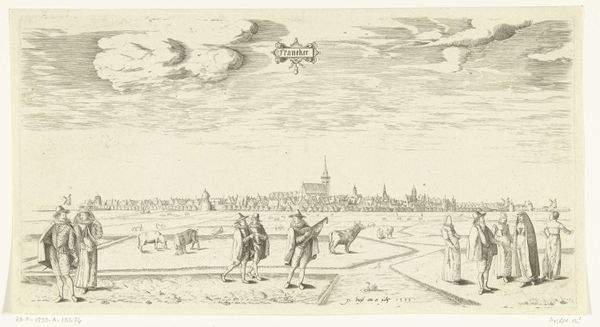
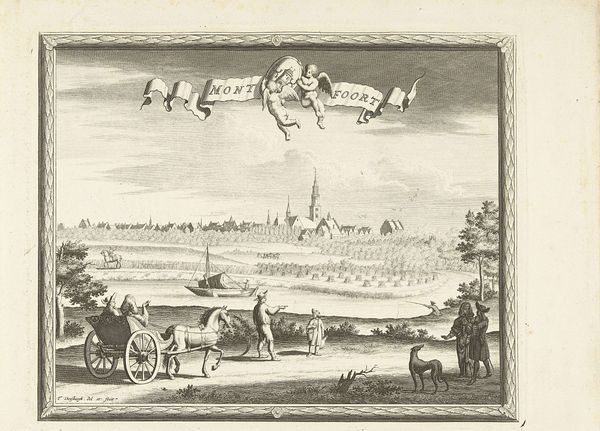
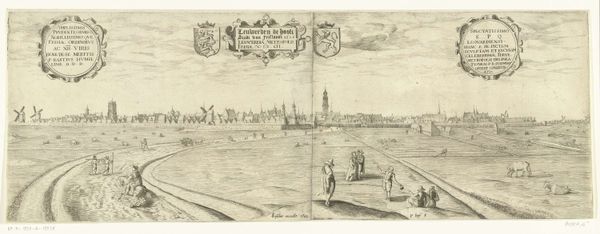
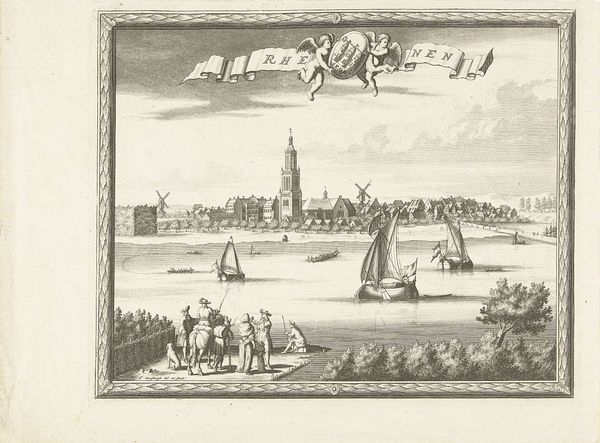
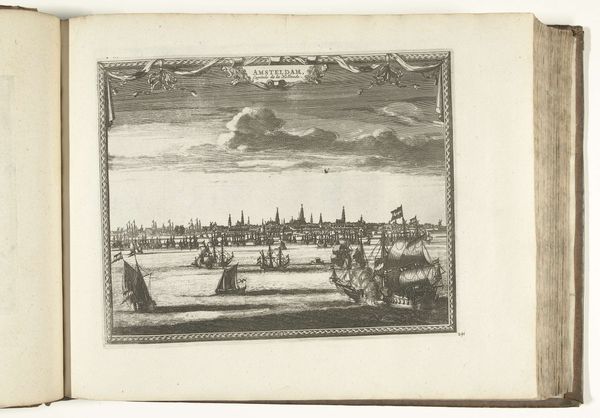
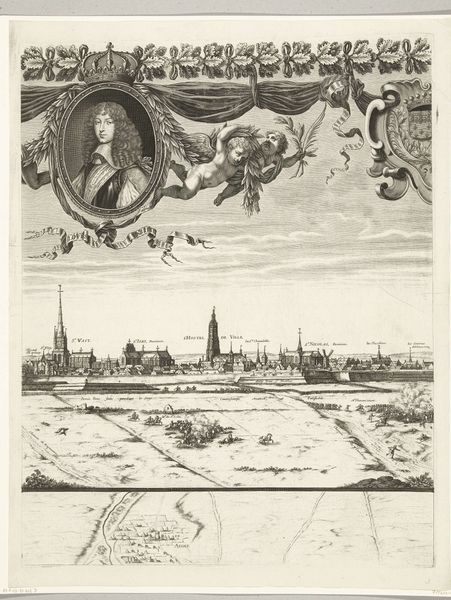
Editor: We're looking at Pieter Bast’s “View of Amsterdam from the West,” created in 1601. It's an engraving and what strikes me most is how much open space there is around the city; it's not what I expected. What does this artwork communicate to you? Curator: Well, consider the Amsterdam of 1601. This print wasn't just a picturesque view. It was a deliberate construction, presenting a specific image of the city to its inhabitants and potential investors. The open spaces signify prosperity and room for growth. Notice the figures in the foreground too; their clothes suggests that the middle class thrived here and are engaged in leisurely activities like hunting, or taking walks, they’re enjoying the space around the city. Editor: That's fascinating. So the 'landscape' aspect is perhaps not just for aesthetic enjoyment but serving a different purpose. Those angel-like figures above seem quite prominent, too. Curator: Precisely. And those figures! Notice the coat of arms of Amsterdam which they bear in their hands. They were intended to act as endorsements; Amsterdam's future and its prospects blessed by divine support and solidifying the cities powerful merchants. Editor: So, in a way, this artwork presents Amsterdam as a secure and thriving commercial center? Curator: Exactly. It is about reinforcing the idea of the city as a center of prosperity and promise, where civic pride meets financial success. It is a strategic PR piece more than simple scenery. Editor: That context really shifts how I see this artwork. Thank you. I will approach other works differently from now on. Curator: My pleasure. Remembering to consider the 'why' behind the image changes everything.
Comments
No comments
Be the first to comment and join the conversation on the ultimate creative platform.
 Collect
 React
React Comment
More like this