1665
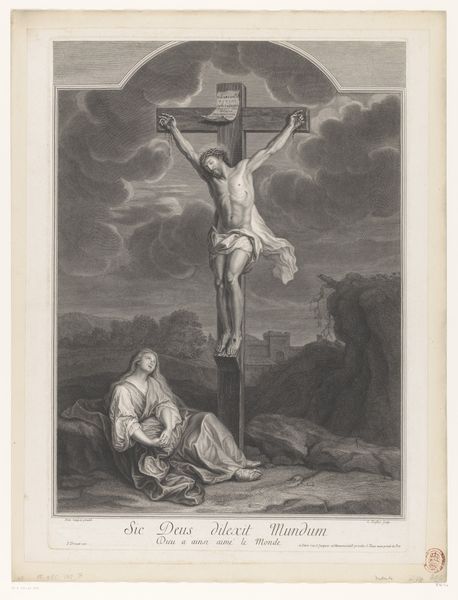
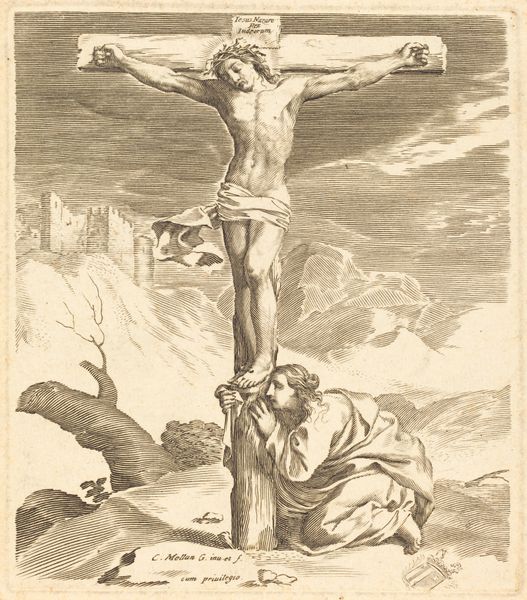
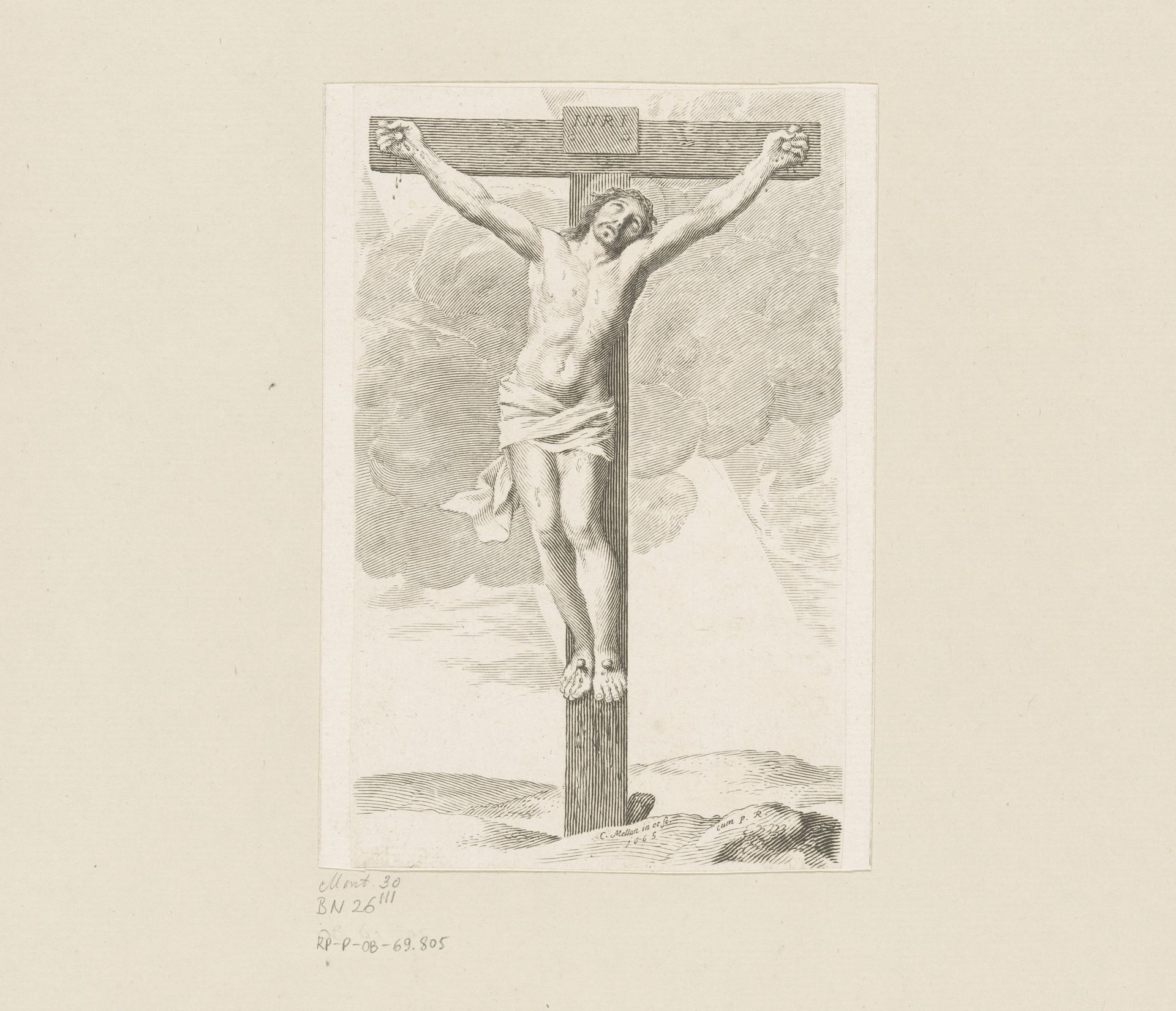
Kruisiging van Christus

Claude Mellan
1598 - 1688Location
RijksmuseumListen to curator's interpretation
Curatorial notes
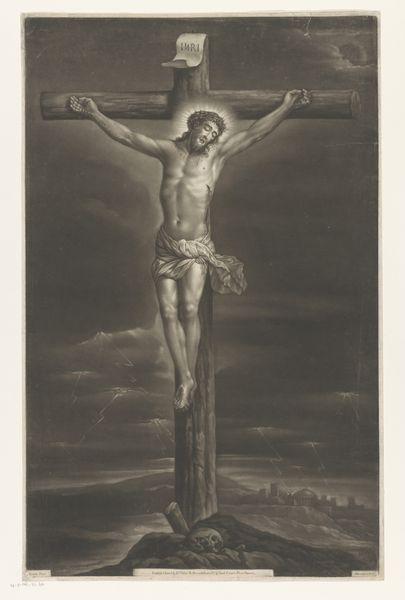
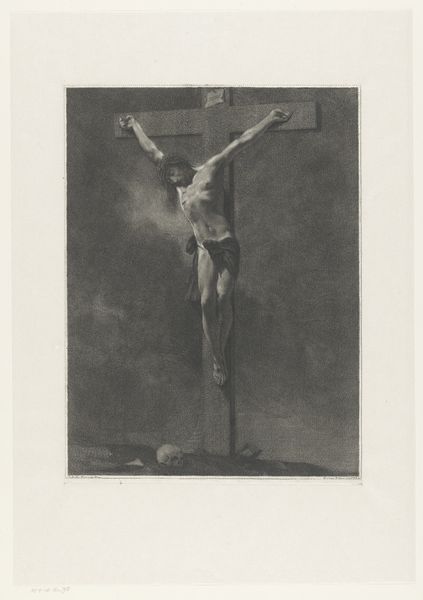
Editor: Here we have Claude Mellan’s "Crucifixion of Christ," an engraving from 1665. It’s quite stark, isn't it? The delicate lines creating such a monumental, yet somber scene. How do you interpret the symbolism within this piece? Curator: This isn’t just a depiction of an event, but a careful arrangement of symbols meant to trigger collective cultural memory. The cross, of course, is central - its wood evoking both suffering and sacrifice. Notice the letters ‘INRI’ above; do you know their significance? Editor: I believe it stands for "Jesus of Nazareth, King of the Jews." Curator: Exactly! It's a declaration, but also a challenge to earthly power. The figure of Christ, almost ethereal in Mellan's rendering, is a visual representation of the divine made human, enduring earthly pain. Look closely at the swirling clouds – do they evoke something for you? Editor: A sense of turmoil, maybe divine anger or grief? Curator: Precisely. These aren't just atmospheric effects; they act as emotional signifiers, contributing to the drama and weight of the scene. What do you make of the landscape at the base? Editor: It's quite barren, adding to the feeling of desolation and perhaps reflecting the spiritual emptiness associated with the event. Curator: Indeed. This print acts as a mirror, reflecting our understanding and cultural memory. The starkness amplifies emotional significance. It compels us to confront enduring questions about faith, power, and sacrifice, a potent demonstration of shared visual understanding. Editor: Thank you, that’s given me a lot to consider about how much these images carried within them. Curator: My pleasure! It is essential to acknowledge these works for the ways that they reflect both conscious intention and deeper cultural values.