drawing, relief, ink, pen, engraving
#
drawing
#
ink drawing
#
narrative-art
#
pen sketch
#
relief
#
mannerism
#
figuration
#
ink
#
pen
#
history-painting
#
engraving
Dimensions: 257 mm (height) x 200 mm (width) (bladmaal)
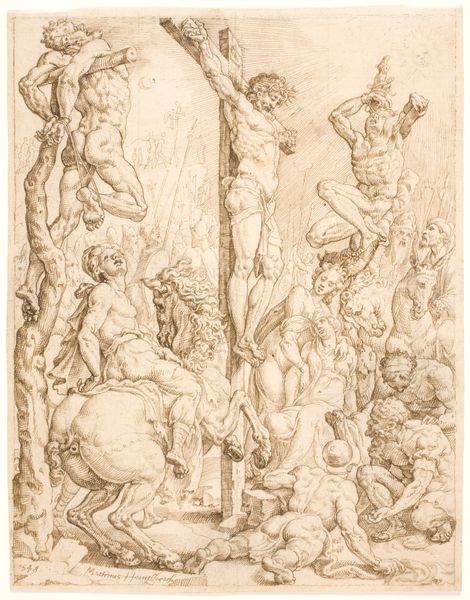
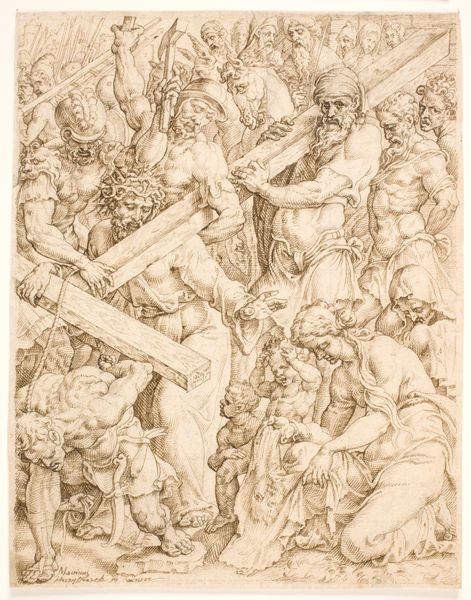
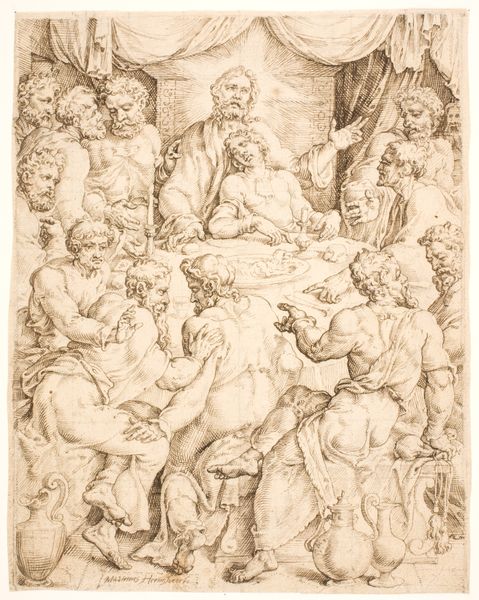
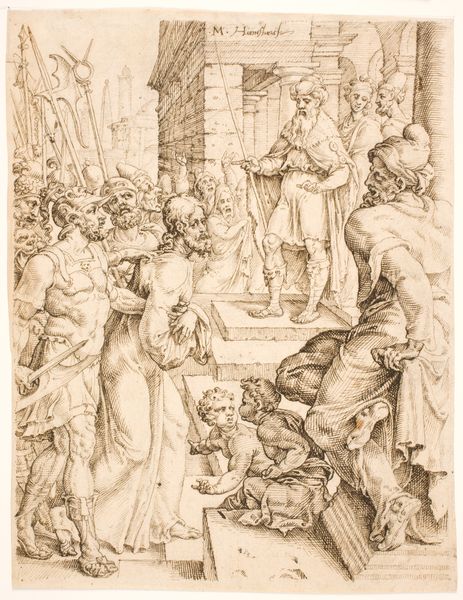
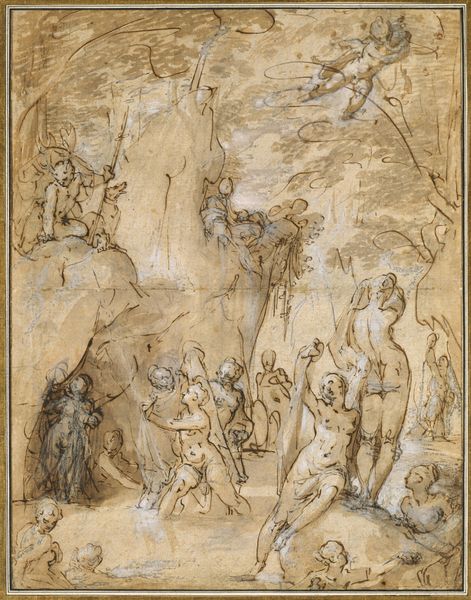
Editor: Okay, so we're looking at "The Deposition from the Cross" made between 1546 and 1549 by Maarten van Heemskerck. It's an ink drawing. The first thing that strikes me is the incredible detail; the emotion seems really heightened. What stands out to you? Curator: It's that very energy, isn’t it? Heemskerck captures a chaotic, almost frantic moment. Forget graceful piety; this is raw grief. Note how he uses the pen—so many lines, packed tightly, creating a sense of unrest, wouldn't you say? Editor: Definitely. There's almost a sense of urgency, even though it's just ink on paper. I mean, look at the figures scrambling to get Christ down, compared to those collapsing under the weight of the sorrow. What about the, sort of, bizarre anatomy? Curator: Ah, yes! Mannerism! Heemskerck distorts and exaggerates for emotional impact. Look at the straining muscles, the elongated limbs. It’s not about realistic depiction; it’s about feeling. It's a bold move and you notice something of a theatrical composition? Almost a stage, complete with symbolic skull... Editor: I do, and the bodies on the side are sort of peeking in, like the public in a theatre play. He seems to draw a strong line between body and soul with how he paints both. I guess I hadn’t thought about the "theatrical" element so literally. It does feel less like witnessing a quiet tragedy, and more like being present in a dramatized version of one. Curator: Precisely. He’s inviting us to not just observe but *experience*. Think about how radical that was then, and perhaps still is. Editor: That’s a fantastic point. I'm going to rethink how I look at Mannerism now. Thanks for the insight. Curator: And I appreciate your fresh perspective! It is through new eyes that these old works keep singing to us, no?
Comments
No comments
Be the first to comment and join the conversation on the ultimate creative platform.
 Collect
 React
React Comment
More like this