About this artwork
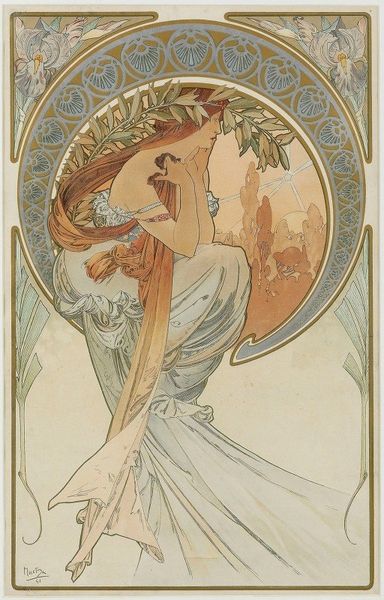
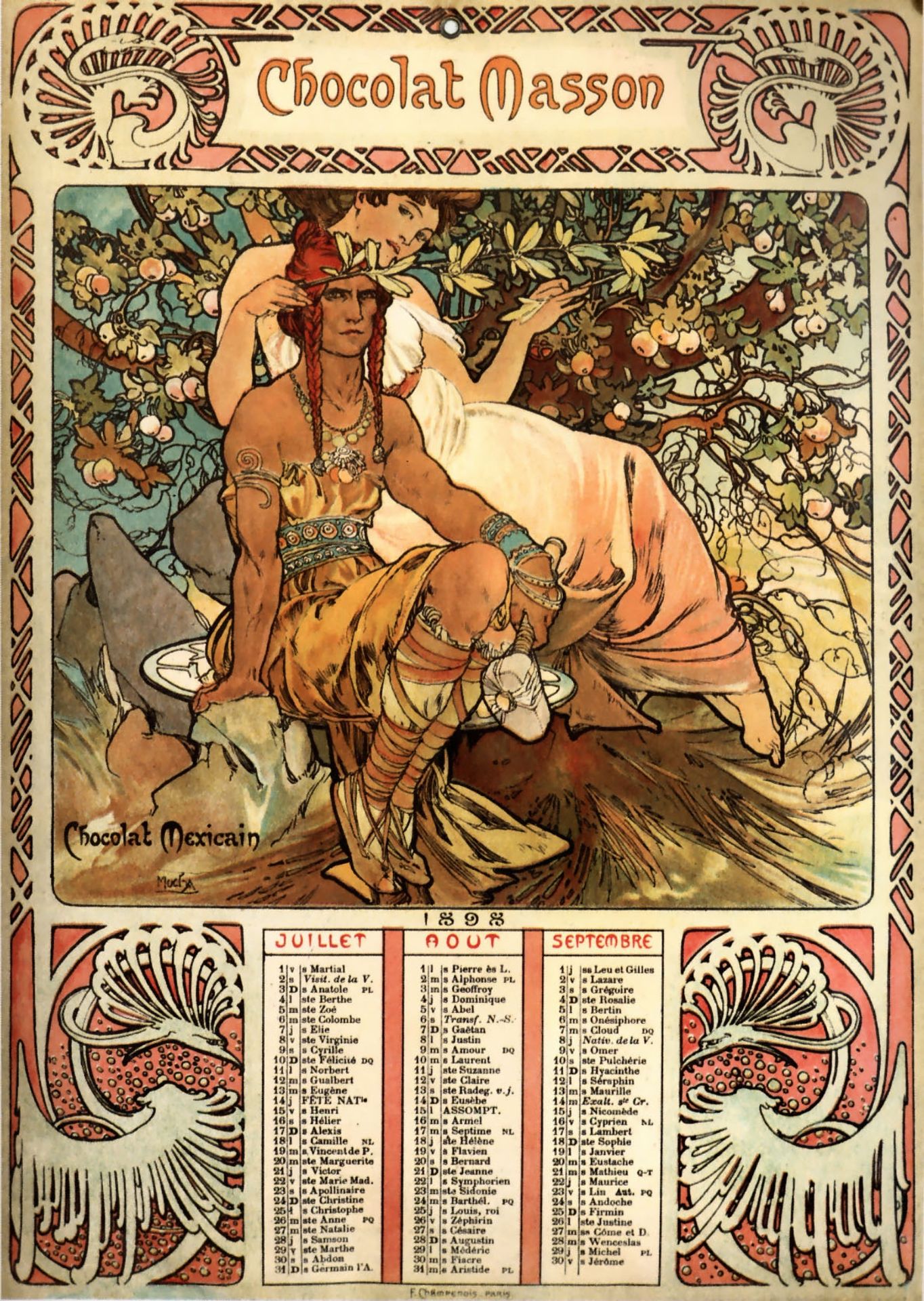
Alphonse Mucha created this print for Chocolat Masson in 1896, employing the Art Nouveau style. It features a calendar below an allegorical scene. Such advertising images reveal the complex colonial politics of 19th-century France. The chocolate comes from the Americas but is consumed in Europe. Note the figure of an indigenous man, elaborately costumed. A fair-skinned woman crowns him with a laurel, signifying the ‘civilizing mission’ of colonialism. This imagery promotes the idea of chocolate as a product of exotic lands, brought to Europe through benevolent trade. We need a critical historical perspective to decode the power relations embedded in such images. Research into the archives of trading companies, government records, and even historical cookbooks can provide a fuller understanding. These can help us to understand how the mass media and consumerism of the time legitimized the colonial project.

Artwork details
- Medium
- painting, print, poster
- Copyright
- Public domain
Tags
Comments
Share your thoughts
About this artwork
Alphonse Mucha created this print for Chocolat Masson in 1896, employing the Art Nouveau style. It features a calendar below an allegorical scene. Such advertising images reveal the complex colonial politics of 19th-century France. The chocolate comes from the Americas but is consumed in Europe. Note the figure of an indigenous man, elaborately costumed. A fair-skinned woman crowns him with a laurel, signifying the ‘civilizing mission’ of colonialism. This imagery promotes the idea of chocolate as a product of exotic lands, brought to Europe through benevolent trade. We need a critical historical perspective to decode the power relations embedded in such images. Research into the archives of trading companies, government records, and even historical cookbooks can provide a fuller understanding. These can help us to understand how the mass media and consumerism of the time legitimized the colonial project.
Comments
Share your thoughts