1772 - 1798
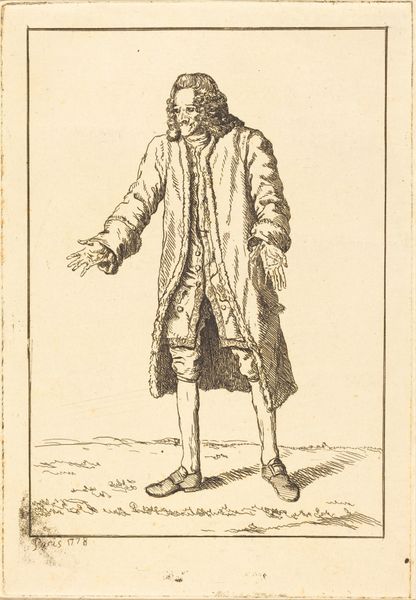
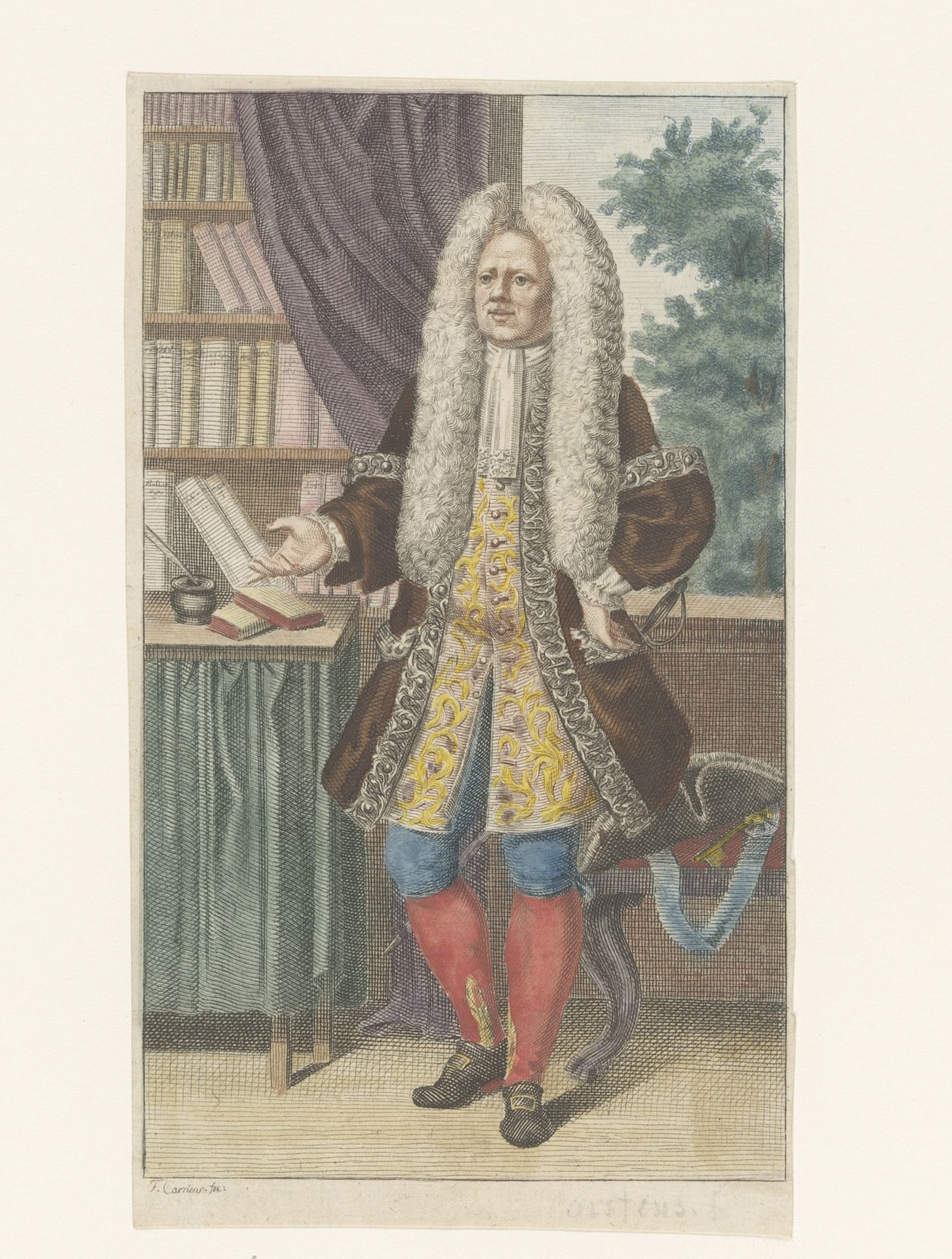
Portret van een staande man

Listen to curator's interpretation
Curatorial notes
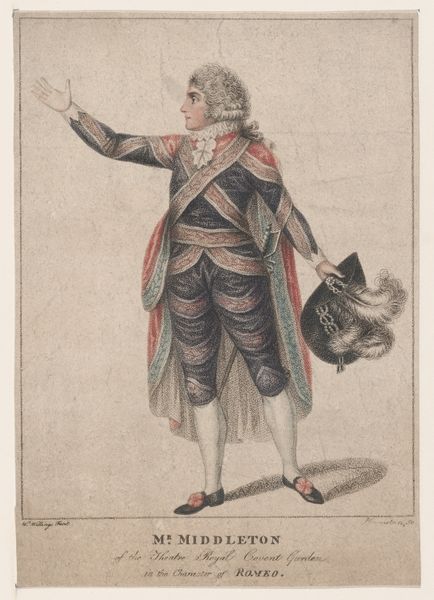
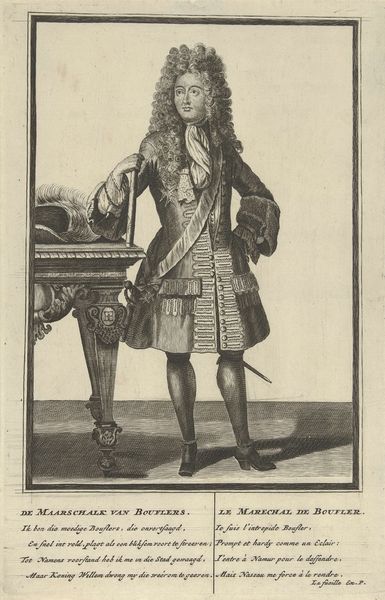
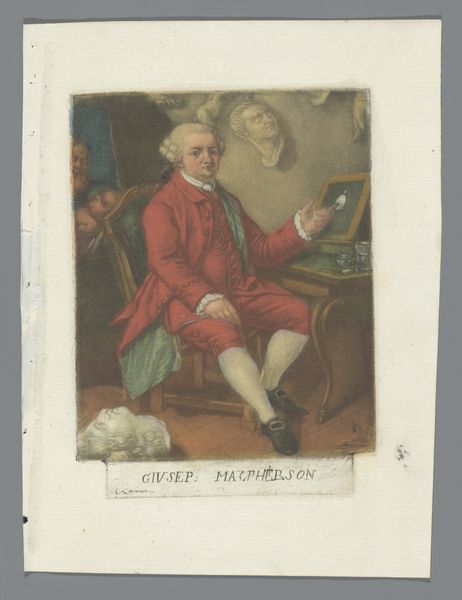
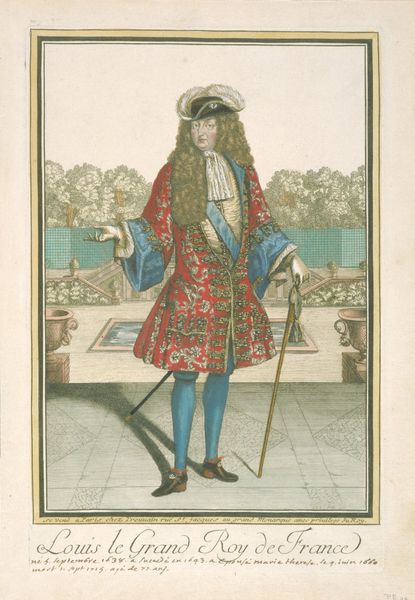
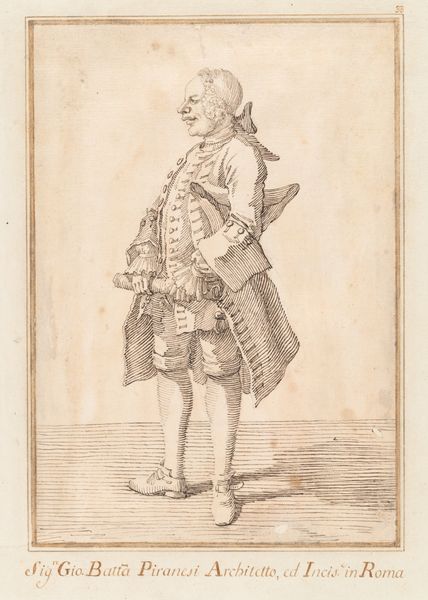
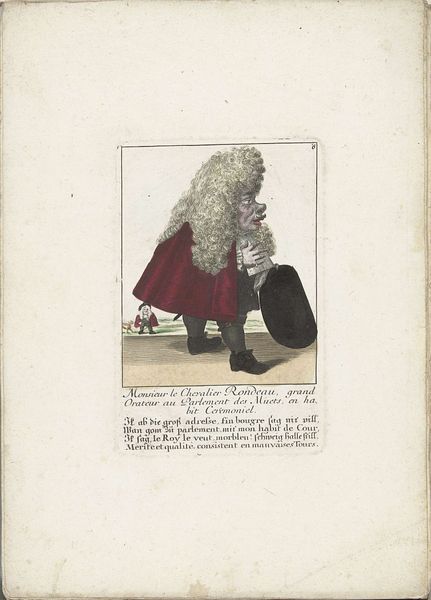
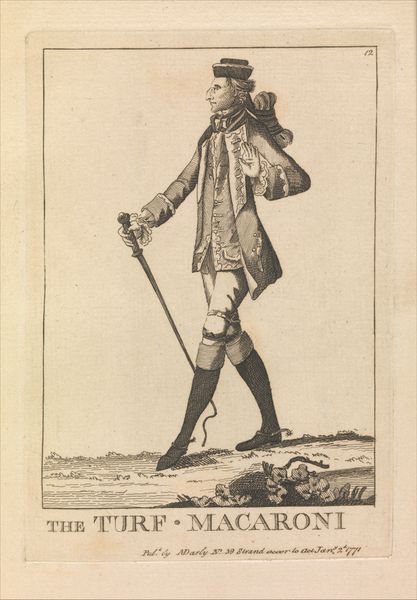
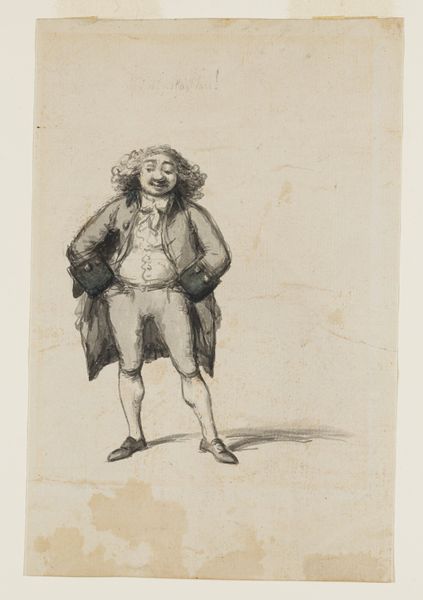
Editor: Here we have Frederik Christian Carstens’ “Portret van een staande man,” created sometime between 1772 and 1798. It looks like an engraving. There’s such attention to detail in the fabrics. The colors feel a little muted, but very coordinated. What draws your eye when you look at this portrait? Curator: Primarily, the composition itself. The figure's placement in the picture plane, almost centrally located, demands immediate attention. Note how the artist utilizes linear perspective to create a sense of depth, drawing the viewer's eye from the foreground, with the sitter, through the architectural background toward the implied space beyond. Editor: Yes, the background is very present. Curator: Precisely. Now, consider the subject’s attire. The artist meticulously renders the textures and patterns, using fine lines and variations in tone. What does the elaborate wig suggest in terms of social commentary? Editor: I guess, wealth and status? A uniform almost? Curator: Perhaps, but more pointedly, I think, an explicit connection to performativity. Observe how the ornate waistcoat and coat are depicted. It underscores artifice. The materiality of these elements creates the aesthetic impact. How do you interpret the book and quill in the context of these formal elements? Editor: Maybe knowledge as another type of status symbol? The trappings of power and intellect all in one image? Curator: Precisely. Ultimately, I observe that Carstens invites us to deconstruct notions of identity, exposing how constructed and performed status really is. Editor: That makes me see the portrait in a completely new light. Curator: Indeed. Through formal analysis, we see how elements work in concert to articulate much broader socio-cultural observations.