About this artwork
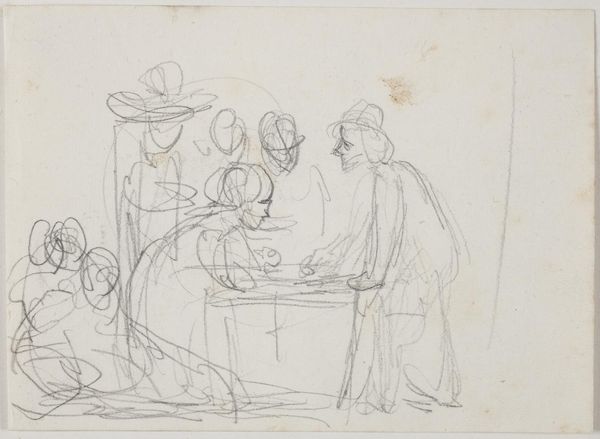
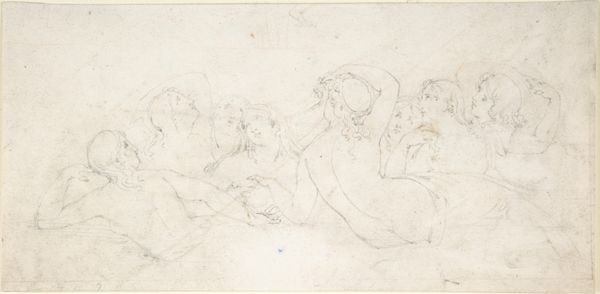
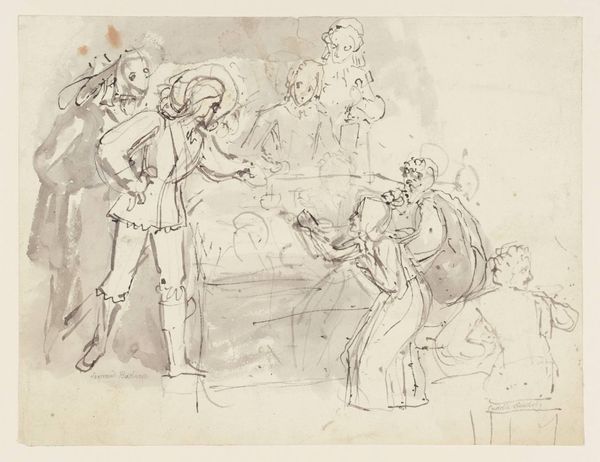
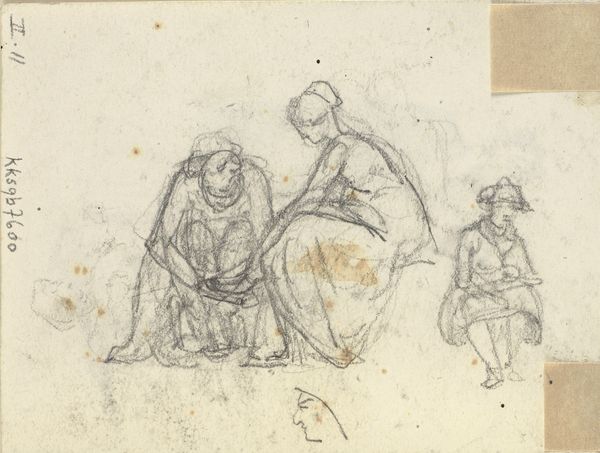
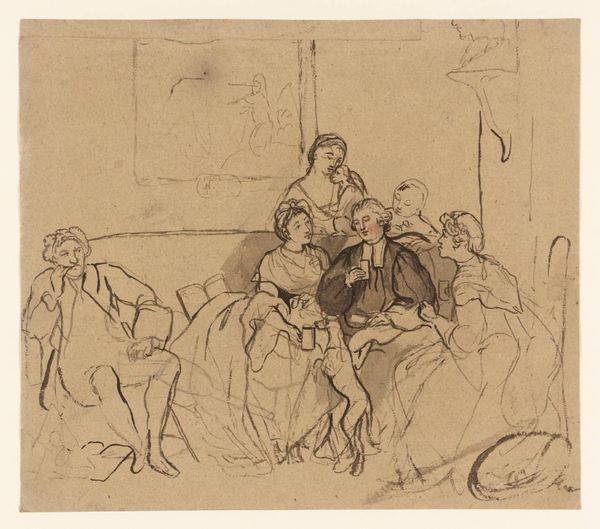
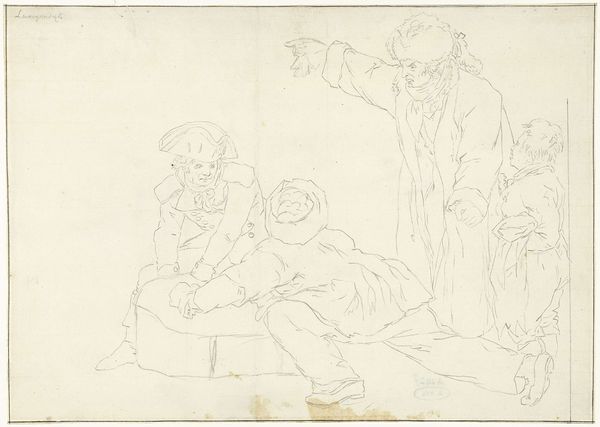
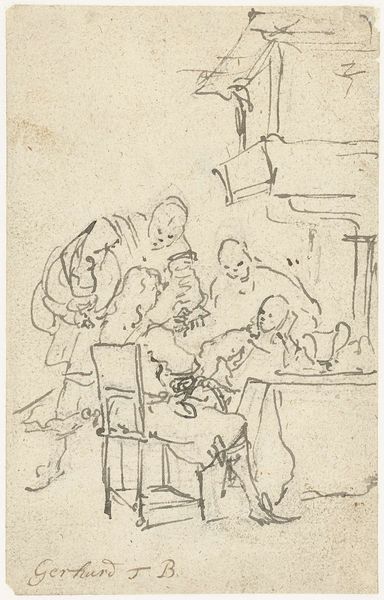
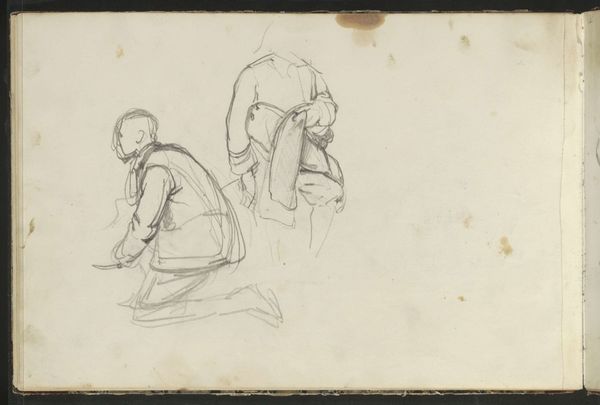
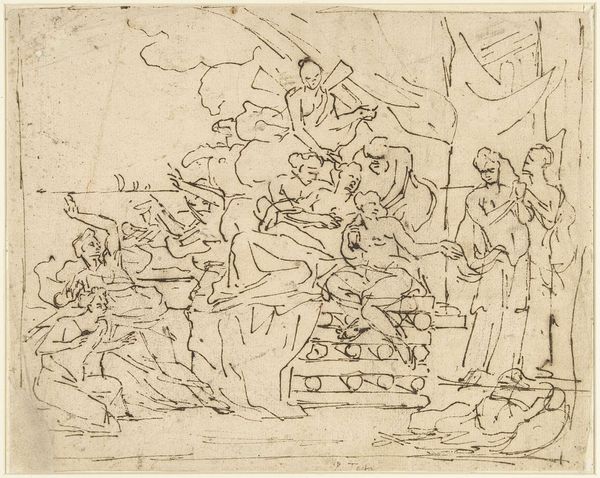
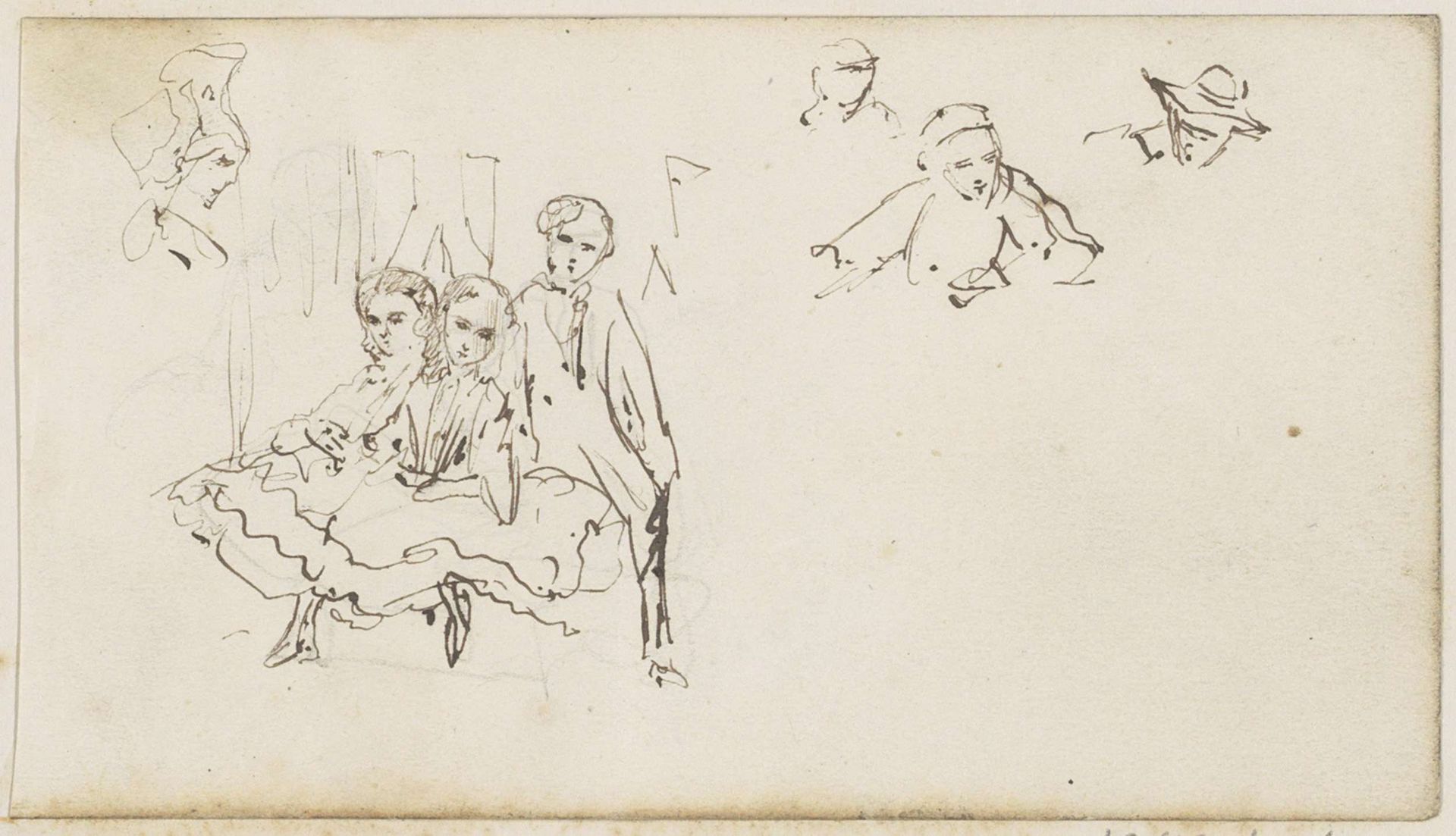
Diederik Franciscus Jamin made this sketch in pen and ink, probably in the Netherlands, sometime in the mid-19th century. It presents us with a puzzle: what was the social function of such a work? Jamin died young, aged only 26. This drawing seems like a study for a more finished piece, perhaps a genre painting of contemporary life. The clothing suggests we're looking at middle-class figures. The children in their finery signal a moment of upward mobility for Dutch society. But why did Jamin create this image? Was it meant for public display, or was it simply a private exercise? The art historian tries to answer these questions by looking at the institutions that shaped artistic production at the time. Examining the records of art academies, exhibition spaces, and patronage networks can help us understand the changing role of art in 19th-century Dutch society. Ultimately, the meaning of this sketch lies in its relationship to the social world in which it was created.

Artwork details
- Medium
- drawing, ink, pen
- Dimensions
- height 66 mm, width 116 mm
- Copyright
- Rijks Museum: Open Domain
Tags
Comments
Share your thoughts
About this artwork
Diederik Franciscus Jamin made this sketch in pen and ink, probably in the Netherlands, sometime in the mid-19th century. It presents us with a puzzle: what was the social function of such a work? Jamin died young, aged only 26. This drawing seems like a study for a more finished piece, perhaps a genre painting of contemporary life. The clothing suggests we're looking at middle-class figures. The children in their finery signal a moment of upward mobility for Dutch society. But why did Jamin create this image? Was it meant for public display, or was it simply a private exercise? The art historian tries to answer these questions by looking at the institutions that shaped artistic production at the time. Examining the records of art academies, exhibition spaces, and patronage networks can help us understand the changing role of art in 19th-century Dutch society. Ultimately, the meaning of this sketch lies in its relationship to the social world in which it was created.
Comments
Share your thoughts