About this artwork
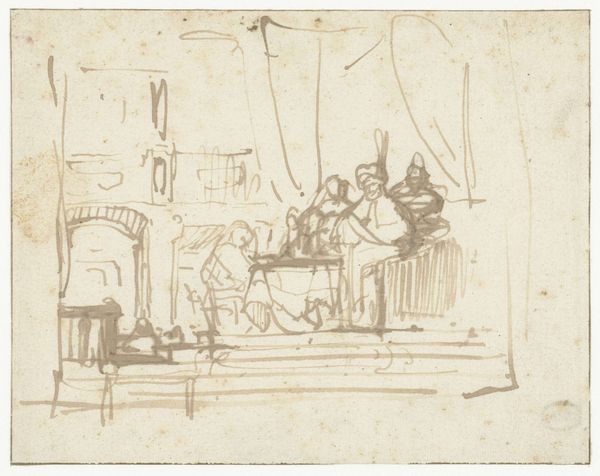
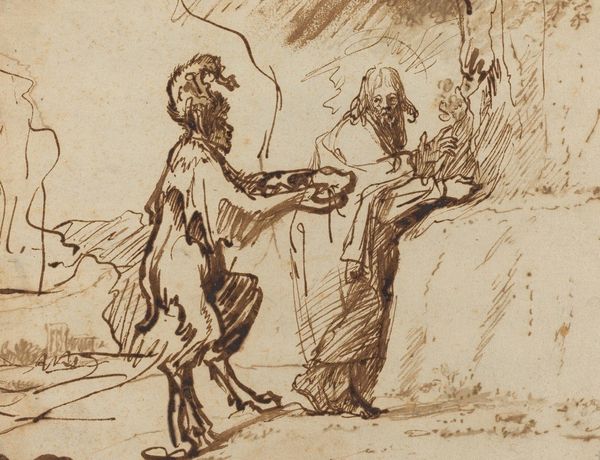
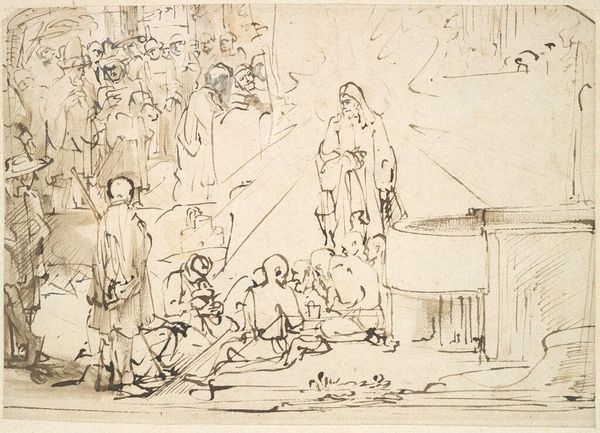
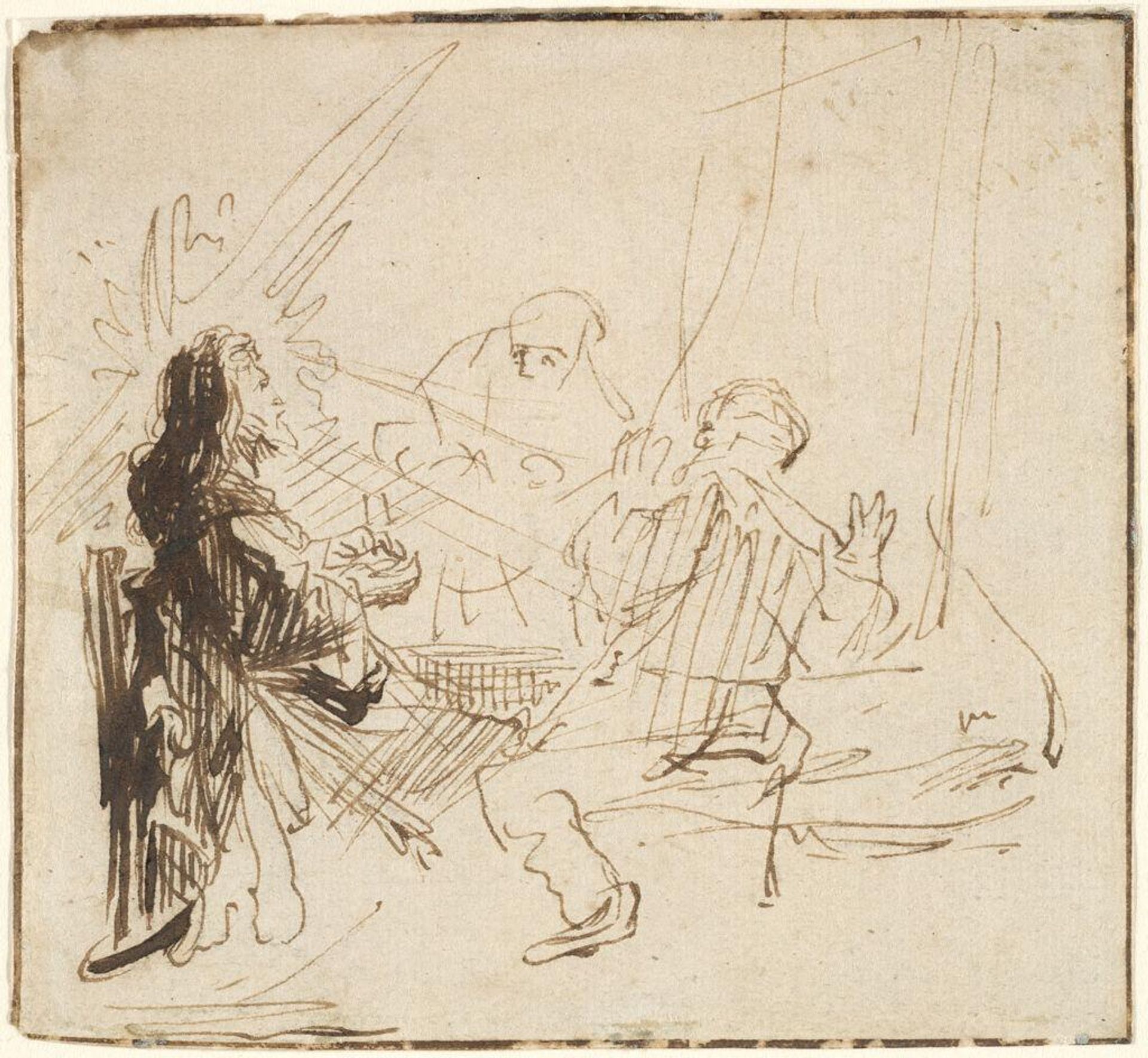
Curator: This small drawing, "Supper at Emmaus," comes from the School of Rembrandt, and captures a pivotal biblical moment. Editor: The emotional tenor is quite intense, isn't it? The figures react with almost violent surprise. Curator: Indeed. Consider how the visual language echoes the story itself. The composition mirrors the disruption of social norms by religious revelation. Editor: And the lines, rapid and expressive, amplify the feeling of sudden recognition. The bread being broken signifies so much more than a shared meal. Curator: It’s a commentary on faith, power, and the subversion of expectations within 17th-century Dutch society. The narrative still resonates today. Editor: Absolutely, seeing how symbols evolve and maintain their power across centuries is fascinating. This quick sketch holds remarkable depth.
Supper at Emmaus
c. 1630 - 1633
School of Rembrandt Harmensz. van Rijn
@schoolofrembrandtharmenszvanrijn
Harvard Art Museums
Harvard Art MuseumsArtwork details
- Dimensions
- 10 x 11 cm (3 15/16 x 4 5/16 in.)
- Location
- Harvard Art Museums
- Copyright
- CC0 1.0
Comments
Share your thoughts
About this artwork
Curator: This small drawing, "Supper at Emmaus," comes from the School of Rembrandt, and captures a pivotal biblical moment. Editor: The emotional tenor is quite intense, isn't it? The figures react with almost violent surprise. Curator: Indeed. Consider how the visual language echoes the story itself. The composition mirrors the disruption of social norms by religious revelation. Editor: And the lines, rapid and expressive, amplify the feeling of sudden recognition. The bread being broken signifies so much more than a shared meal. Curator: It’s a commentary on faith, power, and the subversion of expectations within 17th-century Dutch society. The narrative still resonates today. Editor: Absolutely, seeing how symbols evolve and maintain their power across centuries is fascinating. This quick sketch holds remarkable depth.
Comments
Share your thoughts