499 BC
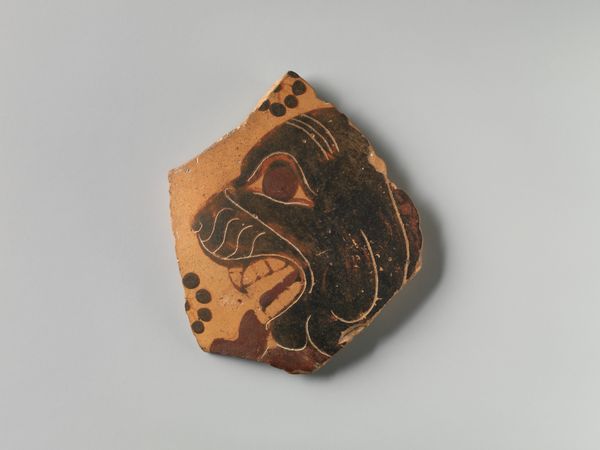
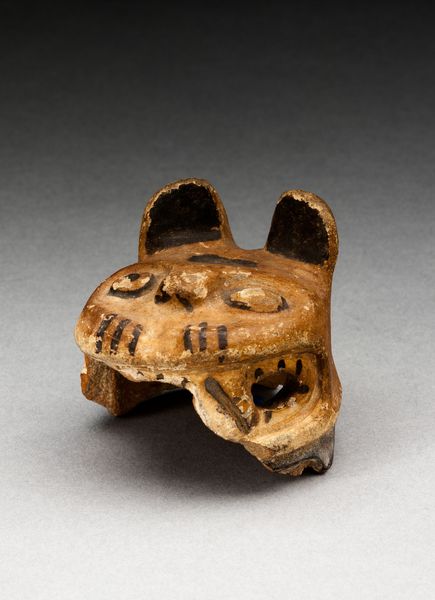
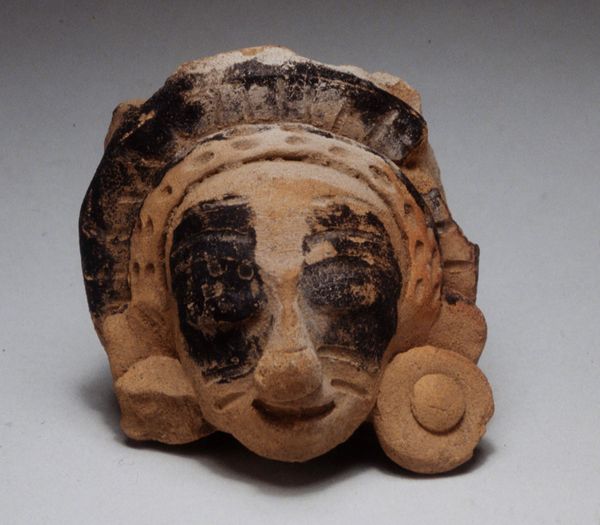
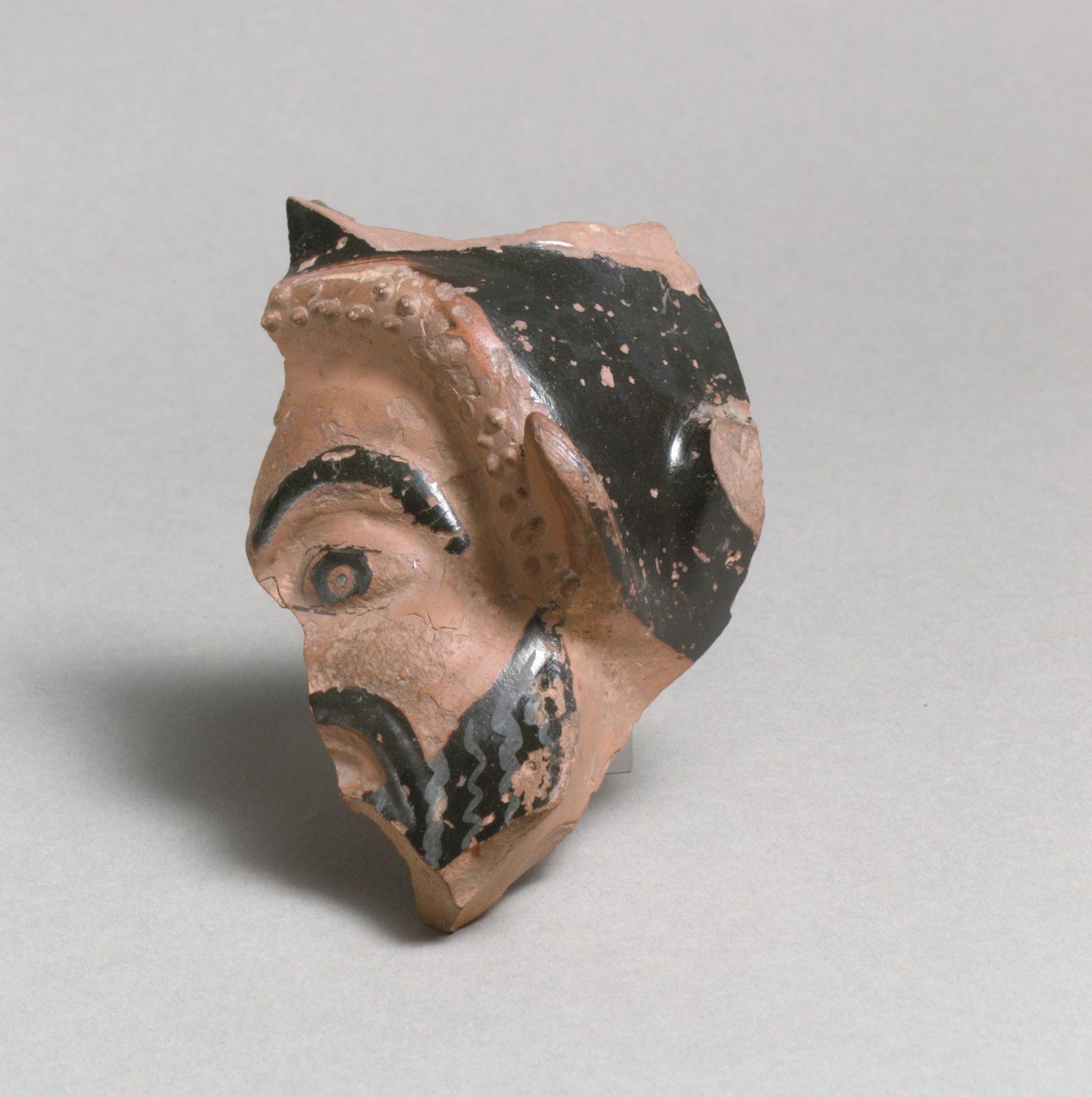
Vase fragment in the form of a satyr's head

Class O: The Sabouroff Class of Head Vases
@classothesabouroffclassofheadvases
The Metropolitan Museum of Art
Metropolitan Museum of Art, New York, NYListen to curator's interpretation
Curatorial notes
This fragment of a vase, shaped like a satyr’s head, was crafted by the Sabouroff Class of Head Vases. Satyrs, those hybrid creatures, part man and part beast, embody the untamed aspects of nature, forever linked with Dionysus, the god of wine, fertility, and ecstasy. Their presence speaks of primal instincts and a release from the restraints of civilization. This archetype echoes through time, from the wild Silenus in Roman art to the medieval depictions of demons, revealing how the human psyche has grappled with the duality of our nature. Even in later Romanticism, we see these untamed figures resurface, mirroring our complex relationship with freedom and instinct. The satyr's knowing gaze, rendered with striking detail, holds a strange, unsettling power, drawing us into the depths of human experience.