About this artwork
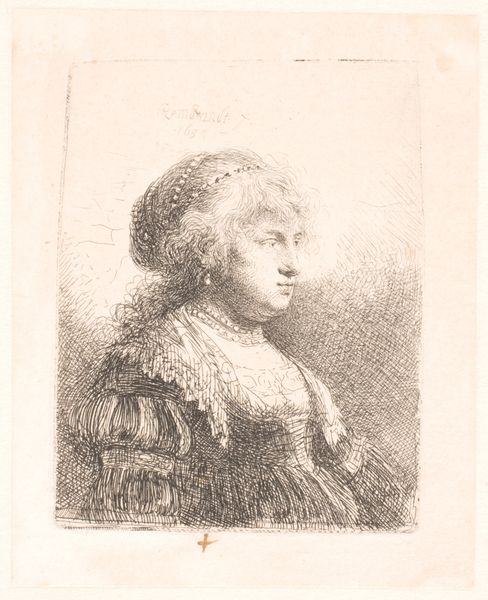
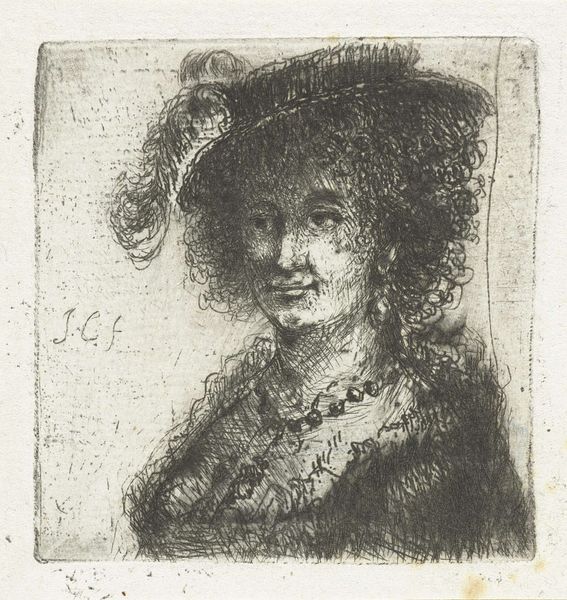
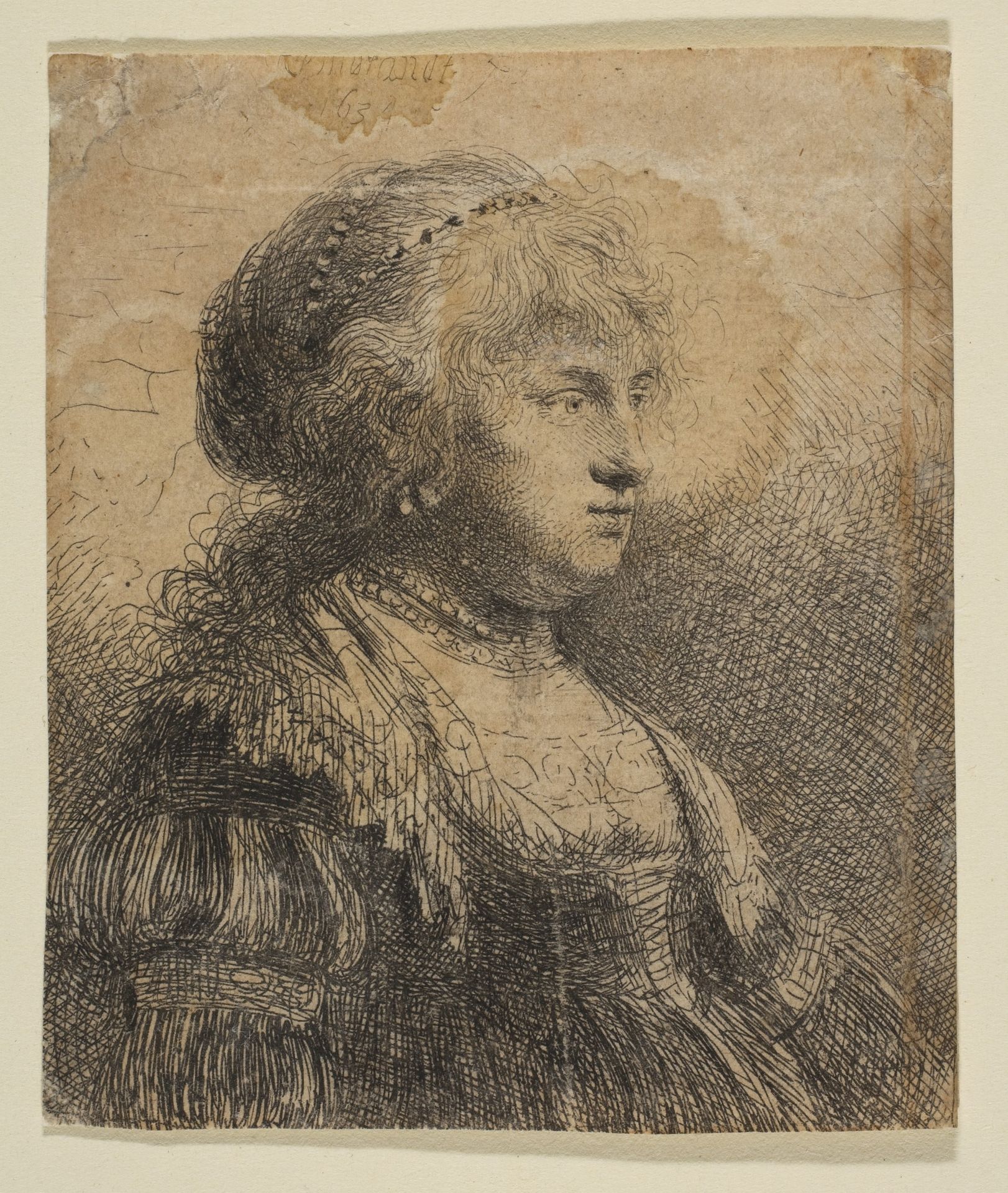
Rembrandt van Rijn rendered this etching of his wife, Saskia, adorning pearls in her hair. Pearls, symbols of purity and status, date back to ancient civilizations as emblems of wealth and power. Consider Botticelli’s Venus, rising from the sea, often depicted with pearls. These recurrent motifs across time are no mere coincidence. They delve into the collective unconscious, embodying beauty, femininity, and the unattainable. Yet, the pearl's symbolism extends beyond the aesthetic, linked to tears and mourning. Notice the somber gaze of Saskia, adding a layer of complexity to the image. This intertwining of joy and sorrow speaks to the human condition. Such duality captures our attention, stirring emotions from the depths of our shared cultural memory. Symbols are not static; they morph and adapt. Saskia's pearls, therefore, are not just adornments but carriers of history, echoing through centuries, and still engaging us today.
Saskia with Pearls in Her Hair
1634


Artwork details
- Medium
- drawing, print, etching, paper, ink, graphite
- Location
- Metropolitan Museum of Art, New York, NY
- Copyright
- Public Domain
Tags
Comments
Share your thoughts
About this artwork
Rembrandt van Rijn rendered this etching of his wife, Saskia, adorning pearls in her hair. Pearls, symbols of purity and status, date back to ancient civilizations as emblems of wealth and power. Consider Botticelli’s Venus, rising from the sea, often depicted with pearls. These recurrent motifs across time are no mere coincidence. They delve into the collective unconscious, embodying beauty, femininity, and the unattainable. Yet, the pearl's symbolism extends beyond the aesthetic, linked to tears and mourning. Notice the somber gaze of Saskia, adding a layer of complexity to the image. This intertwining of joy and sorrow speaks to the human condition. Such duality captures our attention, stirring emotions from the depths of our shared cultural memory. Symbols are not static; they morph and adapt. Saskia's pearls, therefore, are not just adornments but carriers of history, echoing through centuries, and still engaging us today.
Comments
Share your thoughts