1762 - 1764
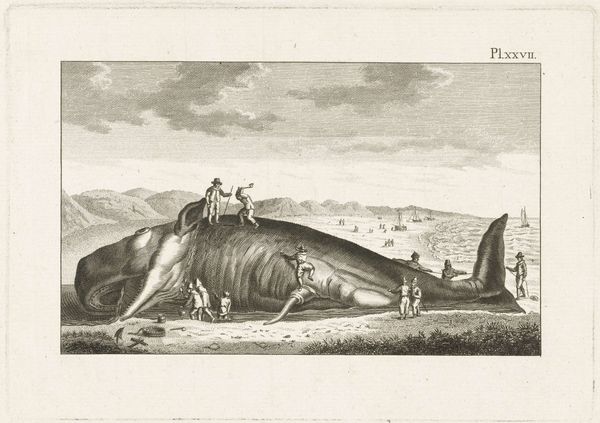
Aangespoelde potvis

Hendrik Spilman
1721 - 1784Location
RijksmuseumListen to curator's interpretation
Curatorial notes
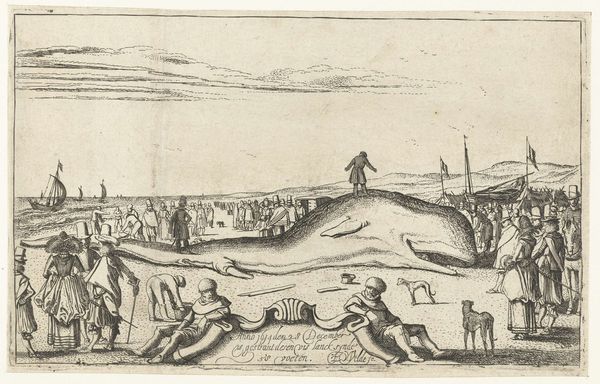
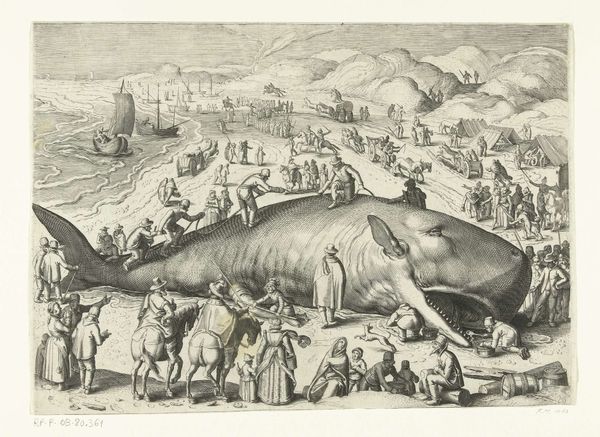
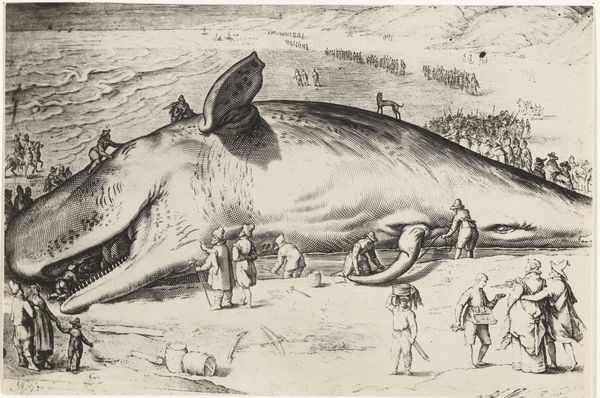
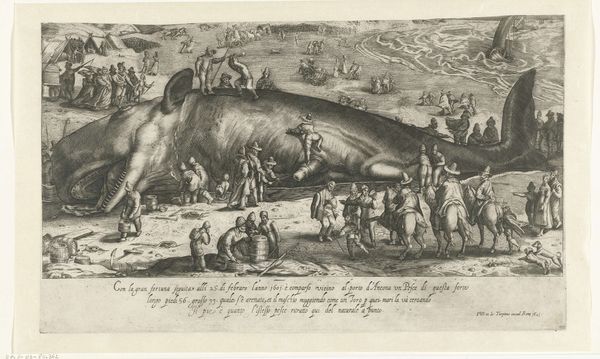
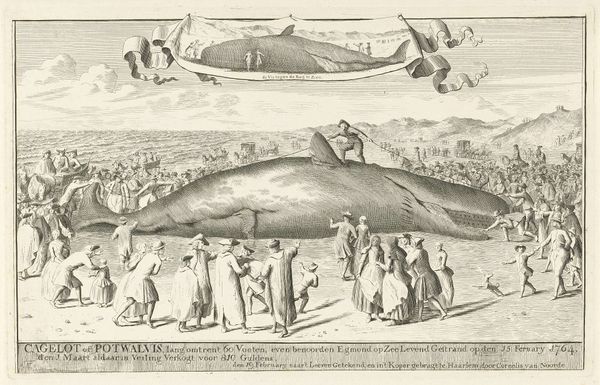
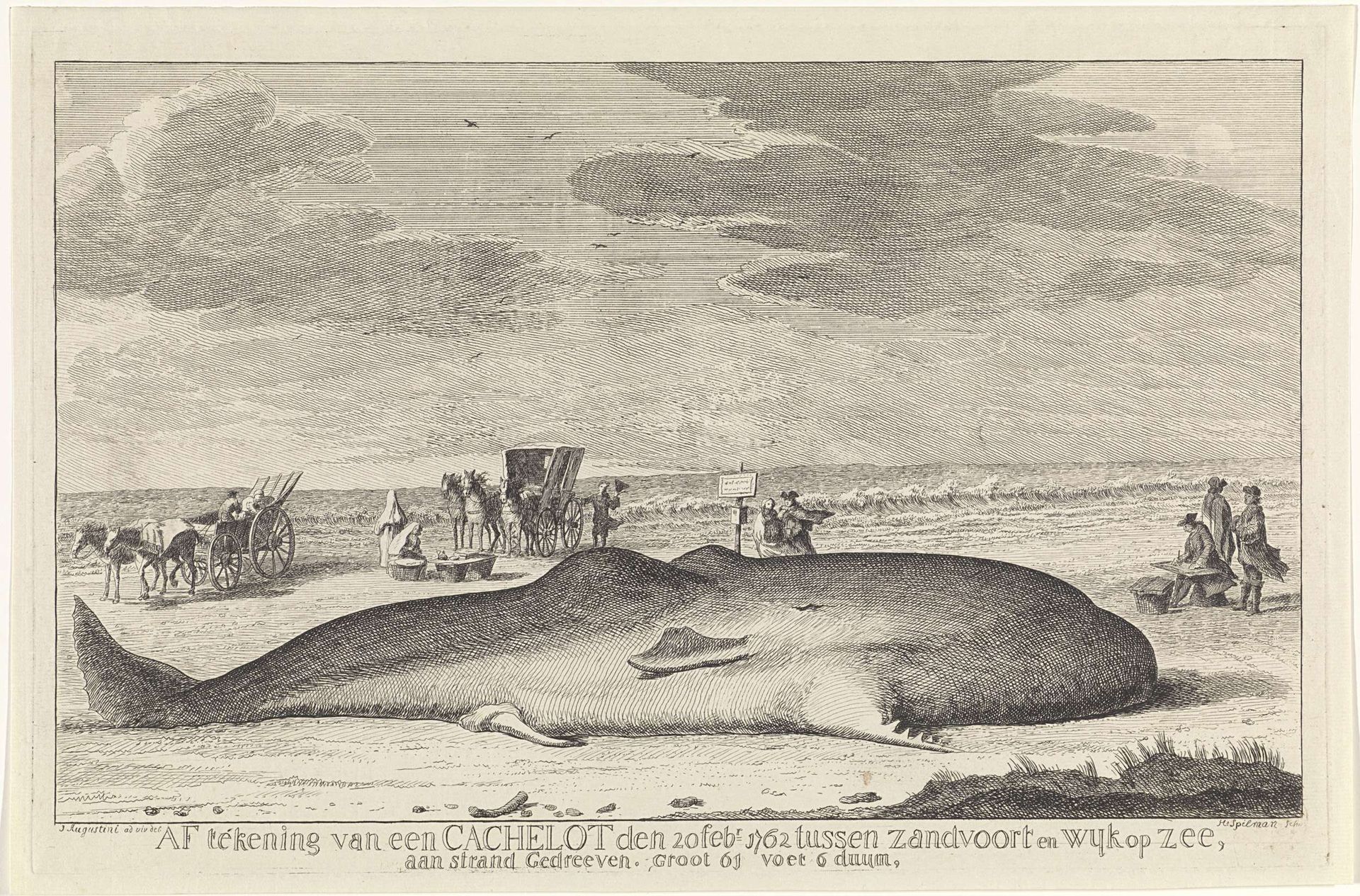
Hendrik Spilman made this print of a beached sperm whale sometime in the 18th century using engraving, a printmaking technique that requires the artist to incise an image onto a metal plate, which is then inked and printed. The stark contrast achieved through engraving lends a documentary feel to this image of a stranded whale, discovered on a beach between Zandvoort and Kijkduin in the Netherlands. Look closely, and you'll see the whale isn't alone. Figures dot the scene, some arriving in horse-drawn carts. Their presence speaks to the economic and social dimensions of such an event. A beached whale was a windfall, its blubber and bones valuable commodities. Spilman’s choice of engraving, a process demanding precision and control, mirrors the era’s scientific curiosity and burgeoning capitalist mindset, where even the creatures of the sea were seen as resources to be cataloged and consumed. Considering these elements, the print serves as a reminder that artistic choices are always intertwined with the social and economic realities of their time.