1614 - 1615
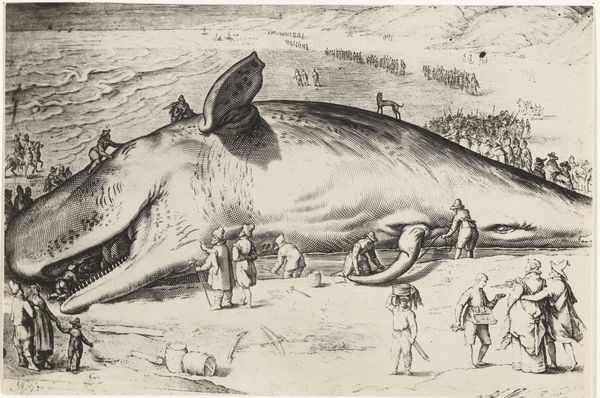
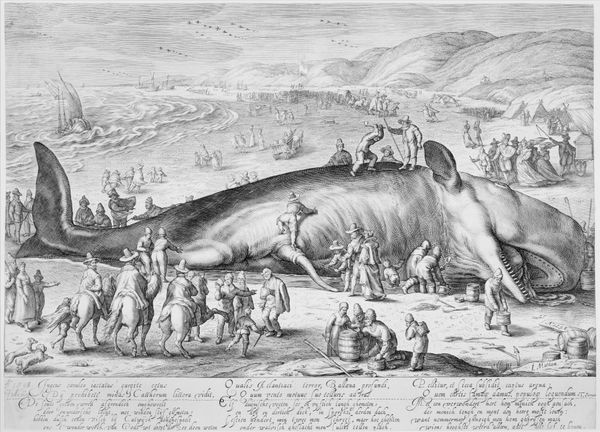
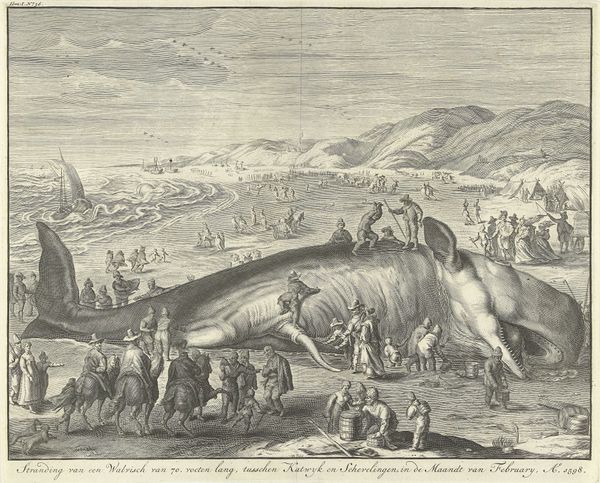
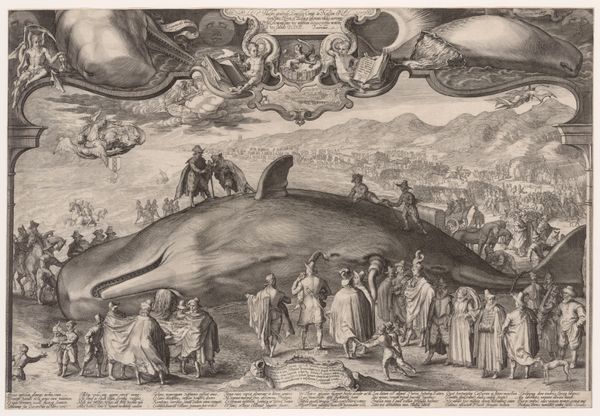
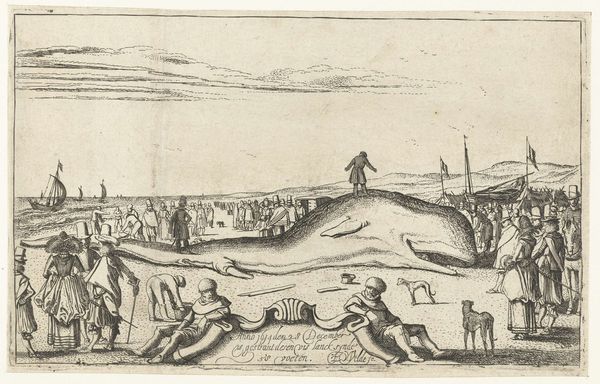
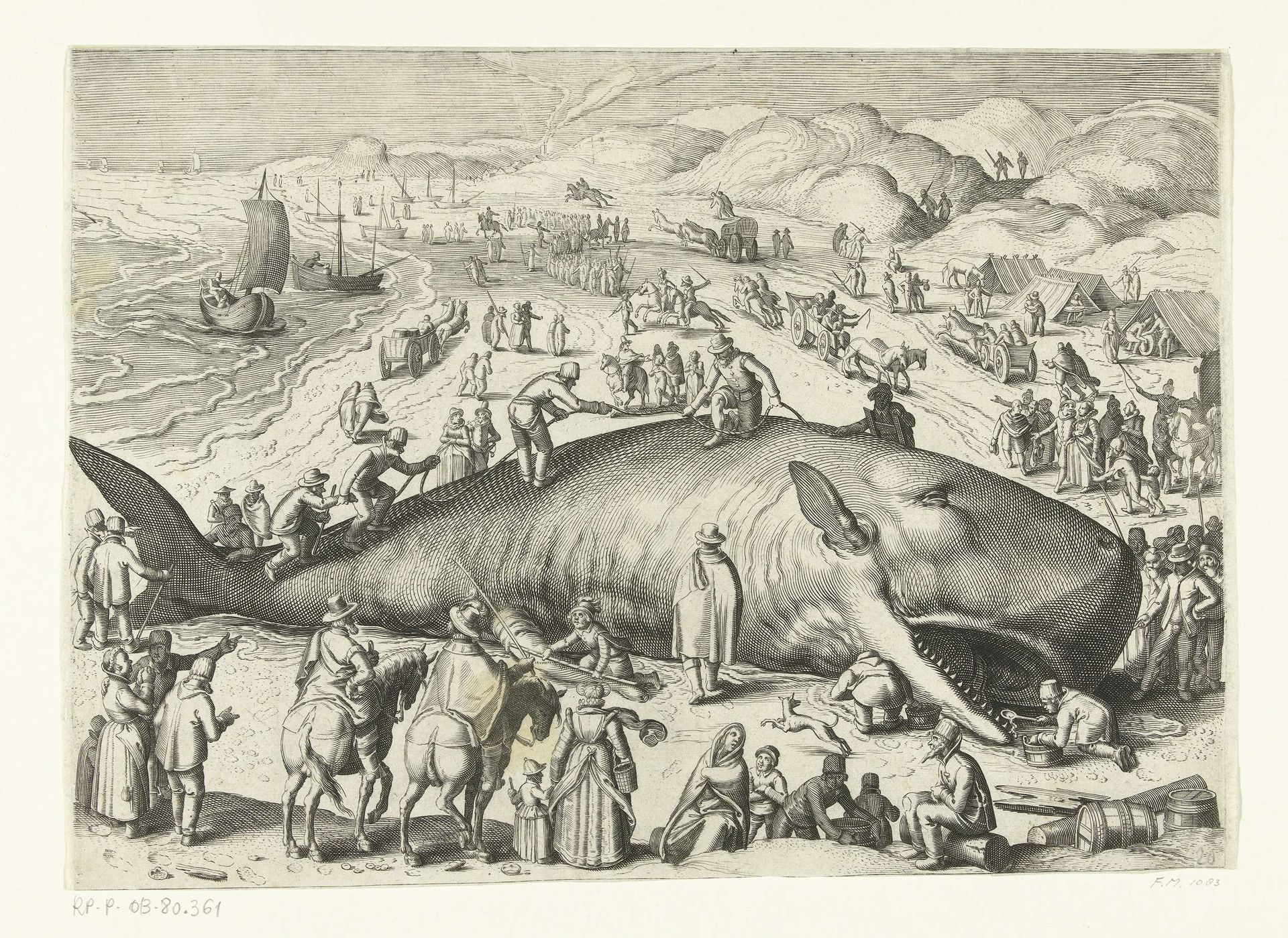
Kopie van de gestrande walvis bij Berckhey van 1598 als de walvis gestand bij Noordwijk in 1614

Anonymous
@anonymousLocation
RijksmuseumCuratorial notes
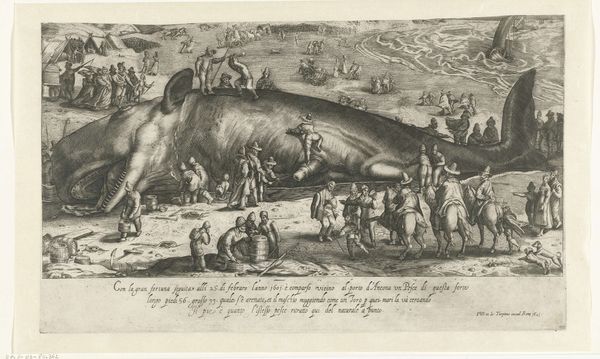
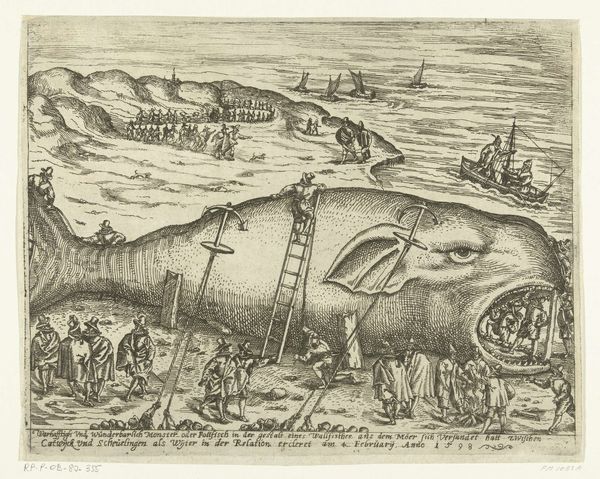
This anonymous engraving depicts a beached whale, a scene witnessed both in Berckhey in 1598 and Noordwijk in 1614. See how the whale dominates the scene, a leviathan beached, drawing scores of curious onlookers. This image resonates with ancient fears and fascinations. Since the classical times, the whale, like other monstrous creatures, was a symbol of the fearsome, unknown depths, a boundary between our world and the deep. Recall the biblical tale of Jonah, swallowed whole, facing the divine in the belly of the beast. Here, the whale's gargantuan size inspires awe, yet its helplessness on the shore evokes a strange empathy. The crowd swarming the creature, some clambering onto its back, others gathering around, reminds us of how communities come together in the face of the extraordinary. This scene reveals a primal urge: to witness, to measure, to understand the forces of nature. Like echoes in a vast chamber, the image of the whale has resurfaced throughout history, each time carrying a renewed emotional and symbolic power, and reminding us of our complex relationship with the natural world.