c. 1509
Saint Christopher


Listen to curator's interpretation
Curatorial notes
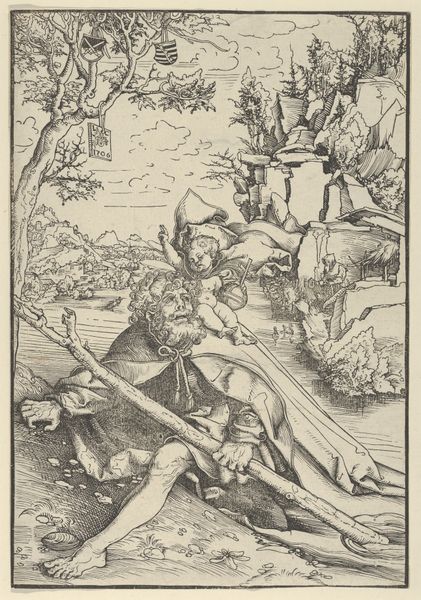
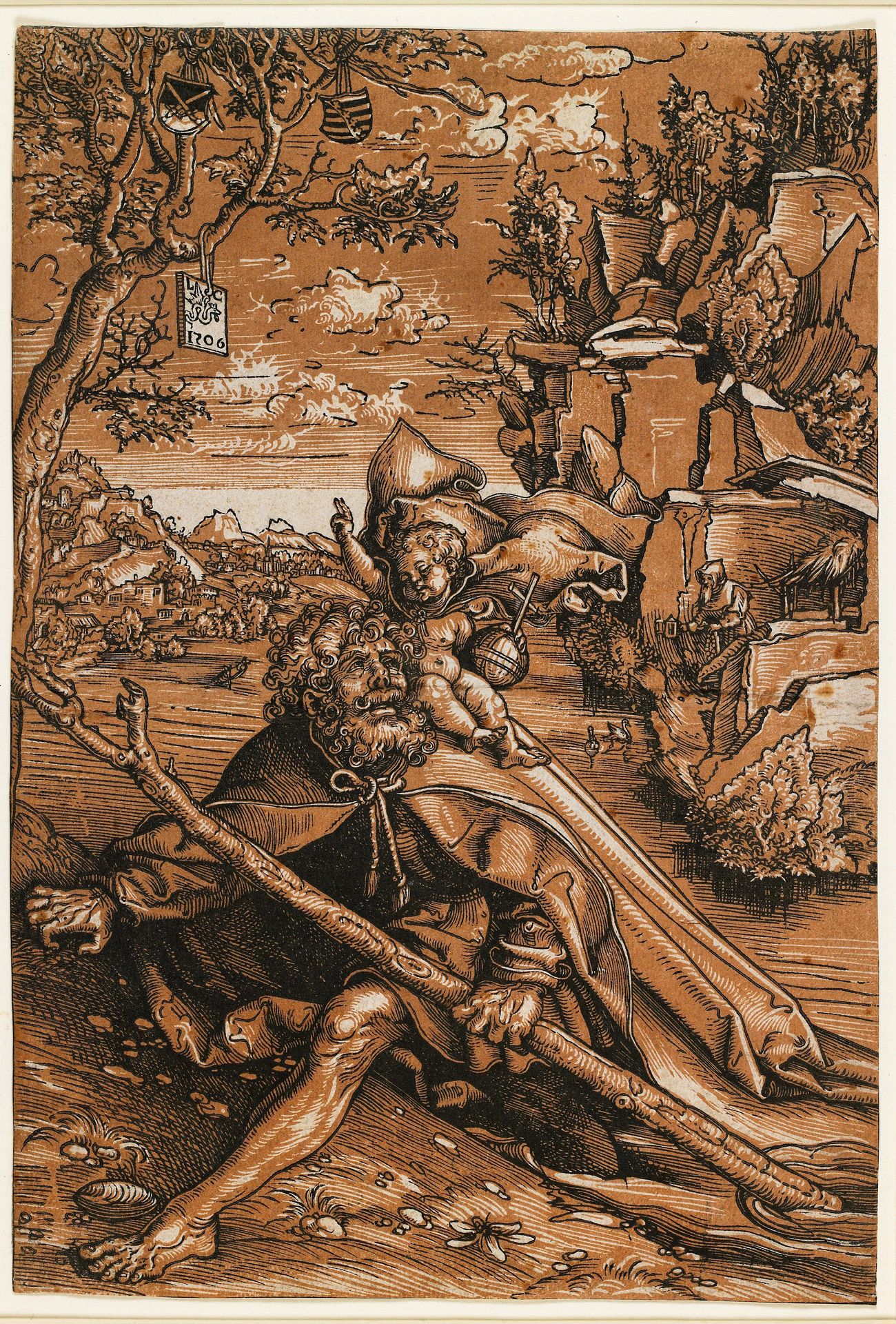
Editor: Here we have Lucas Cranach the Elder’s “Saint Christopher,” a woodcut from around 1509, now at the Minneapolis Institute of Art. There’s such a palpable sense of weight in this image, both physically and emotionally. What do you see in this piece? Curator: Immediately, I'm struck by the visual weight of tradition carried through this image. Saint Christopher, the patron saint of travelers, is rendered in a Northern Renaissance style, yet the symbolism harkens back to earlier Byzantine iconography. Notice the Christ Child – He isn't simply riding on Christopher's shoulders. He holds an orb, a symbol of earthly power, a detail resonating with the psychological burden of faith and destiny. What stories does it conjure for you? Editor: I definitely get a sense of a much larger narrative. He’s not just carrying a child; he’s carrying the weight of the world, literally. Curator: Precisely! And consider the landscape. It’s not just scenery; it is a symbolic terrain, fraught with obstacles. This alludes to the challenges inherent in spiritual journeys, both external and internal. Do you see how the lines of the woodcut contribute to this feeling of hardship? Editor: The lines are so stark and almost harsh, adding to that feeling, yes. What about the symbols in the tree to the left, the gourds perhaps? Curator: Excellent observation! Gourds are often associated with pilgrimage, a temporary life, fitting seamlessly with Christopher's narrative, don't you think? All together, this tapestry of cultural and personal burdens coalesce to convey one meaning of faith as a heavy burden and not light undertaking. Editor: Wow, that's given me a totally different perspective on it! Thanks so much. Curator: My pleasure. The layers of meaning embedded within the image serve as reminders of shared beliefs, values, and societal underpinnings, something powerful to appreciate.