13 - 1895
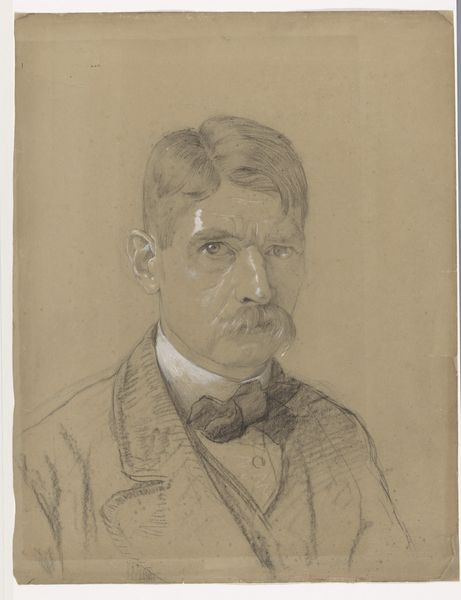
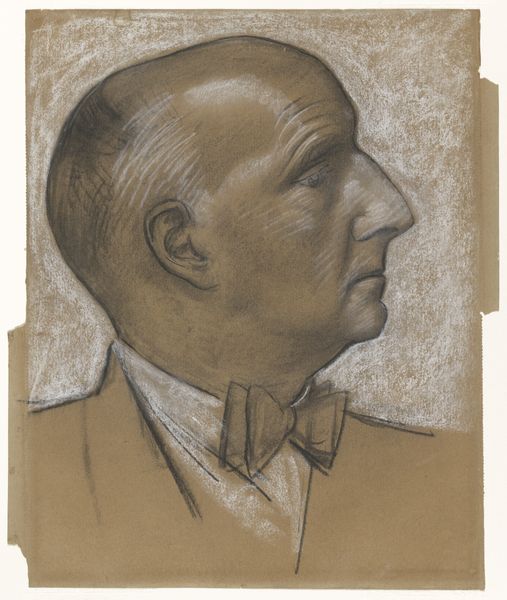
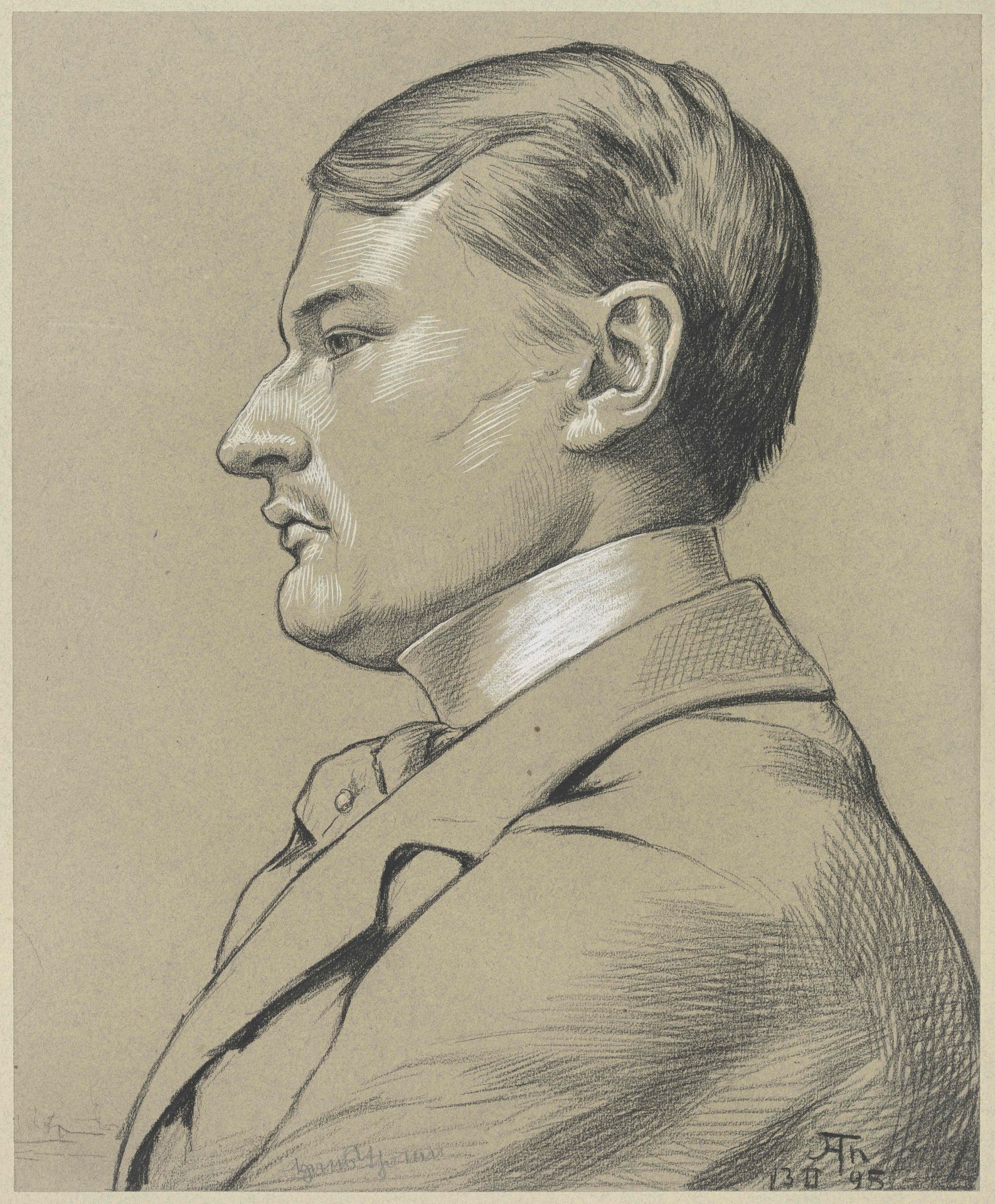
Portrait of Otto Küchler


Listen to curator's interpretation
Curatorial notes
Editor: Here we have Hans Thoma's "Portrait of Otto Küchler," created sometime in 1895. It's a drawing done with chalk and graphite, and the overall tone feels rather reserved and formal to me. What are your first thoughts about this piece? Curator: It's a fascinating example of late 19th-century portraiture, particularly considering the social and cultural role of portraiture at the time. How did the emerging middle class use portraiture to assert their identity and status? Editor: So, you're suggesting this isn't *just* a likeness, but a statement? Curator: Exactly. Consider who commissions a portrait, and why. A portrait becomes a carefully constructed representation, reflecting and reinforcing societal hierarchies. Does this portrait challenge or conform to established conventions? How might the museum context change how this artwork is interpreted? Editor: That's really interesting, I hadn't considered the museum’s impact itself. The lines seem quite controlled, almost academic. Curator: Precisely! How might that choice of style speak to Küchler’s own position and aspirations within society? What sort of social standing might the stark, controlled style have projected? Editor: I suppose the precise lines imply stability and control, which could link to professional success or respectability? Curator: Exactly. Romanticism influenced art and society's notions of the individual. How does Thoma portray Küchler to connect to Romantic ideals, and perhaps project a certain kind of 'inner' identity for public consumption? Editor: This really changes how I see portraits, not just as faces, but as cultural artifacts shaping and shaped by social forces. Curator: Indeed. Reflecting on it all, what this work showcases, for me, is the subtle play between individual identity, societal expectations, and the institutions that display and interpret art.