About this artwork
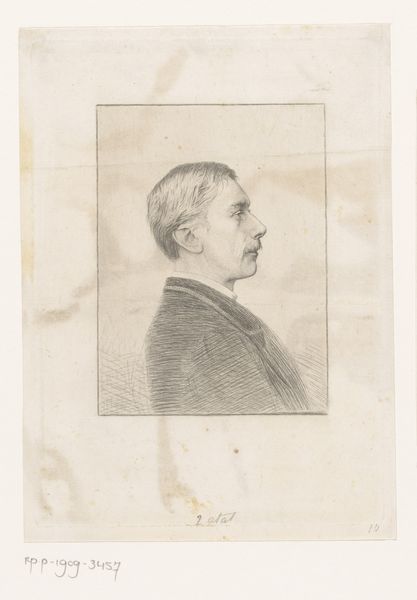
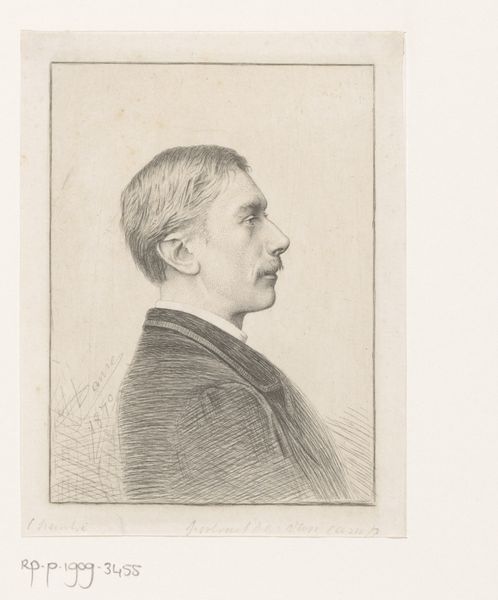
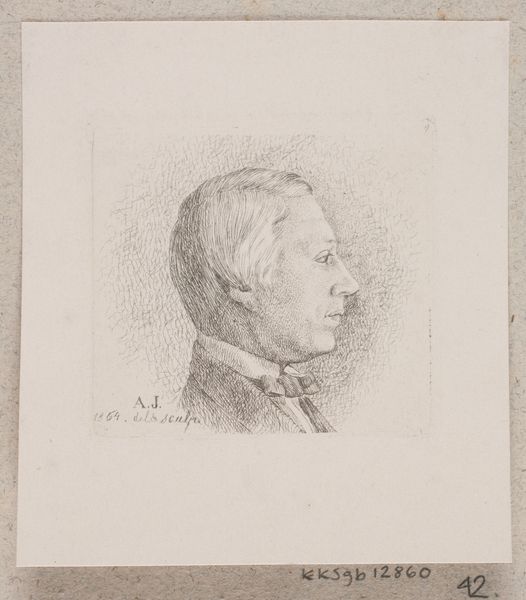
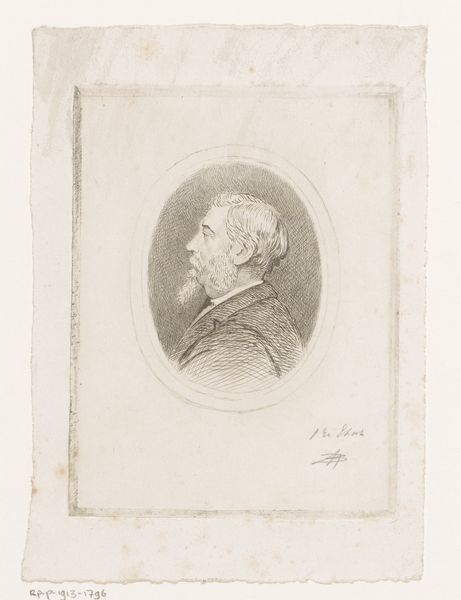
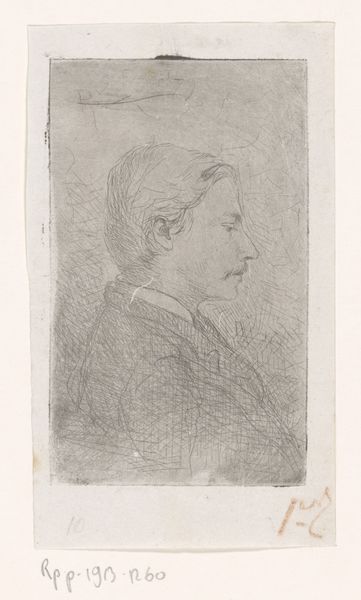
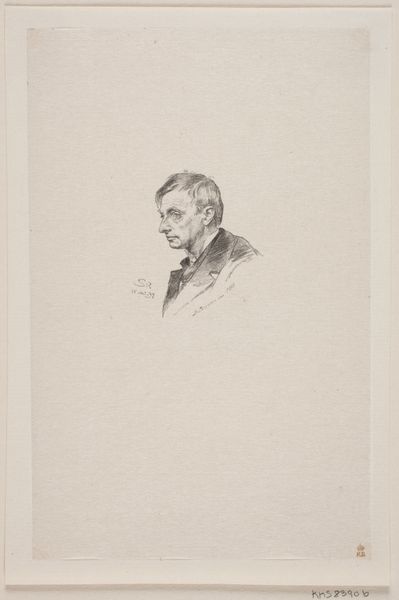
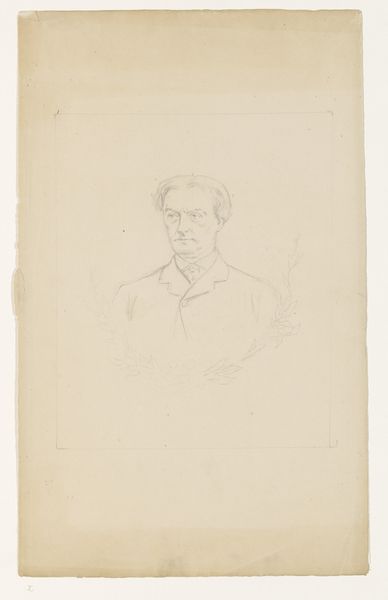
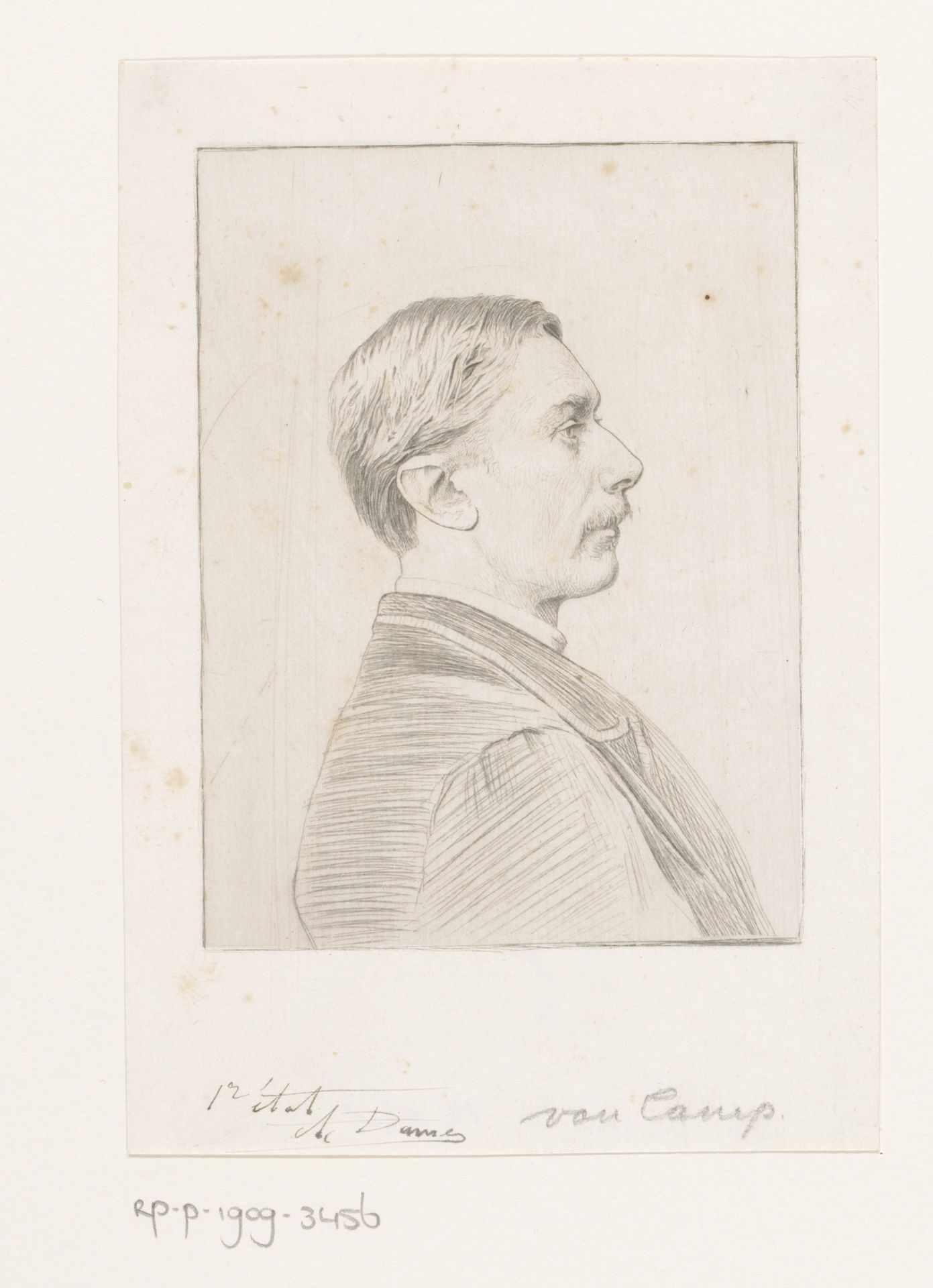
Curator: Before us hangs a delicate pencil and graphite drawing titled "Portret van Camille van Camp," created around 1870 by Auguste Danse. It currently resides here at the Rijksmuseum. Editor: There’s an air of quiet dignity about him, a reserved nature. The starkness of the graphite emphasizes a feeling of almost austere composure. I find it incredibly compelling, yet there’s a palpable distance. Curator: The profile pose immediately brings to mind classical portraiture, a nod to enduring power structures. Consider the symbolic weight of profile portraits through history, particularly those of nobility and important figures. The pencil medium lends an intimacy—a feeling of direct observation, a gaze upon Camille that seeks a glimpse into the soul. Editor: Absolutely. This wasn’t just a snapshot, it was carefully composed within its sociopolitical milieu. As an artwork of the 1870s, we need to recognize the implicit social structures, like class. Portraits functioned in this period often to reassert social status. The question I have is to ask if this profile intentionally alludes to power or critiques it through subtle contrast. Curator: That tension is essential. Auguste Danse lived and worked within the confines of those very social codes, imbuing meaning through subtle departures from convention, challenging established perceptions, a faint smile rather than an imposing stare. These portraits provided some agency to individuals of emerging wealth who desired visual permanence and lasting legacies. Editor: Thinking about the symbols and the impact that art, such as portraiture, had within its original culture definitely has some echoes now. By the same token, this subtle subversion suggests an emerging possibility of social disruption at the cusp of modernity, right? Curator: That's a perceptive way to interpret it! Looking beyond surface-level symbolism allows a profound interaction with not just art history but our present socio-political setting, urging thoughtful and pertinent discourses regarding legacy and power. Editor: It’s been fascinating delving into the historical currents present in what first struck me as merely a quiet portrait. Curator: Indeed! Sometimes, it is precisely in quiet restraint that we uncover the loudest narratives and discover links with ourselves.

Artwork details
- Medium
- drawing, pencil, graphite
- Dimensions
- height 157 mm, width 108 mm
- Location
- Rijksmuseum
- Copyright
- Rijks Museum: Open Domain
Tags
portrait
pencil drawn
drawing
pencil sketch
etching
pencil drawing
pencil
graphite
portrait drawing
realism
Comments
No comments
About this artwork
Curator: Before us hangs a delicate pencil and graphite drawing titled "Portret van Camille van Camp," created around 1870 by Auguste Danse. It currently resides here at the Rijksmuseum. Editor: There’s an air of quiet dignity about him, a reserved nature. The starkness of the graphite emphasizes a feeling of almost austere composure. I find it incredibly compelling, yet there’s a palpable distance. Curator: The profile pose immediately brings to mind classical portraiture, a nod to enduring power structures. Consider the symbolic weight of profile portraits through history, particularly those of nobility and important figures. The pencil medium lends an intimacy—a feeling of direct observation, a gaze upon Camille that seeks a glimpse into the soul. Editor: Absolutely. This wasn’t just a snapshot, it was carefully composed within its sociopolitical milieu. As an artwork of the 1870s, we need to recognize the implicit social structures, like class. Portraits functioned in this period often to reassert social status. The question I have is to ask if this profile intentionally alludes to power or critiques it through subtle contrast. Curator: That tension is essential. Auguste Danse lived and worked within the confines of those very social codes, imbuing meaning through subtle departures from convention, challenging established perceptions, a faint smile rather than an imposing stare. These portraits provided some agency to individuals of emerging wealth who desired visual permanence and lasting legacies. Editor: Thinking about the symbols and the impact that art, such as portraiture, had within its original culture definitely has some echoes now. By the same token, this subtle subversion suggests an emerging possibility of social disruption at the cusp of modernity, right? Curator: That's a perceptive way to interpret it! Looking beyond surface-level symbolism allows a profound interaction with not just art history but our present socio-political setting, urging thoughtful and pertinent discourses regarding legacy and power. Editor: It’s been fascinating delving into the historical currents present in what first struck me as merely a quiet portrait. Curator: Indeed! Sometimes, it is precisely in quiet restraint that we uncover the loudest narratives and discover links with ourselves.
Comments
No comments