print, engraving
#
dutch-golden-age
# print
#
landscape
#
river
#
cityscape
#
engraving
Dimensions: height 118 mm, width 147 mm
Copyright: Rijks Museum: Open Domain
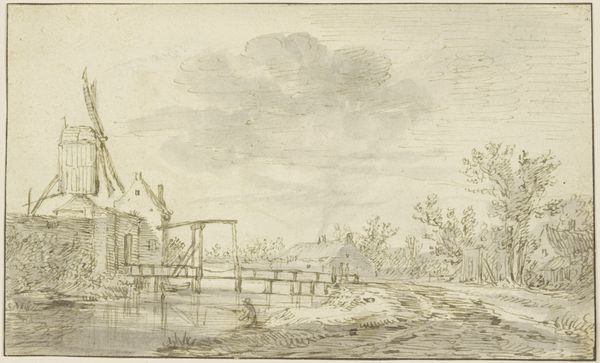
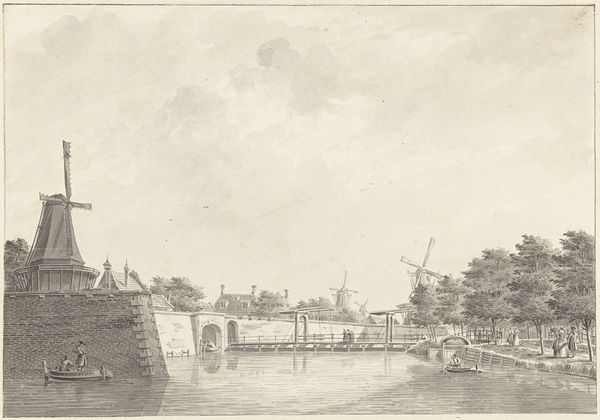
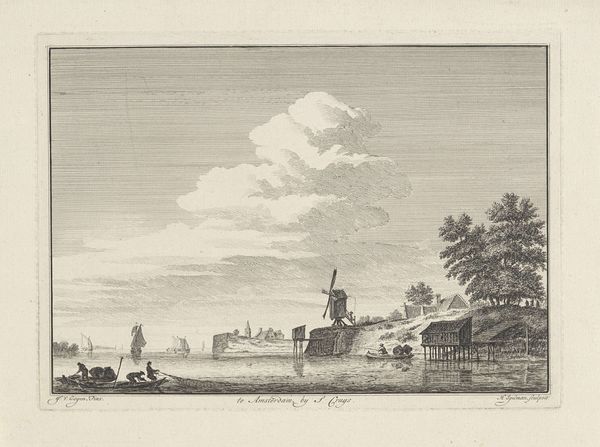
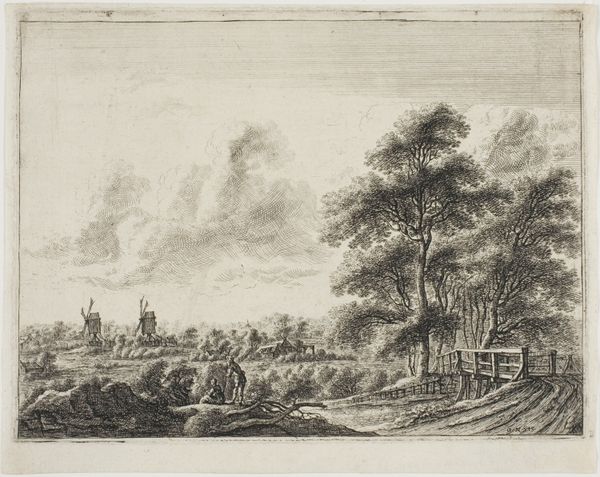
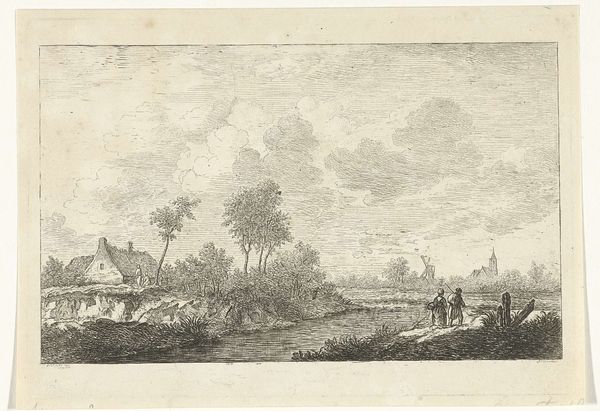
Simon Klapmuts etched "Molens aan het water bij Gouda" in 1779, presenting us with a scene dominated by the iconic windmills. Windmills, more than mere mechanical structures, serve as potent symbols of Dutch identity and ingenuity. Their presence speaks to the Netherlands's ongoing battle against the waters, a struggle deeply embedded in the nation's collective memory. Consider how the windmill, an emblem of human endeavor, echoes throughout art history—from Don Quixote's fantastical tilting at windmills to their romanticized depictions in landscape paintings. The windmill transcends its functional role, tapping into our subconscious associations of progress and resistance. The image engages us on a profound, almost primal level. Like water flowing, the cyclical nature of the windmill mirrors the ever-changing landscape, a reminder of the relentless passage of time and the enduring spirit of human innovation. It is a symbol that has resurfaced, evolved, and taken on new meanings throughout history.
Comments
No comments
Be the first to comment and join the conversation on the ultimate creative platform.
 Collect
 React
React Comment
More like this